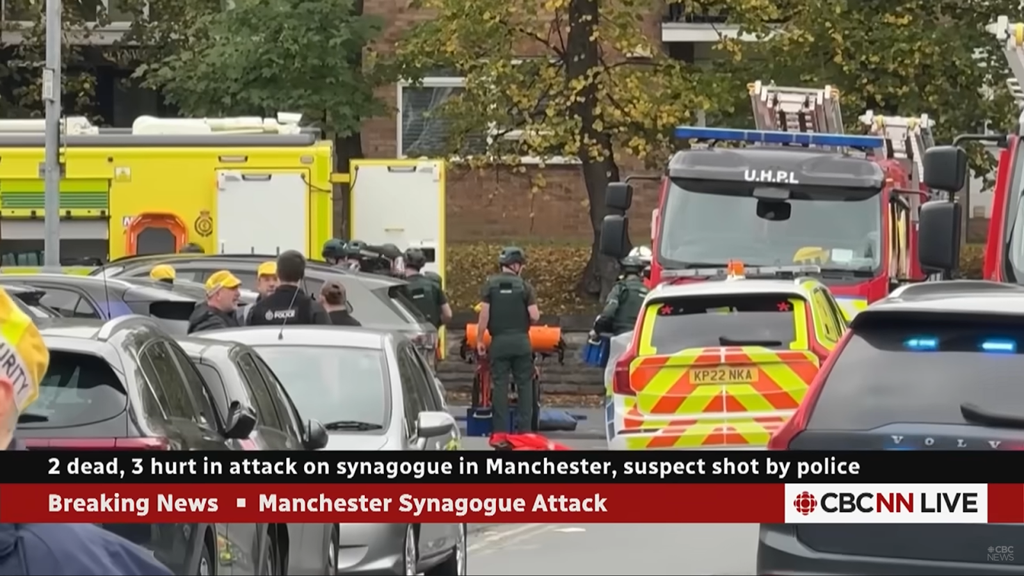
A terror attack in Manchester on Thursday left two people dead and three injured, prompting renewed discussions about immigration policies in the United Kingdom. Jihad Al-Shamie, a 35-year-old British citizen of Syrian descent, allegedly drove a truck into a crowd at a synagogue before attacking congregants with a knife.
The incident occurred on Yom Kippur, a significant Jewish holiday, and has drawn attention to the ongoing challenges faced by European nations regarding immigration and cultural integration. Al-Shamie entered the U.K. as a child and became a citizen in 2006, according to reports from Fox News.
Manchester Police confirmed that at least one of the fatalities and one injury resulted from gunfire by law enforcement during the incident. Authorities have since arrested three additional individuals in connection with the attack, including two men in their 30s and a woman in her 60s, as investigations continue.
Critics of current immigration policies argue that the attack reflects deeper issues within European societies, particularly regarding the integration of foreign nationals. John Daniel Davidson, a writer for The Federalist, stated, "Britain’s leaders today are arguably following in Henry VIII’s footsteps. They introduce and favor foreign cultural practices while extending the power of the state over the traditional rights and liberties of the people." (Uscis)
Davidson highlighted concerns that political elites have catered to the cultural desires of an "unassimilated Muslim population," (Uscis) which he claims contrasts sharply with the Christian foundations of Western society. This perspective is echoed by some commentators who argue that such policies have led to a decline in social cohesion and safety.
In response to the attack, U.K. Prime Minister Keir Starmer condemned the violence but has faced criticism for his government’s broader immigration stance. Critics assert that his administration's policies contribute to a growing divide within society.
Starmer's recent actions, including recognition of a Palestinian state following the Hamas attack on Israel on October 7, 2023, have further fueled debate over his leadership and its implications for national security.
Supporters of the current immigration framework argue that diversity enriches society and that the actions of individuals should not reflect on entire communities. They emphasize the importance of maintaining an open and inclusive society while ensuring that security measures are in place to protect citizens.
However, the tragic events in Manchester have reignited discussions about the balance between immigration and public safety. Many citizens are calling for a reassessment of policies that they believe may compromise national security.
As investigations into the attack continue, the U.K. faces a critical moment in addressing the complex issues surrounding immigration and cultural integration. The ramifications of this incident may influence future policy decisions as leaders navigate the challenges of a rapidly changing society.