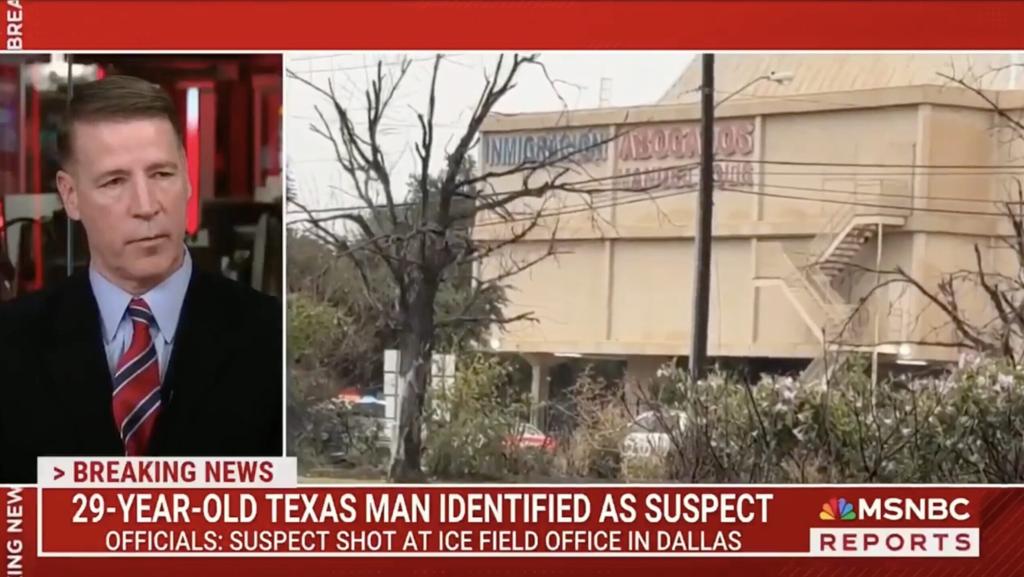
MSNBC analyst Christopher O’Leary suggested that violence targeting the right may persist unless demands from the left are met. His remarks followed a shooting incident in Dallas where one person was killed and two others injured when a gunman opened fire on an Immigration and Customs Enforcement (ICE) transportation vehicle.
The shooter, who died from a self-inflicted gunshot wound, left behind rounds inscribed with anti-ICE messages, according to investigators. This incident follows a bomb threat at the same facility last month, as noted by Tricia McLaughlin, Assistant Secretary for Public Affairs at the Department of Homeland Security (DHS).
During a segment discussing the shooting, O’Leary attributed the violence to underlying societal conditions, stating, "Politically motivated terrorism doesn’t happen in a vacuum. It happens because conditions have been set that people start acting out against." (Dhs Issues Statement Targeted Attack Dallas Ice Facility — dhs.gov)
He listed factors such as the wealth gap, aggressive law enforcement tactics, and the militarization of ICE as contributing to the environment that leads individuals to resort to violence. O’Leary argued that these conditions create a sense of desperation among some individuals, prompting them to act out.
O’Leary emphasized the need for policy changes, suggesting that the Trump administration should reassess its approach to immigration enforcement. He stated, "You have to start looking at what policies you’ve implemented and what tactics you’re using, because, if you tone down the rhetoric, but you leave those other pieces in place, nothing’s going to change." (Dhs Issues Statement Targeted Attack Dallas Ice Facility — dhs.gov)
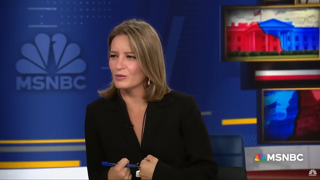
When asked by host Katy Tur how to prevent future incidents, O’Leary responded, "The first thing is, you take the underlying drivers away." (Dhs Issues Statement Targeted Attack Dallas Ice Facility — dhs.gov)
Critics of O’Leary’s comments argue that suggesting violence will continue unless demands are met undermines the rule of law. They contend that such rhetoric could embolden individuals to resort to violence as a means of political expression.
Supporters of O’Leary's perspective argue that addressing systemic issues is essential for reducing political violence. They believe that understanding the motivations behind such actions can lead to more effective solutions.
The shooting incident has reignited discussions about political violence and the responsibilities of media figures in framing these events. The DHS has previously issued statements regarding threats to ICE facilities, highlighting ongoing concerns about safety and security in the context of immigration enforcement.
As the nation grapples with increasing polarization, the dialogue around political violence continues to evolve, with calls for both accountability and understanding of the factors that contribute to such acts.