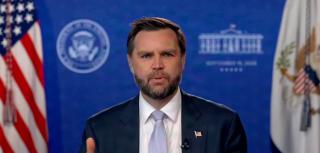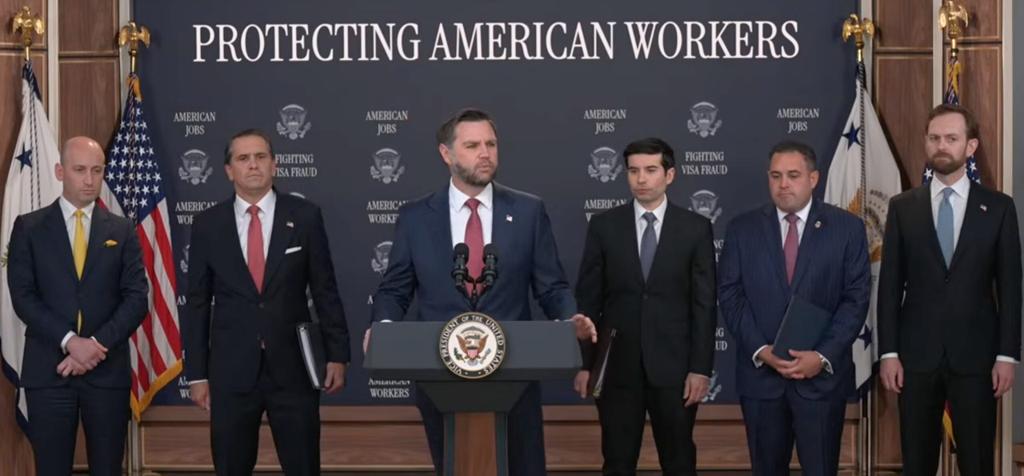
The White House has announced a 180-day suspension that bars Microsoft and several major India-based technology firms from seeking permanent labor certification (PERM) for their H-1B visa workers. The move comes amid concerns that these companies are using the process intended for temporary labor to secure permanent U.S. residency for foreign workers. Vice President J.D. Vance, who leads the White House Task Force to Eliminate Fraud, stated that the action targets companies allegedly misusing the system and aims to reinforce the original intent of U.S. immigration law.
The decision marks a significant escalation in the ongoing debate over the use of H-1B visas and the PERM process. U.S. immigration law restricts H-1B visas to nonimmigrant, temporary workers, but critics argue that some large corporations have been using the PERM process as a pathway to permanent status for these employees, potentially circumventing the law’s intent.
The PERM program, overseen by the Department of Labor, allows U.S. employers to hire foreign workers for permanent positions if they can demonstrate that there are no available, qualified American workers for those roles. According to the Department of Labor's official guidance, employers must obtain a certified labor certification application before they can seek immigration approval for a foreign worker. The White House Task Force to Eliminate Fraud, established earlier this year, is responsible for investigating and addressing abuses in federal programs, including labor and immigration pathways, as outlined in White House documentation.
Companies Facing Suspension
The suspension specifically affects Microsoft and several major Indian technology firms often referred to as the "WITCHes"—Wipro, Infosys, Tata Consultancy Services, Cognizant, and HCL Tech. These companies are among the largest suppliers of technical staff to U.S. businesses, frequently utilizing the H-1B visa program to fill roles. According to Vice President Vance, the administration’s investigation found that these firms were using the PERM process to convert temporary guest workers into permanent residents, which he said runs counter to the original intent of the H-1B program.
"Our message to Microsoft is: You’re a great American company, but you’ve got to hire great American workers."
— J.D. Vance, Vice President
Under the new order, these companies are prohibited from filing new PERM applications for H-1B workers for at least 180 days. The administration has indicated that the suspension could be extended if ongoing investigations reveal further abuses. Officials described the move as an effort to close what they see as a "backdoor conduit" for companies to secure permanent lower-wage immigrant labor, potentially at the expense of American workers.
Microsoft and Industry Response
Microsoft responded to the White House suspension by clarifying that of the roughly 6,000 H-1B visa applications it filed during its 2026 fiscal year, about 80% were for extensions or status changes for existing employees. The company told the Associated Press that only a small portion of its applications—representing about 1% of its workforce—were for foreign-born, U.S.-based workers joining Microsoft for the first time. Microsoft did not directly address the administration’s claim that it laid off approximately 6,000 American workers while hiring a similar number of H-1B workers.
"They are not new arrivals to our country," Microsoft said, emphasizing that most of its visa applications were for current employees already working in the United States. However, the company did not comment on the broader allegation that it was using the PERM process to convert temporary visas into permanent residency for its foreign workers.
Industry representatives and some immigration advocates have argued that the H-1B and PERM processes are essential for filling critical skills gaps in the U.S. technology sector. They contend that the programs help American companies remain competitive in a global market by allowing them to hire highly skilled workers when qualified U.S. candidates are unavailable. Nonetheless, the administration’s action has intensified scrutiny of how these programs are used and whether they are being exploited to the detriment of American workers.
Policy and Legal Background
The H-1B visa category was established by Congress in 1952 to allow U.S. employers to temporarily employ foreign workers in specialty occupations that require specialized knowledge. The program is intended for "nonimmigrant" temporary workers of distinguished merit and ability. The Department of Labor’s PERM certification process requires employers to demonstrate that hiring a foreign worker will not adversely affect the wages or working conditions of similarly employed U.S. workers. Before submitting an immigration petition, employers must obtain a certified labor certification application from the Department of Labor’s Employment and Training Administration, as detailed in official DOL guidance.
The White House Task Force to Eliminate Fraud was created by executive order earlier this year and has made investigating potential abuses in guest worker programs a top priority. The current suspension of Microsoft and the Indian tech firms is the first major enforcement action announced by the task force since its establishment, according to White House records.
At this time, the administration has not indicated whether additional companies or other industries may face similar suspensions in the future. The situation remains fluid as the task force continues its investigations and as affected companies consider their next steps. The outcome of this suspension could have significant implications for both the technology industry and the broader debate over U.S. immigration and labor policy.