Newly released diary entries from Dr. Anthony Fauci show he was alarmed in 2016 after learning the U.S. Army had conducted experiments that aerosolized the Ebola virus—a method not typical for the disease—and publicly shared the results during an active outbreak in Africa, according to records obtained by Senate Homeland Security Committee Chairman Rand Paul.
Explainer The Legal Battle Over Fauci and COVID-19 Accountability: Transparency and Consequences
The disclosures raise questions about government oversight of high-risk pathogen research and transparency around federally funded experiments, as lawmakers debate new restrictions and review possible document destruction.
Fauci, then director of the National Institute of Allergy and Infectious Diseases (NIAID), wrote that the Army’s research suggested vaccinated test animals exposed to aerosolized Ebola suffered more inflammation than unvaccinated ones. He expressed concern that publicizing these findings could undermine confidence in U.S.-deployed vaccines in West Africa, where outbreaks were ongoing. According to the Centers for Disease Control and Prevention, Ebola is not typically transmitted through the air and spreads via direct contact with bodily fluids. The CDC notes that Ebola outbreaks have high fatality rates and are primarily confined to sub-Saharan Africa CDC Ebola basics.
Fauci’s Private Concerns
In a March 2016 diary entry, Fauci criticized the U.S. Army Medical Research Institute of Infectious Diseases (USAMRIID) for conducting and sharing the experiment, writing, “This should have been a classified experiment that never should have been done in the first place.” He added that he would need to brief the National Security Council to address the fallout, describing the situation as “doo-doo” he had to clean up.
"If someone does not tell me the truth and I find out they did not, then they are gone."
— Anthony Fauci, former NIAID director
Fauci’s diary also revealed his frustration with the Army and NIAID researchers for not considering classification of the research until after the results were circulated. He wrote that the findings could “indicate a vulnerability” and that sharing them risked damaging vaccine confidence among African officials, who were already wary of U.S. interventions.
Senate Committee Investigation
Senator Paul’s committee obtained the diary entries and internal emails as part of its ongoing investigation into the origins of COVID-19, U.S. viral research, and alleged cover-ups. Paul said the records show NIAID funded risky research with the Defense Department and that, when results became problematic, Fauci argued for secrecy rather than halting such work. Paul has called for passage of the Risky Research Review Act, which would require independent review of federally funded high-risk experiments before funding is approved.
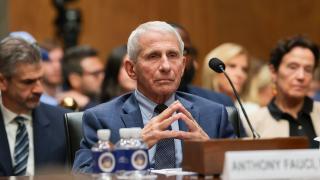
Paul summoned Fauci to testify, but the retired official invoked his Fifth Amendment right against self-incrimination and declined to answer most questions. The committee referred Fauci to the Justice Department for possible contempt of Congress, but President Biden granted him a pardon. Some constitutional experts have questioned whether Fauci could invoke the Fifth Amendment after receiving a pardon.
Details of the Army Ebola Study
The Senate committee’s fact sheet states the Army’s infectious disease institute at Fort Detrick conducted the study under a NIAID task order, comparing four vaccines in groups of four monkeys exposed to aerosolized Ebola. This method forced the virus deep into the lungs, unlike natural infection. The results, which showed vaccinated animals had greater lung inflammation, were shared with vaccine manufacturers and circulated within the government and U.S. embassies.
While using aerosolized viruses to test infection pathways is not considered gain-of-function research—since it does not involve genetic alteration—Senator Paul’s panel has raised concerns about the broader scope of U.S.-funded pathogen research. Earlier this year, the Director of National Intelligence reported that the U.S. has funded numerous pathogen labs globally, including in conflict zones.
Document Preservation and Political Response
Paul’s committee is also investigating possible destruction of government documents related to viral research. He has sought legal immunity for a former Fauci aide who expressed concern about testifying, but a committee vote split along party lines, with Democrats blocking the resolution. The aide, subpoenaed for a closed-door session, invoked her Fifth Amendment rights and declined to answer questions.
Democratic members of the committee have not publicly addressed the latest diary disclosures or the blocked immunity resolution. Supporters of Fauci have previously defended his record on public health and research oversight.
Broader Context: U.S. Virus Research Scrutiny
The revelations come as Congress considers new limits on gain-of-function and other high-risk research. President Trump recently signed an executive order mostly banning research that enhances viruses’ lethality in humans. The Senate committee’s investigation continues, with additional Fauci memos scheduled for release.
The CDC and World Health Organization continue to monitor Ebola and other emerging viruses, including coronaviruses such as MERS-CoV, which was first identified in 2012 and remains under study for its potential to jump from animals to humans WHO MERS-CoV fact sheet).