Missouri's 2026 general election has been thrown into confusion after a series of court rulings left state officials with conflicting orders over which congressional map to use, forcing candidates and voters into districts that do not match the results of the August primary.
Explainer Understanding the Supreme Court’s Impact on Law and Liberty
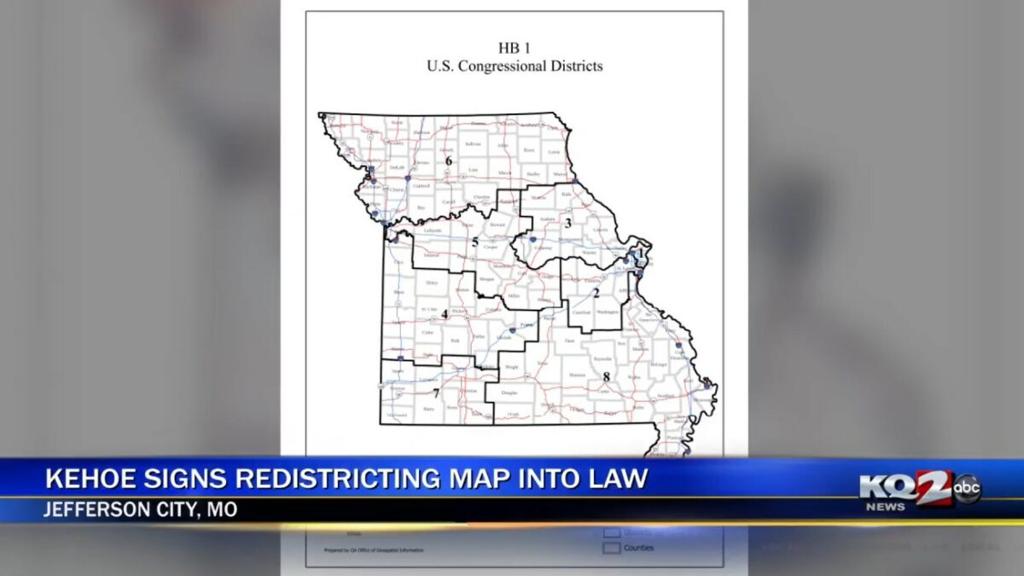
The core dispute centers on whether Missouri should use the new "Missouri First Map"—signed into law by Gov. Mike Kehoe in September 2025—or revert to the previous 2022 map, after a referendum challenge and a cascade of litigation left the state's election process in limbo.
The controversy follows a year of legal battles over redistricting, with the Missouri Supreme Court, federal courts, and the U.S. Supreme Court all weighing in, but failing to provide clear guidance to state officials on how to proceed before the November vote.
Legal Battles Over the Map
Gov. Kehoe signed the Missouri First Map into law on September 28, 2025, after a special legislative session, describing it as a more compact and representative map for the state. The law, passed as House Bill 1, was intended to update congressional districts ahead of the 2026 elections and was supported by state legislators and Missouri's congressional delegation, according to a statement from the governor's office.
Legal challenges began almost immediately. In NAACP v. Kehoe, plaintiffs argued the governor lacked authority to call a special session for redistricting, but the Missouri Supreme Court unanimously upheld Kehoe's power. In Luther v. Hoskins, the court ruled 4-3 that Missouri's constitution did not bar mid-decade redistricting. Two other cases, Wise v. Missouri and Healey v. Missouri, challenged the map's compactness and contiguity, but the Missouri Supreme Court unanimously affirmed the map's compliance with state law in May 2026.
A separate challenge, Maggard v. Missouri, disputed the referendum process, arguing that enough signatures should freeze the new map. The Missouri Supreme Court rejected this, ruling the petition needed to be certified by the August 4, 2026 deadline, but left open what would happen if the petition was certified after the primary.
Conflicting Court Orders
On August 4, 2026—the day of the primary—Secretary of State Denny Hoskins determined the referendum was unconstitutional and declined to place it on the ballot. Plaintiffs sued that evening in von Glahn v. Hoskins, but lost at the trial court. The Missouri Supreme Court expedited the appeal and, on September 3, ordered the Missouri First Map frozen pending a November vote, but did not specify how to handle primary results or federal compliance.
Hoskins was left with conflicting orders: the Missouri Supreme Court required use of the old map, while Judge Stephen Clark of the Eastern District of Missouri ordered the state to use the Missouri First Map to comply with federal law. The Eighth Circuit declined to stay Clark's order, but the U.S. Supreme Court granted a stay, effectively reinstating the 2022 map.
"Secretary Hoskins rightly issued guidance to follow the federal court order."
— Abhi Kambli, partner at Holtzman Vogel
The Missouri Supreme Court threatened Hoskins with contempt for initially following the federal order, but later held the contempt was purged after Hoskins reverted to the old map following the Supreme Court's stay. The state sought emergency relief from Supreme Court Justice Brett Kavanaugh, who denied the request without comment.
Impact on Candidates and Voters
The result is an unprecedented situation: candidates who won the August 2026 primary under the Missouri First Map are now running in districts drawn by the 2022 map, meaning many voters will face candidates in November whom they did not have the chance to support or oppose in the primary.
The Eighth Circuit has scheduled expedited oral arguments for this week, but the immediate future of Missouri's congressional districts remains uncertain. Supporters of the Missouri Supreme Court's actions have not publicly addressed the criticism that the court failed to provide clear guidance to election officials.
Gov. Kehoe has maintained that the Missouri First Map best represents the state's interests and values, stating, “I was proud to officially sign the Missouri First Map into law today ahead of the 2026 midterm election,” according to his office.
The ongoing litigation means the final congressional map for November could still change, with the Eighth Circuit's decision expected soon.