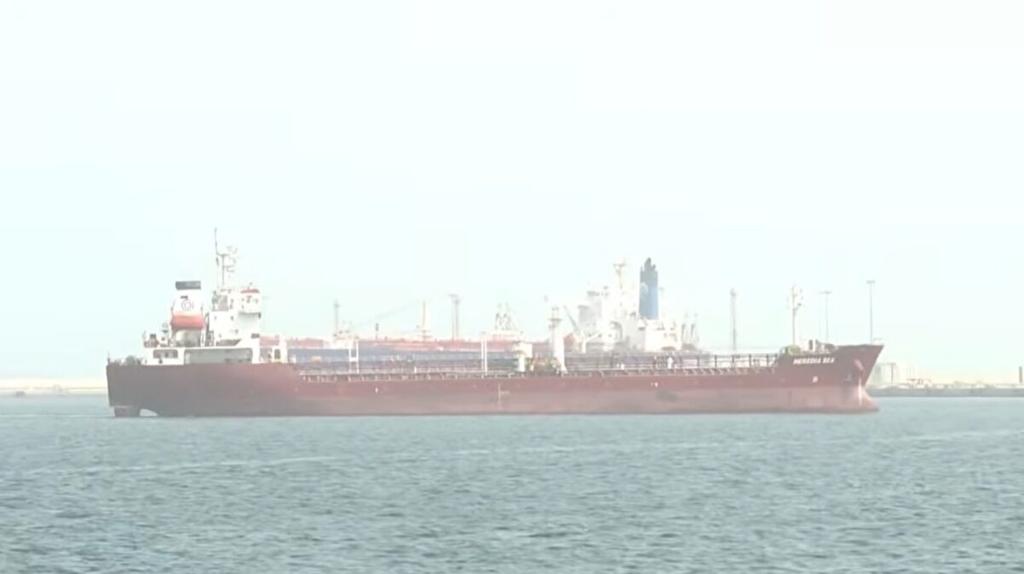
The U.S. Justice Department has confirmed it is reviving maritime prize courts to seize Iranian oil tankers attempting to evade sanctions, marking the first use of this legal tool since the Spanish-American War. U.S. Attorney Aaron Reitz, whose office in the Southern District of Texas is leading the initiative, described prize law as an established but long-unused mechanism. This law allows federal courts to condemn captured vessels and transfer ownership to the United States for auction, bypassing some of the procedural hurdles of civil forfeiture.
Explainer Understanding Iran's Complex Political Landscape and Global Influence
The decision signals a notable shift in U.S. enforcement strategy against sanctioned oil exports, particularly from Iran. It raises questions about the legal basis for such seizures and whether prize courts can accelerate asset claims compared to traditional civil forfeiture, which has often been criticized for its slow pace and susceptibility to third-party claims.
The revival of prize courts comes amid ongoing U.S. efforts to enforce sanctions on Iranian oil exports. In recent years, the United States has relied on civil forfeiture to target Iranian tankers, but the process has proven lengthy. For example, in 2020, the Justice Department seized four Iranian tankers, but it took months from the initial complaint to the eventual sale of the oil. By contrast, prize law is designed to expedite the transfer of ownership and proceeds, potentially allowing the U.S. government to move more quickly against sanctioned vessels and their cargoes.
How Prize Courts Work
Prize courts are federal district courts that exercise constitutional authority to determine whether vessels or cargo captured during armed conflict can be lawfully condemned. The process typically involves three main steps: the military capture of the vessel, a judicial determination of the lawfulness of the capture, and, if the court upholds the seizure, condemnation and auction of the property. The U.S. Constitution grants Congress the power to make rules concerning captures on land and water, a principle affirmed by the Supreme Court in the 1794 case Glass v. The Sloop Betsey.
According to the Federal Judicial Center, admiralty and maritime jurisdiction has historically been a federal responsibility, especially in cases involving international commerce and foreign relations. The Justice Department's move marks the first use of this authority in more than a century, after decades of relying on civil forfeiture for similar cases. The last significant use of prize courts was during the Spanish-American War, and their revival reflects a return to a legal tradition that has largely lain dormant in modern times.
Impact on Iranian and Venezuelan Oil
U.S. officials describe the current blockade of Iranian oil as sustainable indefinitely, with reports indicating that Iranian fuel reserves are nearing exhaustion and shortages are causing long lines in major cities. By reviving prize law, the Justice Department aims to apply more direct and immediate pressure on Iran by quickly moving seized oil and proceeds through U.S. courts. This approach is seen as a way to disrupt Iran's ability to generate revenue from oil exports in violation of U.S. sanctions.
A similar strategy has been considered for Venezuelan oil shipments. In December, federal agents boarded a tanker carrying Venezuelan crude, but the case proceeded through civil forfeiture, which delayed the auction of the cargo. The Justice Department's revived prize law strategy could accelerate such cases in the future, potentially allowing for faster disposition of seized assets and reducing opportunities for third-party claimants to intervene.
"Prize law skips most of that delay and most of the third-party claims that come with it."
— Jay Rogers, financial professional and expert witness
Legal Challenges and Next Steps
Legal experts anticipate immediate challenges once a court approves the first capture under the revived prize law. Owners, insurers, and cargo claimants are expected to contest the seizures, raising questions about whether a recognized armed conflict exists to trigger prize jurisdiction, since Congress has not formally declared war on Iran. Shipowners and insurers may also argue that their vessels are neutral carriers rather than enemy property, a distinction with a long history in prize law litigation.
Additionally, victims of Iranian terrorism may file competing claims against seized assets, adding further legal complexity. The Justice Department's strategy is likely to face extended courtroom battles, but officials maintain that the underlying legal claim is sound and that prize law offers a more decisive remedy than civil forfeiture.
The Justice Department has not publicly addressed criticism of the revived approach. However, supporters argue that the move aligns with constitutional authority and offers a faster, more effective means of enforcing sanctions. By leveraging prize law, the U.S. aims to strengthen its ability to disrupt sanctioned oil exports and respond more swiftly to violations, while navigating the legal and diplomatic challenges that are likely to arise as the new strategy is tested in federal courts.