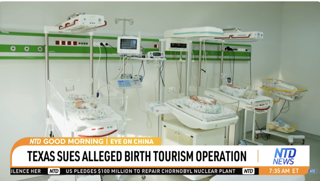
President Donald Trump’s recent executive order targeting birthright citizenship for children born to members of designated foreign terrorist organizations has prompted calls for further action from Rep. Harriet Hageman, R-Wyo., who argues that current measures do not go far enough to address what she describes as loopholes in America’s birth tourism and surrogacy industry.
The debate centers on whether existing executive and law enforcement actions are sufficient to deter foreign nationals from using surrogacy arrangements in the United States to secure citizenship for their children, with Hageman warning that national security and the integrity of American citizenship remain at risk.
Trump’s August 6 executive order clarified that children born to an “alien enemy” are not entitled to birthright citizenship, a move the White House described as part of ongoing efforts to protect the meaning and value of American citizenship. The order follows the Supreme Court’s Trump v. Barbara decision, which left unresolved questions about the scope of birthright citizenship in cases involving surrogacy and foreign nationals.
Hageman’s Letter and Proposals
In a letter to the White House, Hageman praised Trump’s decision to prohibit international surrogacy but argued that more robust measures are needed. She called for the administration to direct the Department of State and U.S. Citizenship and Immigration Services to deny visas to individuals known to participate in international surrogacy arrangements involving U.S. clinics and surrogates.
Hageman cited the Immigration and Nationality Act, noting that the president has “broad authority to restrict the entry of classes of foreign nationals whose admission you determine would be ‘detrimental to the interests of the United States.’” She further suggested making such individuals permanently ineligible for entry under any visa category, asylum, refugee status, or future marriage-based petitions.
"Your decision to prohibit international surrogacy is an important step, but more can and should be done to deter bad actors by eliminating the incentives that facilitate this practice."
— Rep. Harriet Hageman, R-Wyo.
Hageman also urged the administration to hold fertility organizations and surrogacy agencies accountable for facilitating these arrangements. She named agencies such as Surrogate First and Creative Family Connections, which she said advertise birth tourism services to overseas clients, particularly in Asia.
Industry Practices and National Security Concerns
According to Hageman, the international surrogacy industry in the U.S. is dominated by foreign nationals, including residents of countries considered adversaries, who seek to secure American citizenship for their children. She cited the case of Kyla Simpson, an American surrogate who gestated three babies for a Chinese client who failed to collect them at birth, as evidence of the risks posed by unregulated surrogacy arrangements.
Hageman warned that some U.S. surrogacy agencies actively market their services to wealthy Chinese clients and that more than 107 Chinese-owned surrogacy agencies operate in Southern California, with some reportedly linked to Chinese state-owned entities. She expressed concern that these agencies remain in good standing with major U.S. fertility organizations, including ASRM, SART, RESOLVE, and SEEDS.
She criticized the American Society for Reproductive Medicine (ASRM) for what she described as inadequate oversight and for maintaining relationships with physicians and scientists of Chinese origin through its Chinese Special Interest Group. Hageman argued that these ties warrant scrutiny given the broader national security and immigration implications.
Calls for Federal Action and Agency Response
Hageman’s letter called for federal action to address what she described as a patchwork of state laws, cultural differences, and language barriers that complicate enforcement against birth tourism and surrogacy abuses. She argued that without stronger federal oversight, children could be treated as commodities and vulnerable women exploited.
The White House has not publicly responded to Hageman’s proposals. The USCIS continues to process permanent worker and family-based immigration petitions, but the agency has not issued new guidance on surrogacy or birth tourism since the executive order. Supporters of surrogacy and fertility organizations have not addressed the specific criticisms raised in Hageman’s letter.
Hageman’s recommendations come as lawmakers and federal agencies weigh further steps to restrict the use of U.S. surrogacy arrangements by foreign nationals and to increase scrutiny of fertility industry practices.