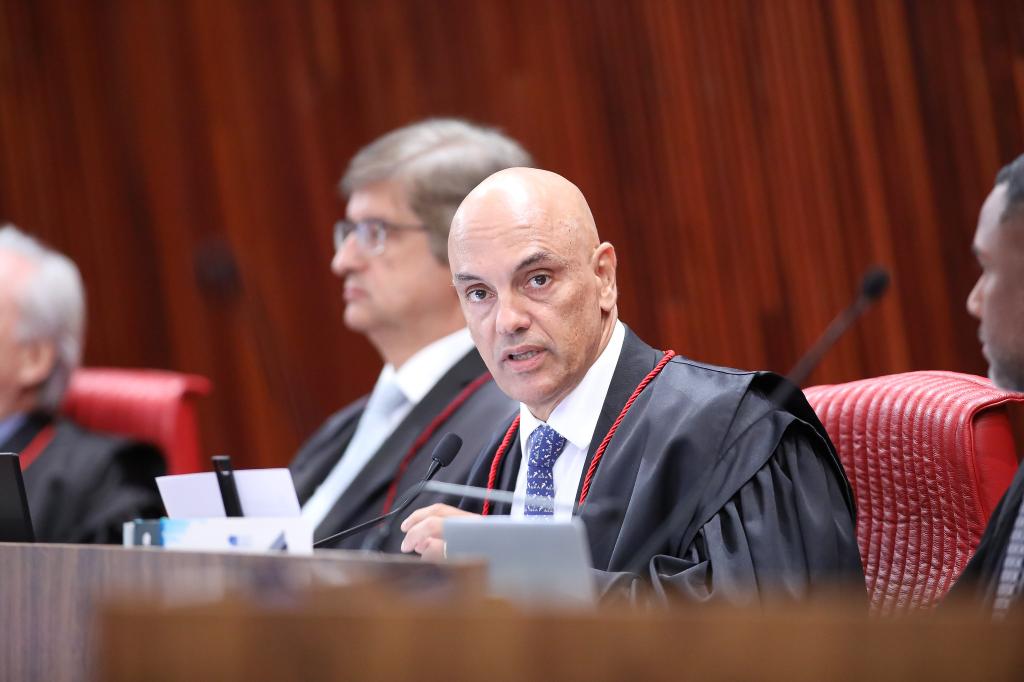
A federal judge in Florida has granted Brazil's request to intervene in a lawsuit filed by Rumble against Alexandre de Moraes, a justice of Brazil’s Supreme Federal Tribunal. Rumble, a video-sharing platform, is challenging Moraes' orders that require the company to block accounts of political opponents. The platform argues that these directives violate U.S. law and infringe upon free speech rights.
Explainer Free Speech Battles: Navigating Rights and Censorship in Modern Society
Brazil Intervenes in Rumble Lawsuit Against Censorship Orders
The core issue revolves around Brazil's assertion that it is the "real party in interest" in the case, as Moraes issued orders in his official capacity. This development raises significant questions about the extent of foreign judicial authority over U.S. companies and the broader implications for free expression in the digital age.
Background and Reactions
In February 2025, Rumble initiated the lawsuit in a Florida federal court, seeking a ruling that would declare Moraes' orders unenforceable in the United States. The platform, which serves as a video-hosting provider for Trump Media, alleges that Moraes' directives have adversely affected its business operations. Among the orders issued by Moraes was a requirement to block the accounts of a Brazilian conservative commentator who has sought political asylum in the U.S.
Moraes has threatened Rumble with fines of approximately $9,000 for each day it fails to comply with his orders, which also include demands for user information. Rumble contends that these actions not only infringe on the rights of its users but also violate federal law regarding user privacy. The platform argues that complying with such orders would compromise its commitment to protecting user data and free expression.
After facing challenges in serving Moraes with legal documents, Rumble was permitted by the court to serve him via email. This procedural adjustment prompted Brazil to file a Motion to Intervene, claiming that the lawsuit against Moraes is effectively a lawsuit against the Brazilian government itself. The court granted this motion, allowing Brazil to join the case, but did not rule on Brazil's separate Motion to Dismiss, leaving the legal proceedings open to further developments.
Critics of Moraes argue that his actions are part of a broader censorship campaign targeting political opponents of the current Brazilian administration. The U.S. State Department has previously sanctioned Moraes, with Secretary of State Rubio stating, "President Trump made clear that his administration will hold accountable foreign nationals who are responsible for censorship of protected expression in the United States." This statement underscores the U.S. government's position on international censorship issues and highlights the tensions surrounding free speech.
The lawsuit has drawn attention to the ongoing tensions between Brazil's left-wing government, led by President Luiz Inácio "Lula" da Silva, and conservative factions within the country. Lula's administration has faced criticism for its handling of free speech issues, particularly in relation to Moraes' actions. As the October elections approach, the implications of this case may further complicate the political landscape in Brazil, potentially influencing voter sentiment and political alignments.
Supporters of Moraes argue that his actions are necessary to combat misinformation and protect democratic institutions. However, critics contend that the measures disproportionately target dissenting voices and undermine the principles of free expression. The Brazilian government's intervention in the U.S. lawsuit may also draw scrutiny from international observers concerned about the implications for judicial independence and press freedom.
As the case unfolds, it remains to be seen how the court will address the complex issues of jurisdiction and the balance between national sovereignty and free speech rights. The involvement of Rumble, a platform associated with former President Trump, adds another layer of political significance to the proceedings, reflecting the intersection of technology, politics, and law.
In the coming months, the outcome of this lawsuit could have far-reaching consequences not only for Rumble and its operations but also for the broader discourse on censorship and free speech in both Brazil and the United States. With political tensions rising ahead of Brazil's elections, the case is likely to remain in the spotlight as it progresses through the courts, shaping the future of digital expression and international legal standards.