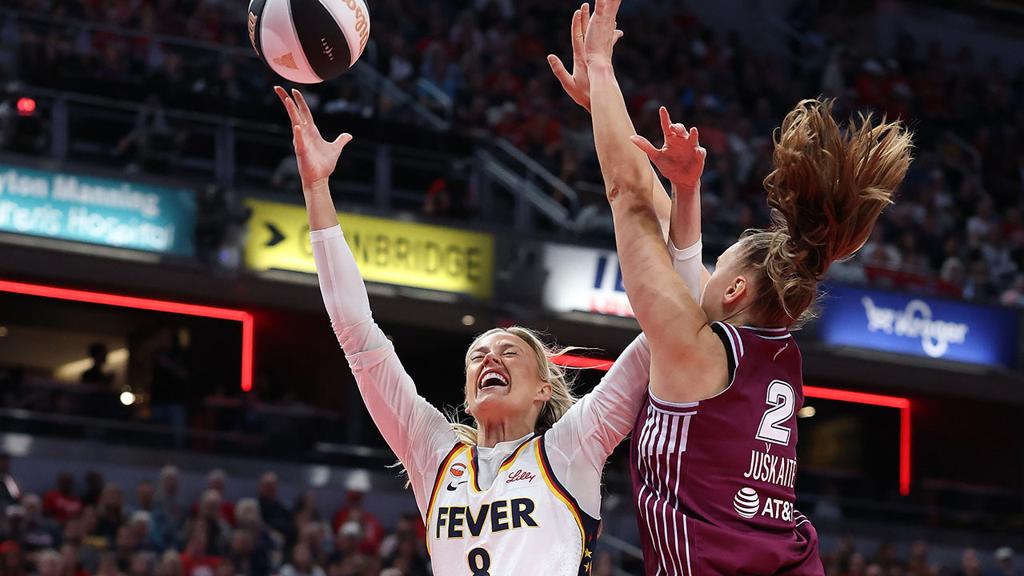
A new controversy has emerged in the Women’s National Basketball Association (WNBA) after Indiana Fever player Sophie Cunningham publicly stated her opposition to biological male transgender athletes participating in women’s sports. Her comments have drawn both support and backlash from league figures and fans, highlighting growing tensions within the WNBA as it navigates increased attention, revenue, and debates over league culture and inclusion policies.
For years, the WNBA operated at a financial loss, subsidized by the NBA, with limited public interest and low attendance figures. The arrival of Caitlin Clark, a high-profile college basketball star, has dramatically changed the league’s fortunes. Clark’s presence has led to sold-out games, surging television ratings, and increased merchandising revenues. Some estimates suggest her impact has contributed to as much as a $1 billion increase in total league and individual player revenues. Sophie Cunningham, also with the Indiana Fever, has gained similar attention for her on-court defense of Clark and viral moments, further boosting the team’s profile and generating additional enthusiasm for the league.
Sophie Cunningham’s Comments
Cunningham recently told an interviewer that she believes only biological women should participate in women’s sports, arguing that transgender women—biological males—have undue advantages. She stated that while transgender people should have equal civil rights, their participation in women’s leagues raises concerns about fairness and safety. According to commentator Victor Davis Hanson, “Eighty percent of the American people agree with her,” and many believe that biological differences create an uneven playing field.
"She thinks girls should participate, biologically determined women, not men that are transgender."
— Victor Davis Hanson, commentator
Cunningham’s remarks sparked immediate reactions. At a recent game, two teenage fans brought signs supporting her stance, but were confronted by Seattle Storm co-owner Celeste Keaton, who berated and cursed at them courtside. Keaton was subsequently suspended for five days following the incident. The episode drew further attention to the league’s handling of dissenting views on transgender participation and raised questions about how the WNBA addresses differing opinions among its players, officials, and fans.
League and Public Reactions
The controversy intensified when Minnesota coach Cheryl Reeve wore a jacket with the slogan “Trans kids belong” after Keaton’s suspension, signaling her support for transgender inclusion in sports. Hanson described this as part of a broader trend of league officials and coaches taking public stances on the issue, reflecting the wider societal debate over transgender participation in women’s athletics.
Both Cunningham and Clark have faced aggressive play on the court, including flagrant fouls and physical targeting. Some observers attribute this to envy over their rising fame and the attention they bring to the league. Hanson has argued that the league’s culture has become divisive, with issues of race, sexual orientation, and political advocacy sometimes overshadowing the sport’s recent growth and increased visibility.
Supporters of transgender inclusion in women’s sports have not publicly responded to Cunningham’s comments or to the recent incidents involving fans and team officials. Additionally, league officials have not issued statements addressing criticism of their handling of player and fan disputes, leaving some to question the WNBA’s approach to managing controversy and maintaining unity within the league.
The Stakes for the WNBA
The WNBA’s surge in popularity and revenue has brought new scrutiny to its internal dynamics and public image. While the arrival of stars like Clark and the increased attention on players such as Cunningham have revitalized interest in the league, ongoing disputes over player treatment and transgender athlete participation risk alienating fans and undermining recent gains.
Hanson has warned that continued infighting and politicization could return the league to its previous state of limited relevance and financial instability. The next steps for the WNBA and its leadership remain unclear as debates over fairness, inclusion, and league culture persist. The league faces the challenge of balancing its newfound popularity with the need to address sensitive issues in a way that maintains both its growth and its commitment to inclusivity.