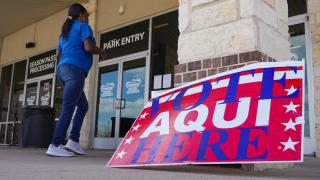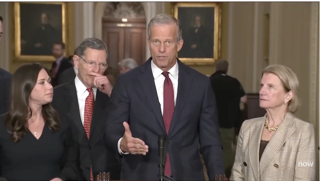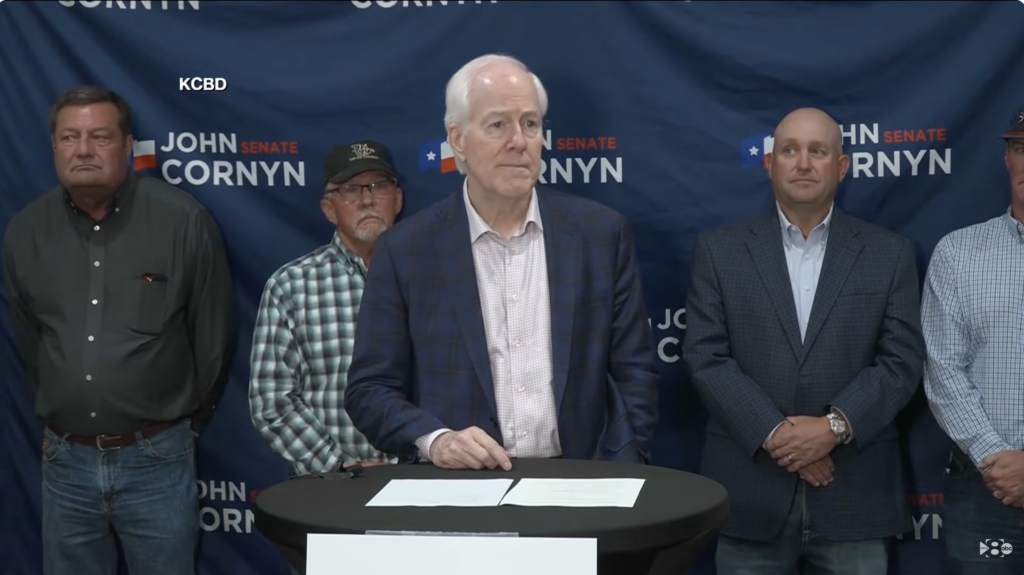
Former President Donald Trump has officially endorsed Texas Attorney General Ken Paxton in the upcoming Senate primary, a decision that carries significant implications for the political landscape in Texas, particularly for incumbent Senator John Cornyn. This endorsement comes just days before the runoff election, intensifying the competition between the two Republican candidates and highlighting the shifting loyalties within the Texas Republican Party.
Explainer Legal Landscape in Texas: Key Issues Reshaping State Law
The core tension in this primary race lies in the contrasting levels of support for Trump’s agenda, especially regarding election integrity legislation. Trump’s endorsement of Paxton signals a notable shift in loyalty among Texas Republicans, as many voters seem to favor candidates who align closely with the former president’s policies and rhetoric.
Cornyn, who is a four-term senator, has faced increasing criticism for not fully supporting Trump’s initiatives. This includes his stance on the SAVE America Act, which aims to tighten voting regulations across the state and the nation. In a recent statement, Cornyn emphasized, "I know who gets to choose our senators, and it’s the people of Texas," indicating his belief in the importance of voters’ decision-making power and their role in the electoral process.
Background on the Primary
The Texas Senate primary has become a focal point for the Republican Party, particularly after neither Cornyn nor Paxton secured a majority in the initial round of voting. The runoff election is set for next week, and Trump’s endorsement of Paxton, who has been described as a "true MAGA warrior," adds considerable pressure on Cornyn to rally support from his base.
Trump’s influence in GOP primaries has been notable and significant. Many candidates who receive his endorsement tend to win their races. For instance, in recent primaries, Trump-backed candidates have consistently outperformed incumbents who have distanced themselves from the former president. This trend raises critical questions about Cornyn's viability as he faces a challenger who has embraced Trump’s agenda more fervently and openly.
The SAVE America Act
The SAVE America Act has emerged as a key issue in the primary. This legislation requires proof of citizenship to register to vote and mandates photo identification to cast a ballot. Paxton has positioned himself as a staunch advocate for this legislation, even suggesting that he would consider withdrawing from the Senate race if Senate leadership committed to passing the bill. He stated, "The SAVE America Act is the most important bill the U.S. Senate could ever pass, and I’m committed to helping President Trump get it done."
In contrast, Cornyn’s response to the SAVE America Act has been perceived as lukewarm at best. Following Paxton’s proposal, Cornyn published an op-ed expressing conditional support for changes to Senate rules that would facilitate the bill's passage. However, critics argue that his actions have not matched his words, leading to a perception of weakness among conservative voters who are looking for strong leadership on this issue.
Reactions and Implications
Trump’s endorsement of Paxton has been interpreted as a clear message to Senate Republican leadership about the need to align with the party's base and its priorities. In a post on Truth Social, Trump criticized Cornyn for his lack of support during challenging times, stating, "He was not supportive of me when times were tough."
Political analysts note that the endorsement reflects a broader trend within the GOP, where loyalty to Trump and his policies is increasingly becoming a litmus test for candidates seeking office. Vice President JD Vance remarked, "You have got to serve the people who sent you, and if you don’t do that, you’re going to find yourself out of step with voters."
Despite the criticism he faces, Cornyn maintains that he has consistently supported Trump’s agenda, asserting that he has voted with the former president more than 99% of the time during his tenure in the Senate. In a recent statement, he expressed hope that Texas voters would recognize his efforts and choose him as their nominee in the upcoming election.
As the runoff approaches, the dynamics of the Texas GOP primary will be closely watched, with significant implications for the party's direction heading into the general election. The outcome could signal whether traditional Republican values or a more populist, Trump-aligned approach will dominate the party's future in Texas and beyond, shaping the political landscape for years to come.