President Donald Trump’s recent State of the Union address has sparked considerable debate after he urged Congress to affirm that the federal government’s primary responsibility is to protect American citizens rather than unauthorized immigrants. This moment was characterized by some commentators as a shift towards a more confrontational tone in his speech, which has drawn both support and criticism from various political factions.
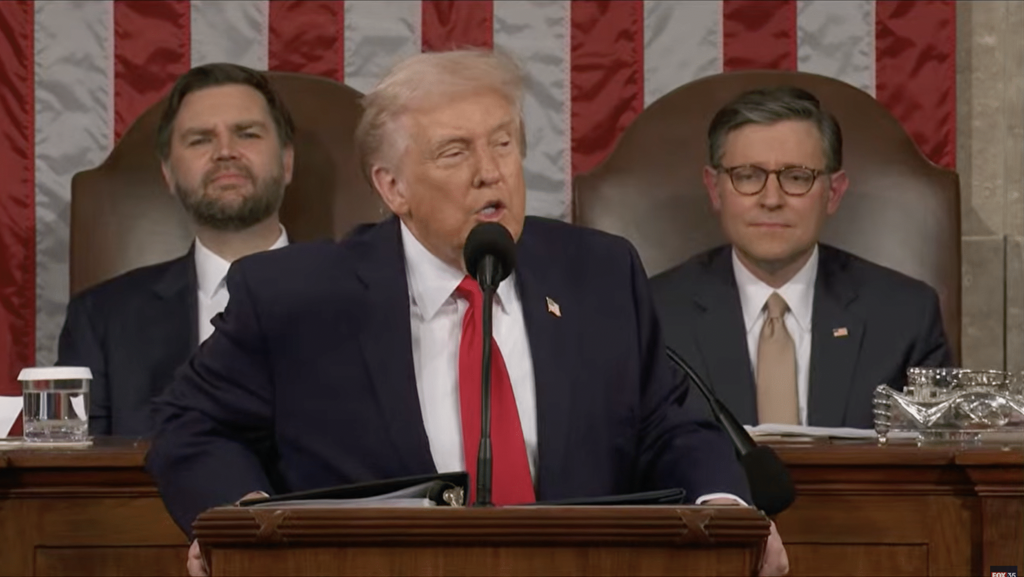
The core tension lies in the differing interpretations of Trump's remarks. Critics have labeled the emphasis on protecting citizens as a "darker" turn in his rhetoric, while supporters argue that it reflects a fundamental duty of government. During the address, Trump invited legislators to stand if they agreed with his assertion that the "first duty of the American government is to protect American citizens, not illegal aliens." This call for a show of hands was a notable moment in the speech, as it aimed to visually demonstrate the divide among lawmakers on this contentious issue.
As Trump made this statement, Republican lawmakers stood and applauded, while many Democrats remained seated, highlighting the stark partisan divide on the issue of immigration and citizen protection. Isaac Arnsdorf of The Washington Post noted that this moment marked a significant change in the tone of the address, stating, "Until that point, Trump largely stuck to a positive message. Then he asked for a demonstration to show the television audience where everyone stood — or sat." This shift in tone has been interpreted by some as a strategic move to rally his base while alienating opponents.
Partisan Responses
Arnsdorf described the shift as a move from a tone reminiscent of Ronald Reagan to one that returned to the "darker territory of partisan barbs and graphic descriptions of violence." Critics argue that such rhetoric can deepen divisions and foster a hostile political environment, potentially exacerbating tensions between different political groups. They express concern that focusing on a narrative that prioritizes citizens over immigrants may lead to increased polarization and a lack of constructive dialogue on immigration reform.
Supporters of Trump’s stance, however, contend that prioritizing the safety of American citizens is a legitimate and necessary focus for any government. They argue that the government should prioritize its citizens' needs, especially in light of ongoing discussions about immigration policy and national security. This perspective resonates with a segment of the population that feels that their safety and interests are being overlooked in favor of accommodating unauthorized immigrants.
Historical Context
The sentiment expressed by Trump is not new in American political discourse. Former President Jimmy Carter articulated a similar view in a 1978 speech, stating, "the first duty of a government is to protect its own citizens." This perspective aligns with historical documents such as the Progressive Party Platform of 1912, which emphasized that the country belongs to its inhabitants and should serve their interests. These historical references suggest that the principle of prioritizing citizens is a longstanding aspect of American governance.
Furthermore, Thomas Jefferson's Declaration of Independence underscores the idea that governments exist to secure the rights of their citizens. This foundational belief has influenced American political thought throughout history and continues to resonate in contemporary discussions about the role of government in protecting its populace.
Conclusion
While Trump's remarks have drawn criticism for their tone, they also resonate with a segment of the population that believes in a strong focus on national security and citizen protection. As the political landscape continues to evolve, the implications of such statements will likely remain a point of contention among lawmakers and the public alike. The differing reactions to Trump's address reflect broader debates about immigration, national security, and the role of government, indicating that these issues will continue to shape political discourse in the lead-up to future elections. The ongoing dialogue surrounding these topics will be crucial as the nation navigates its complex relationship with immigration and the responsibilities of government to its citizens.