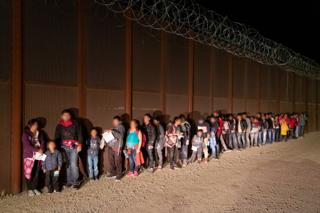
Spain's Prime Minister Pedro Sánchez has announced a significant plan to grant amnesty to approximately 500,000 unauthorized immigrants currently residing in the country. This move has ignited considerable debate regarding its implications for national identity, economic stability, and social cohesion. Critics of the policy argue that it prioritizes the interests of foreigners over those of native citizens, while supporters contend that it is a necessary step to address pressing demographic challenges and economic needs that Spain faces today.
The announcement comes as Sánchez frames the amnesty as a moral obligation, drawing historical parallels between Spanish emigrants who sought better opportunities abroad in the past and the current migrants entering Spain. He stated, "It is our duty to become the welcoming and tolerant society that our own relatives would have hoped to find on the other side of our borders." However, critics question the validity of this comparison, arguing that it overlooks the responsibilities the government has to its own citizens and the potential consequences of such a policy.
Economic Arguments
Sánchez has also argued that Western nations, including Spain, face a demographic decline that could threaten economic growth and the sustainability of public services. He claims that without accepting mass migration, countries risk stagnation in their gross domestic product (GDP) and deterioration of essential public services, such as healthcare and pension systems. He emphasized, "The only way to avoid decline is to accept mass migration and integrate migrant groups as much as possible."
However, some experts caution against the potential pitfalls of creating a low-wage underclass to fill labor shortages. Critics assert that relying on unauthorized immigrants for essential services could undermine social cohesion and lead to long-term instability within society. They argue that such policies may create divisions and foster resentment among native citizens, particularly if they perceive that their needs and rights are being sidelined in favor of newcomers.
National Identity Concerns
The amnesty announcement has raised alarms about the potential erosion of national identity in Spain. Critics argue that if citizenship becomes merely a matter of physical presence, it risks diluting the cultural and historical fabric of the nation. John Daniel Davidson, a senior editor at The Federalist, expressed concerns that the policy could lead to a fragmented society, stating, "If all it means to be a Spaniard is that you are physically present in that country, then national identity becomes fungible."
In response to the criticism, some politicians have openly supported the idea of demographic change. Irene Montero, a former Minister of Equality and member of the far-left Podemos Party, was recently quoted saying, "Of course I hope for replacement theory. I hope we can sweep this country of fascists and racists with immigrants." This perspective has further fueled the debate over the implications of the amnesty policy, raising questions about the balance between integration and the preservation of national identity.
Broader Implications
The broader implications of this policy extend beyond Spain, as similar debates unfold across Europe regarding immigration and national identity. Critics argue that the trend toward mass amnesty and migration could lead to a shift away from representative governance toward a more imperial-style administration, where different groups are managed under varying rules. This raises significant questions about the future of democratic institutions and the concept of national sovereignty in the face of changing demographics.
While supporters of the amnesty have not publicly responded to the criticisms, the debate continues to evolve as the government prepares to implement this policy. The potential for increased migration flows into Spain following the announcement adds another layer of complexity to the situation, as many unauthorized immigrants may view this as an opportunity to seek legal status.
As Spain navigates these contentious issues, the outcome of this amnesty plan could have lasting effects on the nation's social fabric, economic landscape, and political climate. The ongoing discourse reflects a broader struggle within Europe to balance the needs of its citizens with the realities of a changing demographic landscape. The government's approach to this situation will likely set a precedent for how similar issues are handled in the future, both in Spain and across the continent.