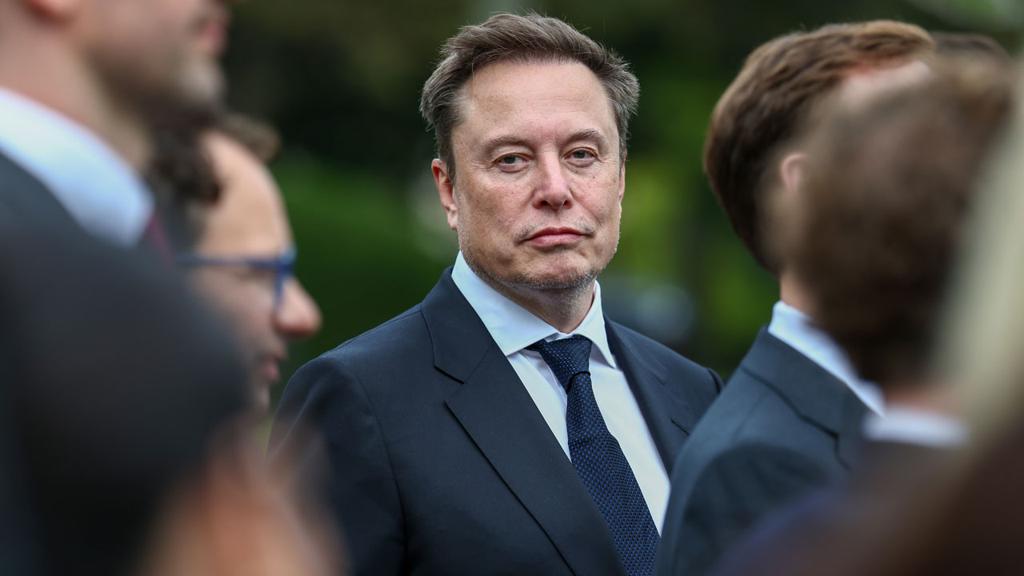
Nonprofit groups that organized a protest outside Elon Musk’s Texas compound received more than $10 million in taxpayer-funded grants, according to IRS records and state contract data. The demonstration, held four days after the midterm elections, targeted Musk’s political spending and drew about 60 protesters, many arriving by chartered bus.
Explainer Understanding Midterm Elections: Voter Trends, Security, and GOP Strategy
The core issue centers on whether public funds awarded to these organizations for harm-reduction and community programs could indirectly subsidize political activity, despite legal restrictions on such use.
The protest was led by the Texas chapter of Voices for Community Activists and Leaders (VOCAL), a Brooklyn-based nonprofit, and the Center for Popular Democracy, now known as Popular Democracy. Both organizations have received significant government funding in recent years. IRS filings show VOCAL was awarded $10.1 million in government grants from 2018 to 2024, including contracts from the New York State Department of Health for harm-reduction services such as needle exchanges and hepatitis C testing. One contract, valued at $381,000, runs through September 2025, with a subsequent contract for the same amount extending to September 2027, according to state records.
Popular Democracy reported $545,000 in government grants in 2023, including a $200,000 grant from the New York State Office of Children and Family Services. In 2024, it secured a two-year, $400,000 grant for an initiative supporting Puerto Rican communities displaced by climate disasters. The group also received a $1.93 million Paycheck Protection Program loan in 2020.
Details of the Musk Protest
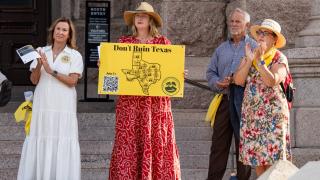
On November 7, protesters representing VOCAL’s Texas chapter, Popular Democracy, and People’s Action Institute staged a satirical demonstration outside Musk’s compound. The event featured a conga line, a Tesla Cybertruck piñata, and signs accusing Musk of “stealing” from the public. JJ Ramirez, an organizer for VOCAL Texas, told FOX 29 San Antonio the protest was meant to show that billionaires "can’t buy our elections."
"Given the fungibility of money, funds given to a group for one purpose can potentially end up indirectly subsidizing others. But the same problem arises anytime the government contracts with any group for anything, and that contractor engages in lobbying or political speech."
— Ilya Somin, law professor at George Mason University
The demonstration followed reports that Musk contributed $445 million to Republican candidates and political groups, the largest sum by any individual donor in the cycle, according to OpenSecrets.
Legal and Grant Oversight Questions
Federal law prohibits 501(c)(3) charities from engaging in political campaign activity, but nonprofit law experts told The Center Square the protest did not appear to violate these rules. Philip Hackney, a University of Pittsburgh law professor and former IRS attorney, said the event’s timing—after the election—meant no candidate was actively campaigning. Lloyd Hitoshi Mayer, a Notre Dame Law School professor, noted that whether grant conditions were breached would depend on the specific terms and whether public funds were used for the protest. He added that agencies are generally required to ensure government funds are spent as intended, but oversight measures vary.
VOCAL’s harm-reduction programs, as described in federal filings, focus on providing services to people who use drugs, including needle exchanges and outreach, without requiring abstinence. The organization’s mission, according to its website, is to build power among low-income people affected by HIV/AIDS, drug use, mass incarceration, and homelessness.
Responses and Funding Sources
Neither VOCAL Texas nor Popular Democracy responded to requests for comment about their participation in the protest or the use of government funds. The New York State Department of Health and the Office of Children and Family Services also did not respond to questions about grant oversight or awareness of the groups’ protest activities. Tesla and SpaceX, both run by Musk, did not immediately comment.
In addition to government grants, both groups have received funding from the Open Society network, supported by billionaire George Soros. According to the New York Post, VOCAL has received $1.7 million from Soros-backed sources since 2016. Popular Democracy’s lobbying arm received $500,000 in 2016 from the Open Society Foundation’s lobbying entity for advocacy on economic opportunity and $205,000 for efforts against anti-Muslim sentiment.
The Center Square reported it requested grant documents from New York officials but had not received them by publication time.