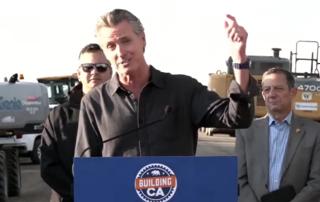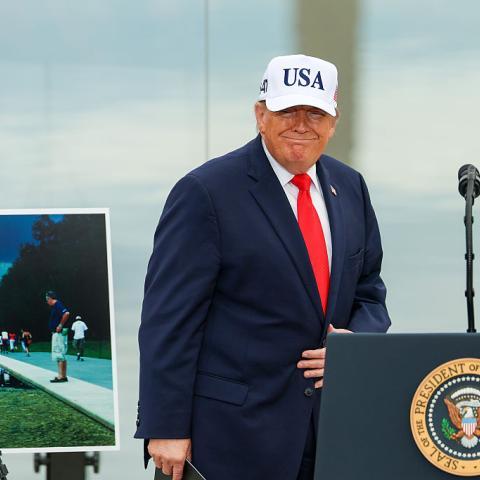
President Donald Trump has sharply criticized California Governor Gavin Newsom for his decision to pause the death penalty for the state's death row inmates, describing the move as a "disaster for Justice in America." The decision, which affects 563 inmates currently on California's death row, has reignited a longstanding debate over capital punishment in the state and drawn national attention due to California's large death row population and history of legal and political battles over the issue.
Explainer California Elections: Low Turnout, Vote Counting Controversies, and Political Implications
Trump’s Criticism of Newsom
President Trump accused Governor Newsom of being "incompetent and insensitive" for blocking executions. Trump argued that the governor's decision undermines the legal process and devastates the families of victims. He emphasized that some of the inmates affected by the pause are, in his words, "the worst cold blooded murderers to have ever lived."
In a statement, Trump wrote, "Many of these names, people who have killed, over and over again, can’t believe their luck in having a Governor so incompetent and insensitive that he would not let the long and winding legal system prevail. The family members of those who were so viciously killed are, rightfully, devastated. Hopefully this decision will be overturned!"
Trump's remarks reflect his broader stance in favor of the death penalty and his belief that halting executions sends the wrong message to both victims' families and the public. He called for Newsom's decision to be reversed, arguing that it denies justice to those affected by violent crimes.
Impact on Death Row Inmates
Governor Newsom's action to pause executions applies to all 563 inmates currently on California's death row. While the move suspends executions, it does not alter the sentences that have already been handed down by the courts. The legal process for capital cases in California is known for being lengthy, with executions rarely carried out in recent decades. In fact, California has not executed an inmate since 2006, due in part to ongoing legal challenges and concerns about the methods used for lethal injection.
Trump described the group of inmates affected by the pause as including "some of the worst cold blooded murderers to have ever lived." The governor's decision means that, for now, no executions will take place, even though the death penalty remains on the books in California. This has led to frustration among some victims' families and supporters of capital punishment, who argue that the legal process should be allowed to proceed to its conclusion.
Broader Reactions and Context
Supporters of Governor Newsom's decision have not issued a public response to President Trump's criticism, and the governor's office did not immediately address the remarks. However, the move to halt executions is consistent with Newsom's previously stated opposition to the death penalty. He has argued that the system is costly, ineffective, and prone to errors, and that it does not serve as a deterrent to crime.
California's death penalty has been the subject of repeated legal challenges and political debate for decades. Previous governors have also faced pressure from both supporters and opponents of capital punishment. In recent years, voters in California have been asked to weigh in on the issue through statewide ballot measures, with mixed results. While some measures to repeal the death penalty have failed, others aimed at speeding up the process have also faced legal obstacles.
Trump's comments add to the ongoing national discussion over the role of the death penalty in the criminal justice system, particularly in states with large death row populations like California. The debate touches on issues of justice, fairness, and the effectiveness of capital punishment as a deterrent. As California continues to grapple with these questions, the governor's decision and the response from national figures like President Trump highlight the deep divisions that remain over the future of the death penalty in the United States.
The controversy over Newsom's pause on executions is likely to continue, as lawmakers, advocates, and the public debate the merits and drawbacks of capital punishment. For now, the state's death row inmates will remain in limbo, with their sentences unchanged but their executions on hold, as California's leaders and citizens consider the next steps in this complex and emotionally charged issue.