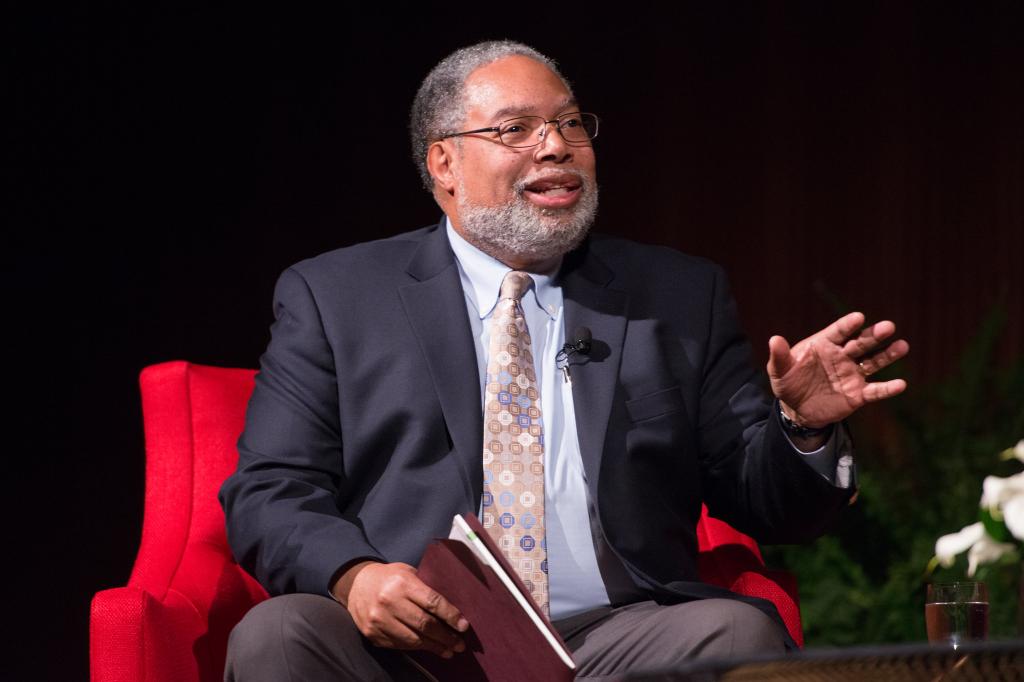
Lonnie Bunch, secretary of the Smithsonian Institution since 2019, announced Tuesday that he will step down by the end of the year, concluding a nearly four-decade career at the nation’s largest museum complex. Bunch, who previously served as the founding director of the Smithsonian’s National Museum of African American History and Culture, has been at the center of ongoing debates about the Smithsonian’s approach to American history and social issues during his leadership.
The announcement comes amid intensifying national discussions over how American history is presented in public institutions. Critics have alleged that the Smithsonian has shifted toward politicized narratives, while supporters argue that the institution is fulfilling its educational mission by presenting a more comprehensive view of the nation’s past.
During Bunch’s tenure, the Smithsonian expanded its exhibits and programming to include topics related to race, gender, and social justice. These efforts have drawn both praise and criticism. Some conservative commentators and academics have accused the institution of promoting what they describe as anti-American perspectives. For example, the National Museum of American History, under director Anthea Hartig, has included land acknowledgments and exhibits addressing the treatment of American Indians. One such exhibit features a video titled “The Indian Problem,” which asserts that the U.S. government committed genocide against Native Americans.
Smithsonian-Zinn Education Project Partnership
The Smithsonian has also collaborated with the Zinn Education Project, an organization known for its critical approach to U.S. history. Through this partnership, the Smithsonian has hosted teacher “teach-ins” and continuing education sessions focused on re-examining historical narratives. The Zinn Education Project has advocated for replacing Columbus Day with Indigenous Peoples’ Day, a change that has gained traction at various levels of government. President Joe Biden has issued annual proclamations recognizing Indigenous Peoples’ Day, according to the Associated Press.
Exhibits Addressing Social Issues
Other Smithsonian museums have addressed a range of contemporary social issues in their exhibits. The Museum of African Art, for instance, displayed works referencing the “national racial reckoning” and included figures such as George Floyd and Che Guevara. The Museum of Natural History examined how cell phone footage has influenced social justice movements, while the Museum of Asian Art presented photography exploring gender and cultural identity.
Supporters of Bunch’s leadership argue that the Smithsonian’s mission includes presenting a comprehensive and sometimes challenging view of American history. They contend that the institution’s exhibits are intended to provide nuanced and inclusive accounts, rather than promote any particular political agenda. Supreme Court Chief Justice John Roberts, who serves as chancellor of the Smithsonian by law, praised Bunch’s leadership in a statement, saying, “Secretary Bunch has pursued excellence in the telling of our nation’s story. The Regents, and the Smithsonian, have benefited greatly from his wisdom, vision and leadership.”
“Secretary Bunch has pursued excellence in the telling of our nation’s story. The Regents, and the Smithsonian, have benefited greatly from his wisdom, vision and leadership.”
— John Roberts, Supreme Court Chief Justice and Smithsonian chancellor
The Trump administration, expressing concerns about the Smithsonian’s direction, launched efforts to refocus the institution on what it described as its founding mission to “increase and diffuse knowledge among men.” A White House fact sheet detailed initiatives aimed at promoting what it called “truth and sanity” in American history education, including at federal cultural institutions such as the Smithsonian.
Matthew Spalding of Hillsdale College, testifying before Congress, argued that Smithsonian officials had “killed America’s story” by emphasizing critical perspectives. Spalding stated, “Each generation should be equipped with a knowledge of America’s principles and history, a reverence for their liberties, and a reflective love of their country.”
While critics have accused the Smithsonian of advancing left-leaning narratives, officials and supporters maintain that the institution’s exhibits are designed to reflect the complexity of American history and society. They argue that presenting a fuller picture, including difficult or controversial topics, is essential to the Smithsonian’s educational mission.
Smithsonian representatives did not immediately respond to requests for further comment regarding Bunch’s resignation or the ongoing debates about the institution’s direction.
Bunch is expected to depart the Smithsonian by the end of the year. The Board of Regents, which oversees the institution, will be responsible for selecting his successor. The transition comes at a time when the Smithsonian’s role in shaping public understanding of American history remains a subject of national conversation and scrutiny.