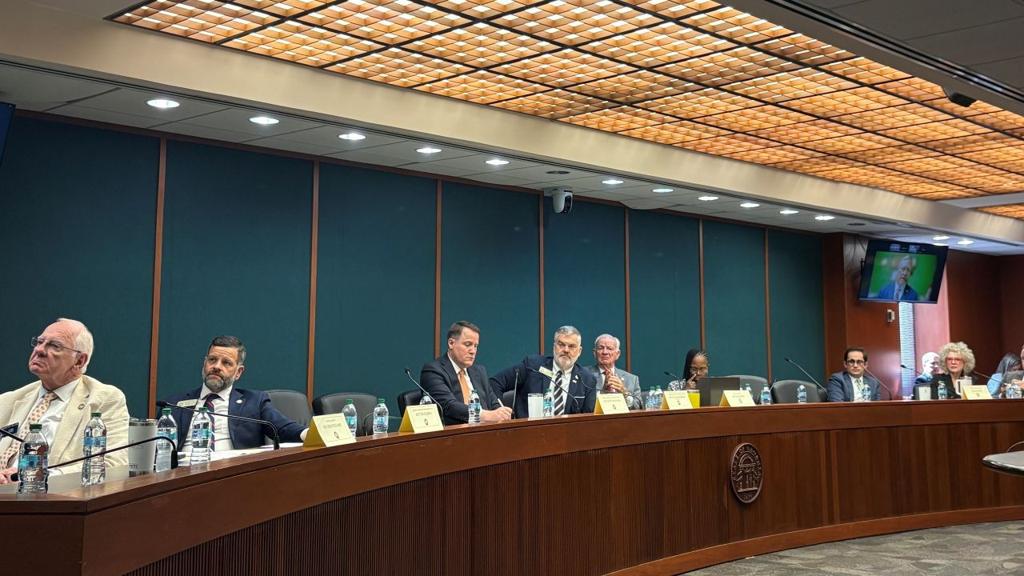
Georgia lawmakers are considering significant changes to the state’s voting system, as the Joint Election Equipment Specifications and Standards Committee met Thursday at the Statehouse to hear expert testimony and public input. The committee’s focus centers on evaluating ballot-on-demand technology, cybersecurity, and accessibility for Latino and disabled voters, as part of a broader effort to ensure Georgia’s elections are secure, efficient, and inclusive.
Explainer Georgia Election Reforms: Security, Controversies, and the Road Ahead
The committee is tasked with determining whether to recommend upgrades to the current voting infrastructure or to pursue a complete system replacement. This review comes amid ongoing scrutiny of Georgia’s election processes, with both advocates and officials emphasizing the need for any new system to address the requirements of diverse voters and comply with state and federal laws.
Testimony on Voting Technology
During the hearing, Rebecca Anglin, elections director for Greene County, underscored the importance of a comprehensive approach. She told lawmakers that a successful voting system must address every stage of the process, from voter check-in to ballot tabulation and reporting. Anglin relayed feedback from county officials, noting that ballot-on-demand systems and full-faced ballot-marking devices are “a viable path forward for consideration.”
Kelvin Williams, acting elections supervisor for Gwinnett County, urged the committee to carefully evaluate whether existing hardware could be upgraded and retained, rather than replaced entirely. “We recommend careful evaluation of whether existing hardware and components can be upgraded and retained rather than discarded for a complete replacement,” Williams said, highlighting concerns about cost and continuity.
Chris Channell, director of Glynn County elections, brought attention to cybersecurity, which he described as the top concern among his colleagues. He cited survey results from election officials and referenced the Halderman Report, which found that, given unlimited time and access—including keys and passwords—potential vulnerabilities in voting systems could be identified. Channell’s remarks emphasized the need for robust security measures, regardless of the system chosen.
Paul Lux, supervisor of elections in Okaloosa County, Florida, shared insights from his experience with ballot-on-demand technology. He explained that ballots can be printed in about 30 seconds at check-in, streamlining the process and reducing the need for pre-printed ballots. John Cronin, elections services manager for Virginia, added that most ballots in his state are hand-marked, and that recent legislative changes have expanded the definition of voting systems to include ballot-on-demand devices. These perspectives provided lawmakers with examples of how other states are modernizing their voting processes.
Accessibility and Language Access
The committee’s afternoon session shifted focus to accessibility for voters with disabilities and language minorities. Lanona Jones of the Rev Up Georgia Coalition and Jessica Mathis stressed the importance of electronic ballot-marking devices, which can help ensure that disabled voters are able to cast their ballots independently and privately. Their testimony highlighted the need for accessible technology to be a core component of any new system.
Dr. Anar Parikh of Asian Americans Advancing Justice-Atlanta called on lawmakers to expand language access, describing it as “a cornerstone of our voting rights.” Parikh’s remarks reflected concerns that language barriers can prevent eligible voters from fully participating in elections, and urged the committee to consider solutions that would make ballots and instructions available in multiple languages.
AJ Link, a disability justice advocate, and Shun Tucker-Allen of New Disabled South, advocated for the inclusion of curbside voting options, which can provide greater flexibility and independence for voters with mobility challenges. Nicolas Bernal of Latino Justice PRLDEF pressed for new equipment specifications to require “the complete voter-facing ballot interface to be available in multiple languages,” reinforcing the call for inclusivity in the voting process.
State Rep. Victor Anderson acknowledged the progress made by Georgia’s current system, stating, “We have a system that was, for the most part, considered to be fairly successful at addressing a lot of the needs now. As we develop plans for whatever this next system looks like, we’ll just have to make sure that those same principles are brought forward to it, and that we continue to provide services.”
Lawmakers’ Responses and Next Steps
Lawmakers on the committee indicated that accessibility and inclusivity would remain central to their recommendations. State Sen. Max Burns told reporters that ensuring access for voters with disabilities will be “an integral part of the specification requirements.” Rep. Anderson echoed that the current system has addressed many needs, but emphasized the importance of carrying those principles forward as Georgia considers changes.
The committee’s work is ongoing. Members are expected to continue gathering input from election officials, advocates, and the public before making a formal recommendation on the specifications and standards for Georgia’s next uniform voting system. The outcome could shape how millions of Georgians cast their ballots in future elections, as lawmakers seek to balance security, efficiency, and equal access for all eligible voters.