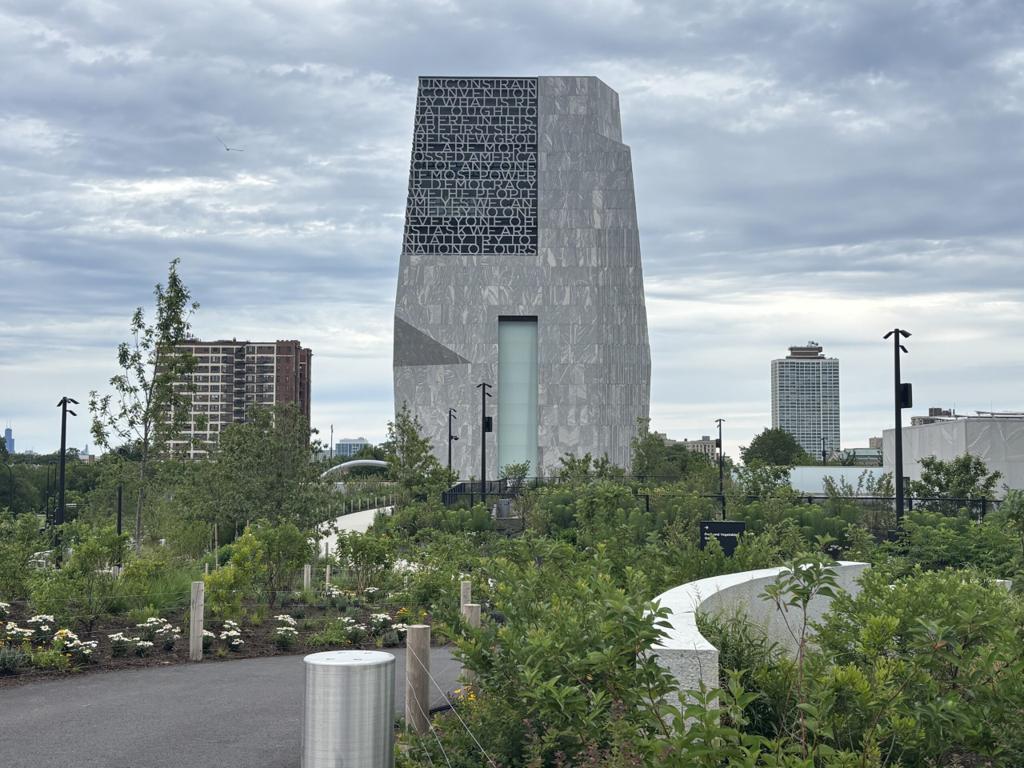
The Obama Presidential Center in Chicago has opened to mixed reviews, with critics describing its design as unremarkable and its impact on the surrounding community as limited. The center, which is not a traditional library, has been characterized by some as a bland architectural statement that fails to resonate with its environment.
The core tension surrounding the center lies in its ambitious goals versus its perceived shortcomings, particularly in fostering community engagement and enhancing the neighborhood. Critics argue that the center's design and location do not contribute meaningfully to the Hyde Park area, while supporters maintain that it represents a significant cultural investment.
The center occupies a 19-acre site in a park that includes amenities such as playgrounds and walking paths. However, some observers note that the area lacks vibrant commercial activity, which diminishes the potential for community interaction. Chris Bray, a senior correspondent at The Federalist, described the building as a “brutalist stub” that blends into a landscape of similar structures, stating, "It’s ugly, but it’s a brutalist stub of a building in Chicago."
Design Critiques
Critics have taken to social media to express their discontent with the center's architectural style, likening it to a “hideously ugly” structure. Bray remarked that the building's features, such as a long white translucent window and an overhanging notch, leave visitors questioning its design intent. "I spent several hours here today, and I dunno," he wrote, reflecting a sense of confusion about the building's purpose.
The center's design has been described as lacking coherence, with Bray noting that it feels like a “monument to midwittery,” filled with references to cultural and historical figures. This sentiment has been echoed by others who feel that the center does not live up to the legacy of Barack Obama, who is known for his eloquence and vision.
Community Engagement
Despite the criticism, the Obama Foundation has reported high interest in the center, with tickets for the museum sold out for months. However, Bray pointed out that the center inhabits an “urban dead zone,” suggesting that visitors may struggle to find dining or shopping options nearby. He noted, "If you don’t get lunch or a cup of coffee inside the Obama Center, you’re not getting lunch or a cup of coffee."
Supporters of the center argue that it has the potential to become a cultural hub, fostering community engagement over time. They emphasize that the center is still in its early stages and that its impact may evolve as more people visit and utilize its facilities.
Future Prospects
The Obama Presidential Center includes various spaces named after notable figures, such as the Nelson Mandela Sky Room and the Oprah Winfrey Courtyard. While these names may resonate with some, critics argue that they do not compensate for the center's perceived lack of substance. Bray remarked on the experience of visiting the Sky Room, stating, "When you visit this view, you’re in the Nelson Mandela Sky Room."
As the center continues to attract visitors, it remains to be seen how it will integrate into the local community and whether it will fulfill its promise as a transformative space. The Obama Foundation has not publicly addressed the criticisms raised by Bray and others, leaving some questions about the center's future impact unanswered.
In summary, the Obama Presidential Center's opening has sparked a debate about its design and community relevance, highlighting the challenges of creating a cultural landmark that resonates with both visitors and local residents.