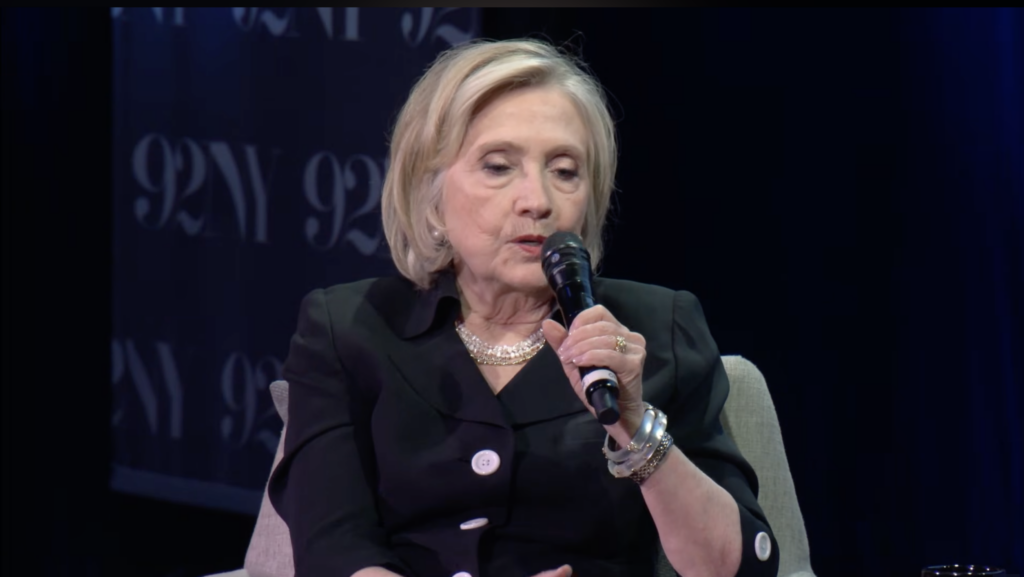
Hillary Clinton has reiterated her criticism of the Electoral College, calling it "an abomination for obvious reasons" in an interview for Netflix’s upcoming docuseries, "The American Experiment," which is set to release on June 24. Clinton's remarks come nearly seven years after her defeat in the 2016 presidential election, where she lost the Electoral College to Donald Trump despite winning the popular vote by nearly 2.9 million votes. This ongoing critique underscores her belief that the Electoral College undermines the democratic principle of representing the will of the people.
Critics of the Electoral College argue that the system disproportionately favors less populous states, which can lead to an imbalance in representation. On the other hand, supporters contend that it ensures a balance of interests across the nation, preventing larger states from dominating the electoral process. In the 2016 election, Clinton secured 227 Electoral College votes compared to Trump’s 304. Her popular vote advantage was largely attributed to high turnout in populous states like California and New York, which have faced scrutiny over the accuracy of their voter rolls. Clinton has previously stated, "In a democracy, we should respect the will of the people," advocating for a shift to a direct popular vote for president.
Clinton's Continued Critique
Clinton's dissatisfaction with the election results has been a recurring theme in her public statements since 2016. In a 2017 interview with CNN, she called for the elimination of the Electoral College, asserting that it needs to be replaced with a system that reflects the popular vote. She has also suggested that foreign interference played a role in her loss, a claim that remains contentious among political analysts and has sparked significant debate regarding the integrity of the electoral process.
In her latest comments, Clinton expressed concern that abolishing the Electoral College would allow candidates to focus solely on populous states, potentially marginalizing the interests of smaller states. "If Clinton and her party succeed in 'abolishing' the Electoral College, then winning California and New York would be all that’s necessary to become president of the entire country," she stated, highlighting the potential implications of such a change on the political landscape and the representation of diverse interests across the nation.
Historical Context of the Electoral College
The Electoral College was established by the framers of the Constitution to balance the influence of populous regions with that of smaller states. Proponents of the system argue that it prevents the "tyranny of the majority," a concern voiced by James Madison in Federalist No. 10. Madison warned that a majority faction could compromise the rights of minority groups, a principle that supporters of the Electoral College believe remains relevant today. This historical context is crucial in understanding the ongoing debate surrounding the Electoral College and its role in American democracy.
Alexander Hamilton also defended the Electoral College, suggesting it serves as a safeguard against potential corruption and intrigue in the electoral process. Critics of Clinton's position argue that her focus on the popular vote overlooks the foundational purpose of the Electoral College, which is to ensure that all states have a voice in presidential elections, thus maintaining a federalist system of governance.
Responses and Perspectives
While Clinton's criticisms have garnered attention, responses from her political opponents and supporters of the Electoral College have been limited. Some experts emphasize the importance of maintaining the current system to ensure that all regions of the country are represented in presidential elections. They argue that changing to a popular vote could lead to candidates ignoring less populated areas, focusing instead on urban centers where the majority of votes are concentrated.
As the debate over the Electoral College continues, Clinton's comments reflect a broader discussion about the electoral process in the United States and the balance between popular will and state representation. Ten years after the 2016 election, her struggle to accept the outcome highlights ongoing divisions within American politics regarding electoral fairness and representation. This enduring discourse illustrates the complexities of American democracy and the challenges of reconciling differing perspectives on how best to represent the electorate.