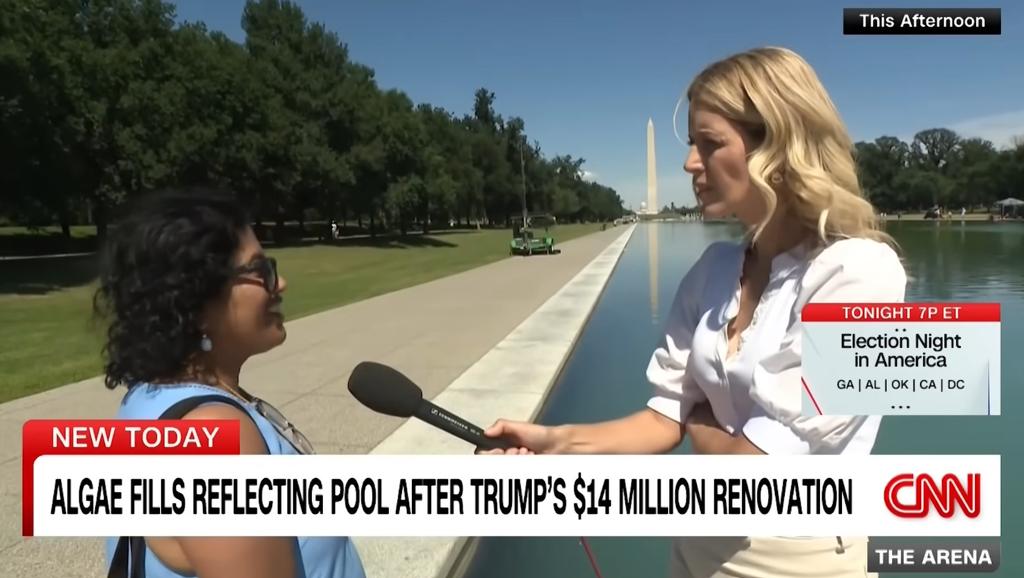
Media outlets have intensified their coverage of algae blooms in the Lincoln Memorial Reflecting Pool, drawing criticism for prioritizing this story over more pressing national issues. Critics argue that the focus on algae highlights a broader trend of corporate media neglecting serious topics such as crime, homelessness, and environmental crises.
The algae blooms have become a focal point for major networks, including CNN and ABC, which have dedicated extensive resources to reporting on the issue. This has raised concerns among some observers who believe that the media's attention to the algae situation serves to undermine efforts to improve the nation's capital, particularly following a $14 million renovation of the reflecting pool.
The Department of the Interior, which oversees the maintenance of the pool, noted that algae problems have been a recurring issue since the pool's opening in 1922. "Algae has plagued every Lincoln Reflecting Pool reopening — most infamously Obama’s reopening — since 1922," a spokesperson stated. Despite this historical context, the current media coverage has been characterized as excessive, especially when compared to the relative silence surrounding other significant environmental incidents.
Lack of Coverage on Major Environmental Issues
In January, one of the largest sewage spills in U.S. history occurred when an estimated 200 to 300 million gallons of untreated sewage entered the Potomac River, located just a short distance from the Lincoln Memorial. This incident resulted in E. coli levels that were 12,000 times above safe limits. However, media coverage of the spill was limited, with CNN initially providing only a brief Associated Press wire report and a short segment on a talk show.
Critics have pointed out that the lack of extensive coverage may be linked to the political affiliations of those involved in the spill. Maryland Governor Wes Moore and Washington, D.C. Mayor Muriel Bowser, both Democrats, were in positions of responsibility during the incident. Some commentators suggest that this political context may have influenced the media's decision to downplay the story.
Broader Implications for Media Coverage
The disparity in media focus raises questions about the priorities of major news organizations. Observers have noted that while algae blooms receive significant attention, issues such as crime and homelessness in major cities often receive minimal coverage. For instance, when former President Donald Trump deployed the National Guard to address rising crime rates in D.C., many journalists and political commentators dismissed the situation as exaggerated.
Independent journalist Nick Shirley recently uncovered billions of dollars in fraud within the American welfare system, a story that went largely unreported by larger media outlets. This has led to speculation about whether corporate media are failing to investigate critical issues due to a lack of interest or potential bias.
"They are either complicit, do not care, or both," remarked one critic regarding the media's handling of significant national crises.
Response from Media Outlets
While the focus on algae blooms has drawn criticism, media representatives have not publicly addressed the concerns raised about their coverage priorities. The Department of the Interior has stated that treatments for the algae issue are being implemented, suggesting that the situation will be resolved quickly. This could explain the urgency in media coverage, as outlets may seek to capitalize on the story while it remains relevant.
As the algae issue continues to unfold, the debate over media priorities is likely to persist. Critics argue that a more balanced approach to reporting is necessary to ensure that significant national issues receive the attention they deserve, rather than being overshadowed by less critical stories.
In conclusion, the media's focus on the algae blooms at the Lincoln Memorial Reflecting Pool has sparked a broader conversation about coverage priorities and the responsibility of news organizations to address pressing national issues. As the situation develops, it remains to be seen whether media outlets will adjust their focus to include more substantial stories that impact the American public.