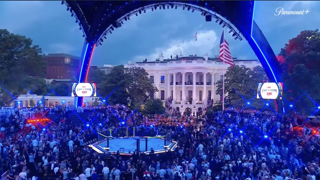
Newsweek has published a report questioning whether the outfits designed for the UFC’s Octagon Girls, which are set to debut at a White House event celebrating America’s 250th birthday, violate the U.S. Flag Code. The article, written by Alice Gibbs, highlights claims from unnamed critics who argue that the outfits may clash with longstanding flag etiquette. This scrutiny comes at a time when the UFC is aiming to celebrate American culture, yet it faces criticism regarding the appropriateness of the designs.
Explainer Free Speech Battles: Navigating Rights and Censorship in Modern Society
The core tension arises from the juxtaposition of patriotic expression and adherence to flag protocol. Critics assert that the outfits, which feature sequined red, white, and blue colors, could be seen as disrespectful to the flag. Despite the UFC's intent to blend sport, spectacle, and celebration, the designs have sparked debate about their alignment with national symbols.
In her article, Gibbs notes that the U.S. Flag Code states that the flag "should never be used as wearing apparel, bedding or drapery" and that no part of the flag "should ever be used as a costume or athletic uniform." However, she also acknowledges that the code is not legally enforceable for private citizens, which adds complexity to the discussion. Opinions on the outfits are divided, with some viewing them as a celebration of American pride, while others see potential disrespect.
UFC's Response
The UFC has not publicly addressed the criticism regarding the outfits. Supporters of the event argue that the designs are a celebration of American pride rather than a violation of flag etiquette. A UFC spokesperson stated, "We aim to honor the spirit of America through our events, and these outfits reflect that spirit," emphasizing the celebratory nature of the occasion and the intention behind the designs.
Gibbs's article contrasts sharply with Newsweek's previous coverage of flag burning, which the outlet defended as a form of free speech. In a 2025 newsletter, Isaac Saul acknowledged that many Americans find flag burning offensive but argued that it should be protected under the First Amendment. He stated, "When I see someone desecrating the flag, my emotional, knee-jerk reaction is that I would feel perfectly alright if that person gets punished for it," highlighting the complexity of balancing free expression with respect for national symbols.
The Flag Code Debate
The sudden focus on the U.S. Flag Code by Newsweek has drawn attention from commentators who suggest that the outlet's interest is selective. Critics point out that while the flag code prohibits disrespect toward the flag, the act of burning it in protest has been framed as a constitutional right in previous articles. This inconsistency raises questions about the motivations behind the current scrutiny of the UFC's costumes and whether it reflects a broader political agenda.
In the past, Newsweek has framed flag burning as a matter of constitutional rights, emphasizing the Supreme Court's ruling in Texas v. Johnson, which protects flag burning as free speech. However, the outlet's recent criticism of the UFC's outfits suggests a shift in focus. Some commentators argue that the concern over the costumes is more about political opposition to Trump than genuine adherence to flag etiquette, indicating a potential bias in the coverage.
Public Reaction
Public reaction to the UFC's outfits has been mixed, with some viewers expressing support for the patriotic designs while others echo concerns about potential disrespect. One fan remarked, "I think the outfits are a fun way to celebrate America, and they should be seen as such," indicating a positive reception among some audiences. Conversely, another viewer commented, "It feels like they are trivializing the flag's significance," reflecting the opposing viewpoint.
As the UFC prepares for the event, the debate over the appropriateness of the Octagon Girls' outfits continues to unfold. While some argue that the designs honor the flag, others maintain that they could undermine its dignity. The UFC's decision to proceed with the outfits may further fuel discussions about the intersection of patriotism, free speech, and respect for national symbols, as the nation grapples with its identity and values in a polarized environment.