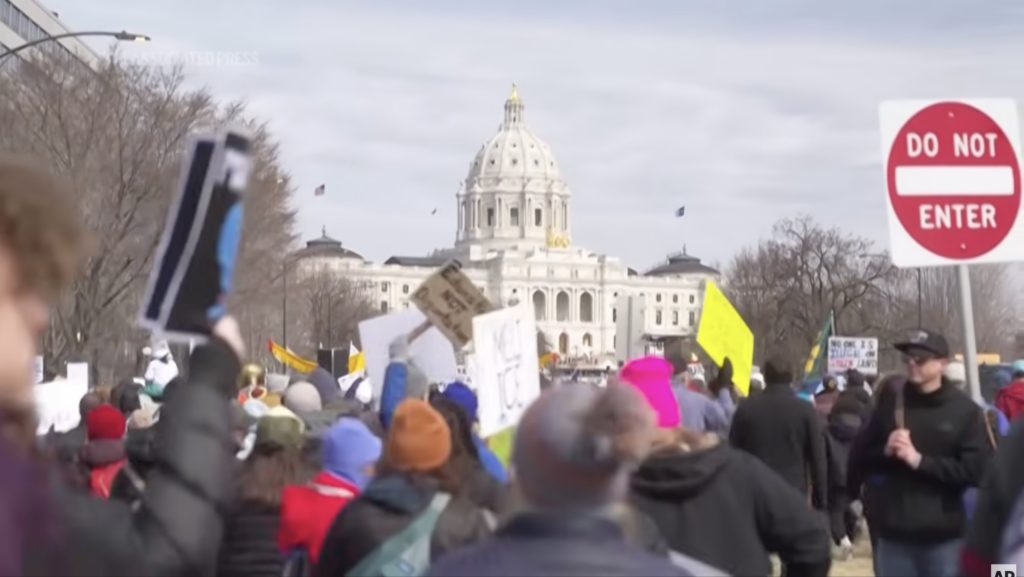
An estimated eight million people participated in nationwide "No Kings" protests over the weekend, with many demonstrators criticizing President Donald Trump as a "dictator" or "tyrant." This significant turnout highlights a mobilized opposition, raising questions about the Republican Party's strategy as the midterm elections approach.
Explainer Election Integrity: Protecting Voter Rights in Modern America
The core tension lies in the stark contrast between the energized protests from the left and the perceived inaction from Republican leaders, who have yet to capitalize on their congressional majority to mobilize voters. Critics argue that the GOP's failure to advance key legislation could dampen voter enthusiasm ahead of the November elections.
The protests, which included over 3,300 events, were largely attended by older, predominantly white individuals expressing their discontent with the current administration. Despite the protests being criticized by some Republicans on social media, the turnout indicates a significant level of engagement among voters who may influence the upcoming elections.
Republican Leaders Absent
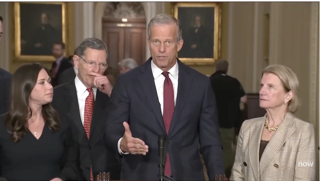
While the opposition was rallying, several Republican senators were notably absent from the political fray. Senator Lindsey Graham of South Carolina was reported to be dining at Disney World, while Senator John Barrasso of Wyoming was seen at Denver Airport. Additionally, Senators Ted Cruz of Texas and John Thune of South Dakota left Washington, D.C., during a critical time when the GOP should be mobilizing its base.
This lack of urgency from Republican leaders comes as the party holds a majority in both chambers of Congress. They have yet to advance the SAVE America Act, which would require proof of citizenship to register to vote and mandate voter ID for federal elections. Both measures have garnered bipartisan support, yet Thune has faced criticism for not taking decisive action to pass the legislation.
"Thune refuses to use a talking filibuster to pass the legislation, which would require no rule changes," noted a source familiar with the situation. Instead, GOP senators are exploring alternative options like reconciliation, which may face significant hurdles.
Asylum Policy Changes
In addition to legislative inaction, Republicans are reportedly scaling back their asylum crackdown. According to CBS News, the Trump administration has lifted the pause on asylum adjudications for most cases, except for those on the president's travel ban list. Officials have framed this move as a reallocation of resources to focus on higher-risk cases, but critics warn it may create the impression that enforcement is weakening.
"While officials frame the move as merely reallocating resources, it risks leaving voters with the impression that enforcement operations are winding down instead of ratcheting up," said a political analyst. This shift could further complicate the GOP's messaging as they approach the midterms.
Challenges Ahead
The Republican-controlled Senate has also struggled to confirm over 50 Trump-appointed nominees, contributing to a perception of inefficiency within the party. Rising gas prices amid ongoing geopolitical tensions add to the challenges facing Republicans as they attempt to rally voter support.
Eddie Scarry from The Federalist emphasized that there is still time for the GOP to turn things around. "The good news is that it’s not too late. The midterms are still eight months from now, and all it takes is a little focus and the will to push Trump’s team and Republicans in Congress to do the work," he stated.
As the midterm elections draw closer, the question remains whether Republican leaders will respond to the urgency of the moment or continue their current trajectory. With the opposition mobilized and key issues at stake, the GOP's strategy will be critical in determining their success at the polls.