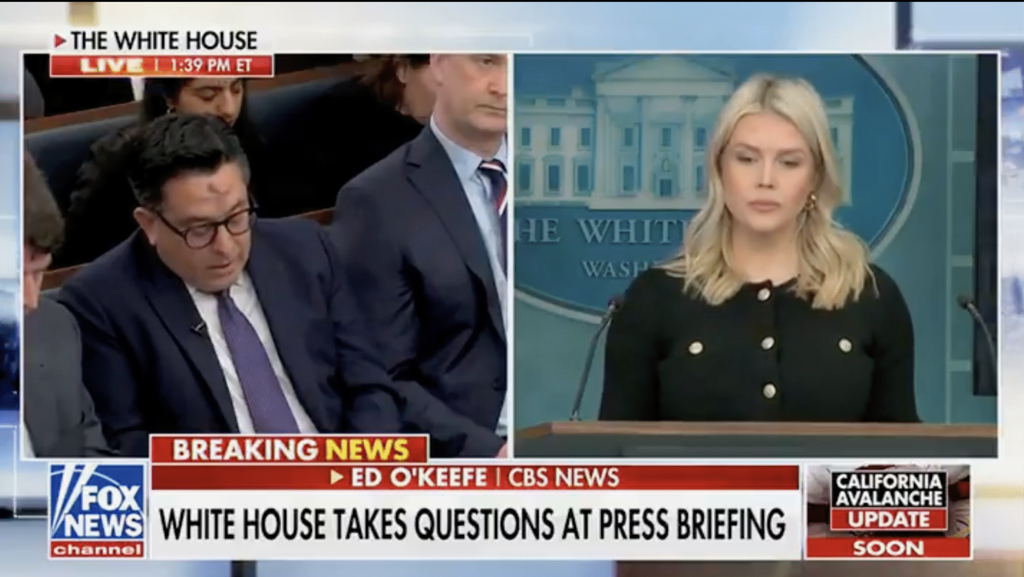
During a White House press briefing on Wednesday, CBS News reporter Ed O'Keefe posed a question to Press Secretary Karoline Leavitt regarding President Donald Trump's assertions that he has been falsely labeled a racist. This inquiry came in the wake of a social media post by Trump, in which he honored civil rights leader Jesse Jackson. In that post, Trump stated he has been "falsely and consistently called a racist by the scoundrels and lunatics on the radical left."
CBS News Reporter Questions White House on Trump's Racism Claims, Press Secretary Responds with Laughter
The exchange between O'Keefe and Leavitt highlighted the ongoing tensions surrounding Trump's rhetoric and the media's portrayal of him. It raised important questions about the accuracy of past accusations against the president. Critics of Trump argue that such labels have been politically motivated, while his supporters contend that these accusations reflect a consistent pattern of behavior that warrants scrutiny.
Background and Reactions
During the briefing, O'Keefe specifically asked, "Where or when does the President believe he has been falsely called racist?" Leavitt's response was, "You are kidding, right?" This reaction prompted laughter from the assembled reporters, indicating a shared skepticism about the premise of O'Keefe's question. The laughter may also reflect a broader frustration with the ongoing debate surrounding Trump's rhetoric and the media's role in that discourse.
The incident underscores a larger narrative about the media's relationship with Trump. In the past, CBS News has reported on various accusations against Trump regarding racial tensions. For instance, a 2019 report claimed he had a "history of inflaming racial tensions." This report referenced Trump's controversial comments following the 2017 Charlottesville rally, where he stated there were "very fine people on both sides." This statement has been widely criticized and interpreted in various ways, contributing to the ongoing debate about Trump's comments and their implications.
Supporters of Trump argue that the media has misrepresented his comments, suggesting that important context is often omitted. They assert that Trump's remarks about certain congresswomen were not racist but rather critiques of their policies and backgrounds. This perspective highlights the complexity of the discourse surrounding Trump's statements and the differing interpretations that arise from them.
In a separate instance, O'Keefe himself reported on the backlash Trump faced for his comments. He noted that despite the criticism, Trump's supporters remained steadfast. In a tweet, he stated, "WATCH: Democrats strike back at Trump’s racist tweets while his supporters stand by him." This acknowledgment of divided opinions illustrates the intricate dynamics at play in the public's response to Trump's rhetoric.
The laughter from the press corps during O'Keefe's question may reflect a growing frustration with the ongoing debate over Trump's rhetoric. Many journalists have faced scrutiny for their reporting on the president, with accusations of bias coming from both sides of the political spectrum. While some media outlets have been criticized for their portrayal of Trump, others defend their coverage as necessary to hold public figures accountable.
The White House press briefing serves as a platform for these discussions, where questions about the president's statements can lead to broader conversations about race and politics in America. As the 2024 presidential election approaches, the dynamics between the media, the White House, and Trump's supporters are likely to remain contentious. The exchange between O'Keefe and Leavitt illustrates the challenges reporters face in navigating this complex landscape.
In summary, the incident highlights the ongoing debate over Trump's comments and the media's role in shaping public perception. While some view the media's coverage as biased, others argue it is essential for transparency and accountability in government. As the political climate evolves, the interactions between journalists and officials will continue to be scrutinized, reflecting the deep divisions within American society regarding race and politics.