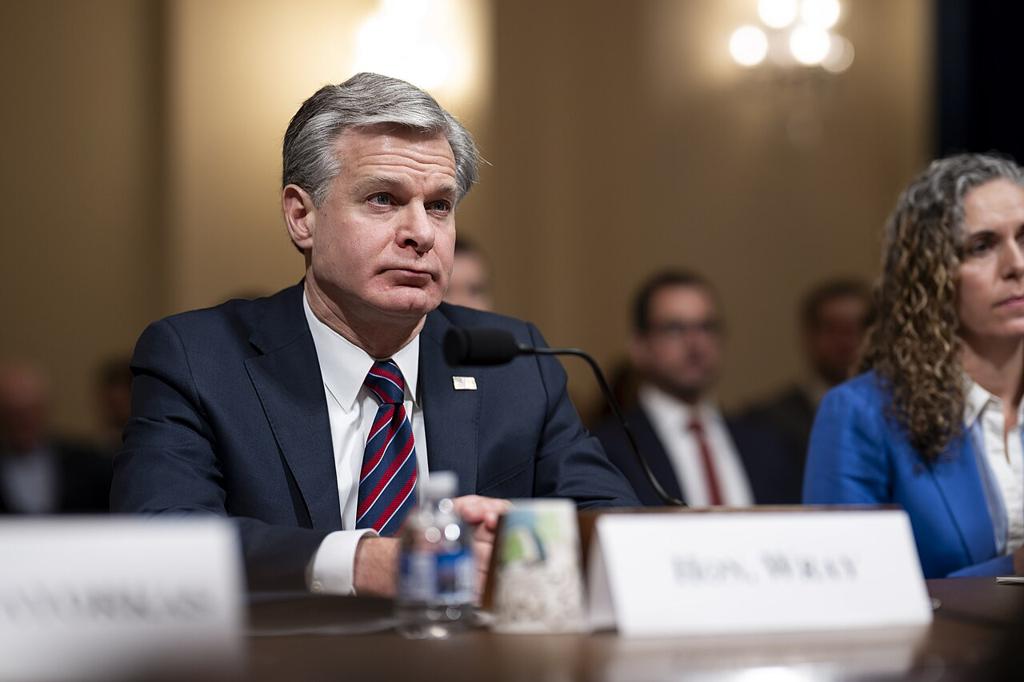
A government watchdog group has formally filed a bar complaint against former FBI Director Christopher Wray. This complaint alleges his involvement in the Biden administration's Arctic Frost investigation, which focused on Donald Trump and his associates. The complaint was submitted to the D.C. Bar and seeks an inquiry into Wray's actions, specifically examining potential violations of professional conduct rules that govern attorneys in the district.
Watchdog Files Bar Complaint Against Wray Over Arctic Frost Role
The complaint raises significant questions about the integrity of the investigative process. It particularly scrutinizes whether Wray's oversight contributed to the political targeting of Trump and his allies. Critics of the Arctic Frost probe argue that it was politically motivated, while supporters maintain that the investigation was necessary to uphold the rule of law and ensure accountability.
Background and Reactions
The Center to Advance Security in America (CASA), the organization that filed the complaint, claims that Wray's approval was instrumental in the investigation led by Special Counsel Jack Smith. According to CASA Director James Fitzpatrick, a common thread among those targeted in the Arctic Frost investigation is their connection to Trump, who was the chief political rival of President Biden at the time. Fitzpatrick stated, "Wray’s involvement warrants further inquiry to determine if any professional conduct rules were violated during the course of his oversight."
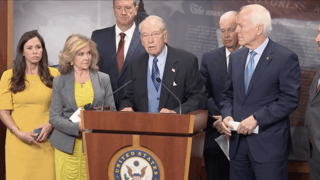
The complaint references a memo from April 2022, which was released by Sen. Chuck Grassley, R-Iowa. This memo shows Wray among several high-ranking officials who approved the Arctic Frost investigation. This probe has been described as an expansive inquiry that not only targeted Trump but also numerous Republican members of Congress and affiliated individuals. Fitzpatrick argues that the actions taken by Smith's team were likely influenced by Wray's recommendations, asserting that Wray authored the initial memo requesting the investigation.
Fitzpatrick further contends that Wray's actions may have contributed to the political targeting of individuals associated with Trump. He noted that the investigation's focus on Republican officials and conservative organizations raises concerns about First Amendment rights. He argued, "A decision to prosecute which is motivated by a possible desire to discourage protected speech or expression violates the First Amendment."
The complaint also highlights allegations that the FBI, under Wray's leadership, furthered this political targeting by subpoenaing the phone records of individuals like Kash Patel and Susie Wiles, who were associated with Trump. These subpoenas reportedly covered calls from 2022 and 2023, with Patel claiming that the collection of Wiles' records extended into her time as a co-campaign manager for Trump.
Fitzpatrick emphasized that while the extent of Wray's involvement in the day-to-day operations of the Arctic Frost investigation remains unclear, his approval of the overall effort is sufficient to warrant an investigation by the D.C. Bar. He argued that even if Wray's involvement was limited to providing general direction, it could still constitute a violation of the D.C. Bar’s Rules of Professional Conduct.
The complaint calls for the D.C. Bar's Office of Disciplinary Counsel to investigate Wray's role in the Arctic Frost investigation and determine whether disciplinary action is warranted. Fitzpatrick noted that the primary aim of the investigation appeared to be to scrutinize the finances of individuals associated with Trump, which he claims violates First Amendment protections.
Supporters of the Arctic Frost investigation, including some legal experts, argue that the inquiry was necessary to address potential misconduct related to the 2020 election. They assert that investigations into election-related activities are crucial for maintaining electoral integrity, regardless of the political affiliations of those involved. However, critics maintain that the investigation has been weaponized for political purposes, suggesting that it serves to undermine the legitimacy of political opponents.
As the complaint moves forward, it remains to be seen how the D.C. Bar will respond to these allegations against Wray. The implications of this case could have significant consequences for both Wray and the broader political landscape as the 2024 presidential election approaches. The outcome may influence public perception of the FBI's role in political investigations and the integrity of the legal processes involved in such high-profile cases.