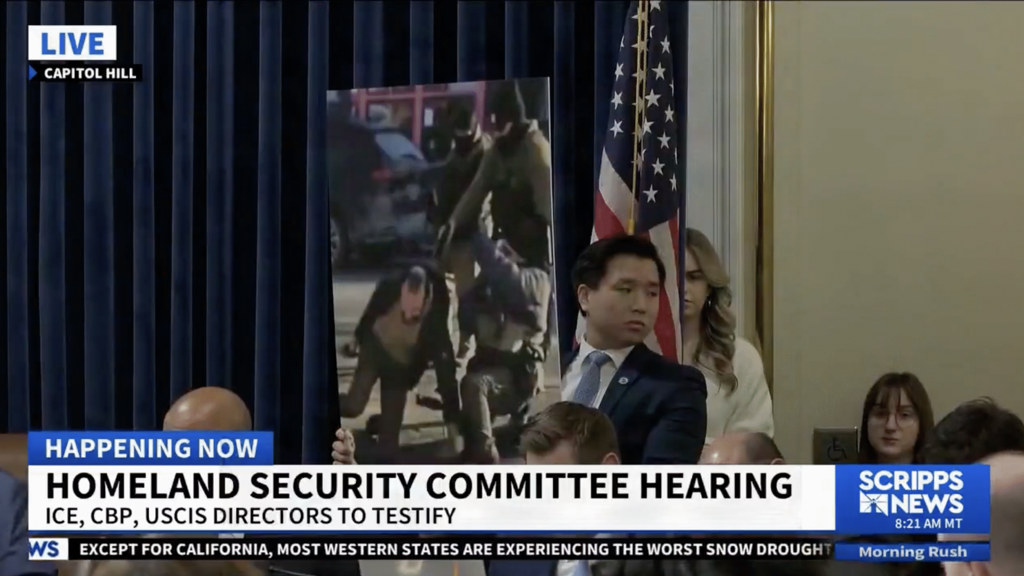
Rep. Bennie Thompson, a Democrat from Mississippi, used an AI-generated image during a Homeland Security Committee hearing on Tuesday, which depicted a headless Border Patrol agent standing over the body of Alex Pretti. This incident has sparked criticism regarding the credibility of the evidence presented by Thompson, who previously chaired the Jan. 6 Committee, which has also faced allegations of fabricating evidence.
The use of the AI-generated image raises significant concerns about the accuracy and integrity of information shared in congressional hearings. Critics argue that such actions undermine public trust in government institutions and the legislative process.
Alex Pretti was fatally shot during an interaction with Border Patrol agents in Minneapolis, with ongoing investigations into the circumstances surrounding his death. During the hearing, Thompson accused Department of Homeland Security Secretary Kristi Noem of creating a “demonstrably false story” about Pretti’s death while a staffer displayed the controversial image.
Key Details
In January, Democratic Senator Dick Durbin also used the same AI-generated image during a Senate floor speech, which was later flagged for being digitally altered. A community note on the platform X stated that the image had been modified from the original screen capture of the incident, highlighting the absence of the kneeling officer's head and other fictional details.
Background and Reactions
The controversy surrounding Thompson's use of the image is compounded by his previous role as chairman of the Jan. 6 Committee. The committee has admitted to altering text messages that were presented as evidence, including doctored communications between former White House Chief of Staff Mark Meadows and Representative Jim Jordan, a Republican from Ohio. A spokesman for the committee acknowledged the error, stating, "The Select Committee is responsible for and regrets the error."
Additionally, former committee chair Liz Cheney has faced scrutiny for her claims regarding former President Donald Trump's response during the Capitol breach on January 6, 2021. Cheney asserted that Trump waited 187 minutes to urge protesters to remain peaceful, a claim that has been contested by various sources.
Thompson's actions have drawn sharp criticism from Republican lawmakers and commentators, who argue that the use of fabricated images is indicative of a broader trend among Democrats to misrepresent facts related to immigration enforcement. For instance, last month, Democrats claimed that a five-year-old boy, Liam Ramos, was kidnapped by ICE agents. However, the Department of Homeland Security clarified that the child was abandoned by his father, who fled law enforcement.
During the same hearing, Rep. Eric Swalwell questioned acting ICE Director Todd Lyons about his resignation, showing a photo of Ramos. Lyons responded, "No, sir, I won’t. Because, sir, that child that you’re showing right there — the men and women of ICE took care of him when his father abandoned him and ran from law enforcement."
Supporters of Thompson and the Democrats argue that the use of such images is a necessary tactic to highlight issues within immigration enforcement and to advocate for reform. However, critics maintain that misleading representations only serve to further polarize the debate and detract from legitimate discussions about immigration policy.
The ongoing scrutiny of Thompson's actions and the broader implications for the credibility of congressional hearings underscore the importance of accurate representation in political discourse. As investigations continue into both the Pretti case and the practices of immigration enforcement, the need for transparency and accountability in government remains paramount.