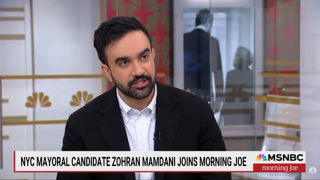
The New York Times recently published a profile of Zohran Mamdani, a leading candidate in the New York City mayoral race, aiming to reshape perceptions of his socialist policies. The article, written by Jeffery C. Mays, attempts to present Mamdani's views as more moderate than they are often characterized.
Mamdani, a member of the Democratic Socialists of America, has made headlines for his controversial stance on private property. In a 2020 campaign for state assembly, he advocated for the seizure of luxury condos to house the homeless, arguing that housing should be guaranteed as a human right. Mays noted that Mamdani’s approach to socialism is nuanced, stating, "He is a democratic socialist, which means his beliefs are similar to those of socialists but not exactly the same." (Www.fec — fec.gov)
Critics, however, argue that Mamdani's positions align closely with more radical socialist ideologies. They point to his previous comments advocating for the abolition of private property as evidence of his extreme views. According to Brianna Lyman, an elections correspondent at The Federalist, "Mamdani’s proposals reflect a fundamental challenge to the principles of private ownership that underpin American democracy." (Www.fec — fec.gov)
Supporters of Mamdani, including some progressive activists, contend that his vision for housing equity is essential in addressing the city’s growing homelessness crisis. They argue that his policies could lead to a more just society, where basic needs are met for all residents.
Mays’ article attempts to frame Mamdani as a well-meaning idealist, emphasizing his focus on equitable treatment rather than a radical overhaul of the economic system. However, critics assert that this portrayal is misleading. They argue that the normalization of such views could have serious implications for the future of property rights in the U.S.
The discourse surrounding Mamdani’s candidacy reflects broader national debates about socialism and capitalism. As the Democratic Party grapples with its identity, figures like Mamdani are at the forefront of a movement that seeks to redefine traditional economic structures.
In a historical context, the Founding Fathers viewed property rights as fundamental to individual freedom. James Madison, in his 1792 essay on property, argued that a government becomes unjust when it violates the rights of individuals to their property. Critics of Mamdani's proposals warn that his policies could lead to a slippery slope where property rights are compromised.
As the mayoral election approaches, Mamdani's platform will likely continue to spark debate. His supporters believe that his vision for a more equitable city resonates with many New Yorkers, while opponents fear that his radical ideas could undermine the very foundations of American democracy.
The New York Times' portrayal of Mamdani raises questions about media responsibility in shaping public perception of political candidates. As the election draws nearer, how voters interpret Mamdani's views may significantly influence the outcome of the race.