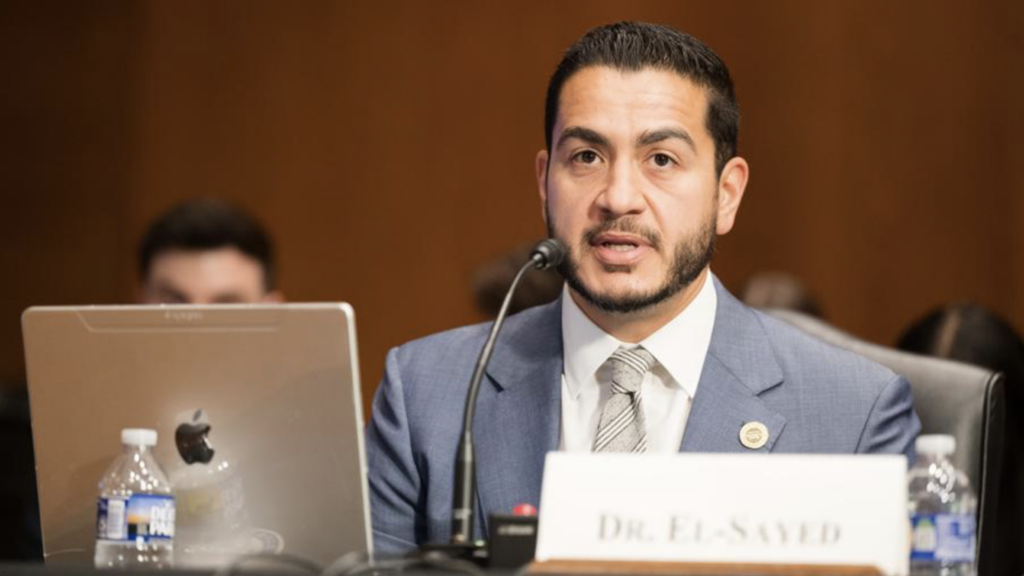
Michigan Democratic Senate candidate Abdul El-Sayed is facing renewed scrutiny over his support for single-payer health care, following reports that his wife’s psychiatric practice does not accept Medicare, Medicaid, or private insurance. The issue has become a focal point in the ongoing debate over health care policy as El-Sayed campaigns for the U.S. Senate seat.
Explainer Health Care Realities: Cost, Ethics, and Reform Challenges in America
El-Sayed, a physician and former Detroit health director, has made single-payer health care a central plank of his campaign. He recently appeared on NBC’s Meet the Press to promote his vision, arguing that a government-run system would "guarantee [Americans] the health care they need independent of the circumstances, wherever they needed to go."
Family Practice Policies Under Scrutiny
The controversy intensified after the Washington Free Beacon reported that Dr. Sarah Jukaku, El-Sayed’s wife, operates a psychiatric practice that is out-of-network for all insurance companies. According to the report, the practice previously included a section on its website FAQ stating: “Do you accept my insurance? No. Dr. Jukaku is out of network for all insurance companies.” This section was reportedly removed from the website earlier this summer.
The business model of Jukaku’s practice, which does not participate in any insurance networks—including government programs like Medicare and Medicaid—has drawn criticism from opponents of El-Sayed’s single-payer advocacy. Critics argue that the family’s decision to operate outside the insurance-based system is at odds with El-Sayed’s public support for expanding government involvement in health care.
Financial Context and Public Perception
Further attention has been drawn to the couple’s financial status. Press reports indicate that El-Sayed and Jukaku reported nearly $700,000 in combined income on their 2025 tax returns, placing them among the top one percent of U.S. households by income. Critics suggest that this financial position makes the family’s non-participation in insurance networks more notable, especially as El-Sayed campaigns on a platform to overhaul the current system.
The scrutiny of El-Sayed’s position is not unprecedented. The article references the example of Dr. Judith Steinberg, spouse of former Vermont Governor Howard Dean. Despite Dean’s advocacy for government-run health care, Steinberg’s practice withdrew from Vermont’s largest Medicaid plan, citing low reimbursement rates and regulatory burdens. This parallel has been used to highlight the complexities and potential contradictions faced by advocates of single-payer systems whose families operate private medical practices.
The Broader Single-Payer Debate
The debate over single-payer health care in the United States often centers on whether doctors and hospitals would accept lower government reimbursement rates while serving a larger patient base. Critics, such as Chris Jacobs of Juniper Research Group, argue that physicians may be unwilling to accept increased workloads and reduced compensation, raising questions about the sustainability of a single-payer model.
El-Sayed has acknowledged that implementing a single-payer system would require higher federal taxes. On Meet the Press, he stated that these tax increases would not be limited to high earners like himself, but would be necessary to fund expanded coverage for all Americans. However, critics contend that El-Sayed has not fully addressed the broader economic and practical consequences of such a policy shift, including the impact on physician participation and patient access.
During his campaign, El-Sayed has also criticized the influence of large corporations in the health care sector. He argues that "huge corporations... have used their power, in effect, to try and buy politicians, so that those politicians will turn around and help them use government to protect their position in markets." This message is intended to resonate with voters frustrated by the current health care system’s costs and complexity.
Supporters of single-payer health care, including El-Sayed, maintain that a government-run system would expand access to care and reduce administrative burdens for patients. They argue that eliminating the need for private insurance would simplify billing and allow doctors to focus more on patient care. However, El-Sayed’s campaign has not directly addressed the specific criticism regarding his wife’s practice policies or explained how such practices would fit into a single-payer framework.
Implications for Michigan Voters
The issue has become a point of discussion as Michigan voters consider health care policy in the upcoming Senate race. El-Sayed’s personal and professional connections to the health care system have drawn attention to the practical implications of single-payer proposals. As the campaign continues, the debate over health care reform—and the alignment between candidates’ public positions and private actions—is likely to remain a central issue for voters weighing their choices at the ballot box.