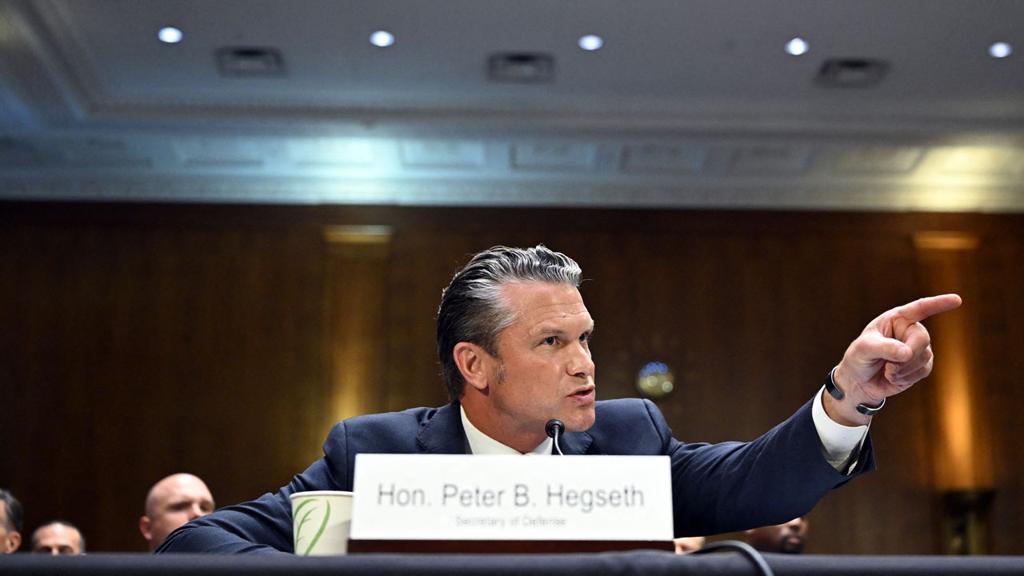
Secretary of War Pete Hegseth appeared before the Senate Appropriations Committee on Tuesday to defend President Donald Trump’s $67 billion supplemental funding request for the Pentagon, as the ongoing conflict in Iran continues to drive up military costs. Hegseth revealed that the conflict has already cost $37.5 billion, underscoring the financial burden of U.S. involvement in the region. His testimony came at a time of heightened scrutiny over both the administration’s military strategy and the process for securing additional funds.
The debate over the supplemental funding request has highlighted deep divisions within Congress regarding military spending and the administration’s approach to the Iran conflict. Some senators have raised concerns about the lack of congressional authorization for U.S. military actions, while others have emphasized the need to ensure American troops have the resources they require.
Hegseth’s appearance marked his first testimony before the committee since two U.S. service members were killed in Jordan last week, following the collapse of a ceasefire. The hearing opened with senators honoring the fallen service members and acknowledging the recent passing of Sen. Lindsey Graham, R-S.C., who had been a member of the committee.
Senate Hearing Details
During the hearing, Hegseth warned that failing to provide adequate funding for the Department of War would put national security at risk. He told lawmakers, “The inability to properly fund this department, the Department of War, is probably the single greatest threat this country faces.”
"The inability to properly fund this department, the Department of War, is probably the single greatest threat this country faces."
— Pete Hegseth, Secretary of War
Several senators pressed Hegseth for more details about U.S. military actions in the Middle East, particularly in light of recent developments in Iran and Jordan. However, Hegseth repeatedly stated that many specifics were classified and could not be discussed in a public setting. Lawmakers from both parties expressed frustration over the lack of recent briefings on military operations, noting that they had not received an update since the ceasefire ended earlier in the month.
The lack of transparency has fueled concerns among some senators about oversight and the administration’s decision-making process. While some members of the committee called for more information, others emphasized the urgency of providing resources to American troops deployed in the region.
Congressional Debate Over Funding
Sen. Chris Coons, D-Del., was among those who criticized the administration for not seeking congressional authorization before entering the conflict, calling it the “first strategic mistake.” Coons and other senators argued that bypassing Congress undermines the constitutional role of the legislative branch in matters of war and peace.
In response, Hegseth urged senators to approve the supplemental funding request, pointing out that the Senate had previously passed five supplemental bills totaling hundreds of billions of dollars for Ukrainian troops. He argued that similar support is necessary for American forces currently engaged in the Middle East, especially given the rising costs and ongoing risks.
While the Senate continues to debate its own version of the supplemental funding bill, the House of Representatives is moving forward with an emergency funding plan. This week, the House Budget Committee is advancing a $95 billion “narrow” budget resolution, which includes more than $70 billion in emergency military funding. The resolution is designed to address immediate needs while leaving room for further debate over long-term military spending.
House Budget Committee Chairman Jodey Arrington, R-Texas, said Hegseth worked closely with his committee to develop the legislation. Arrington described the funding as essential for the military, stating, “I think he’s actually inspired our conference, and some of our toughest members on spending for the military, that it is absolutely imperative.”
Broader Context and Next Steps
The Senate’s deliberations come as the administration faces ongoing scrutiny for its handling of the Iran conflict and the process for securing military funds. Lawmakers remain divided over the appropriate level of oversight, the urgency of the funding request, and the broader implications of continued U.S. involvement in the Middle East.
Supporters of the administration’s approach argue that immediate resources are needed to protect American troops and maintain operational readiness. They contend that delays in funding could jeopardize national security and put service members at risk. Critics, however, continue to question the lack of transparency, the absence of congressional authorization, and the long-term strategy for U.S. engagement in the region.
The House is expected to vote on its emergency funding plan later this week, while the Senate continues to debate its own version of the supplemental bill. The outcome of these deliberations will shape the next phase of U.S. military involvement in Iran and determine the level of support available to American forces.
For more details, see the Daily Signal report.