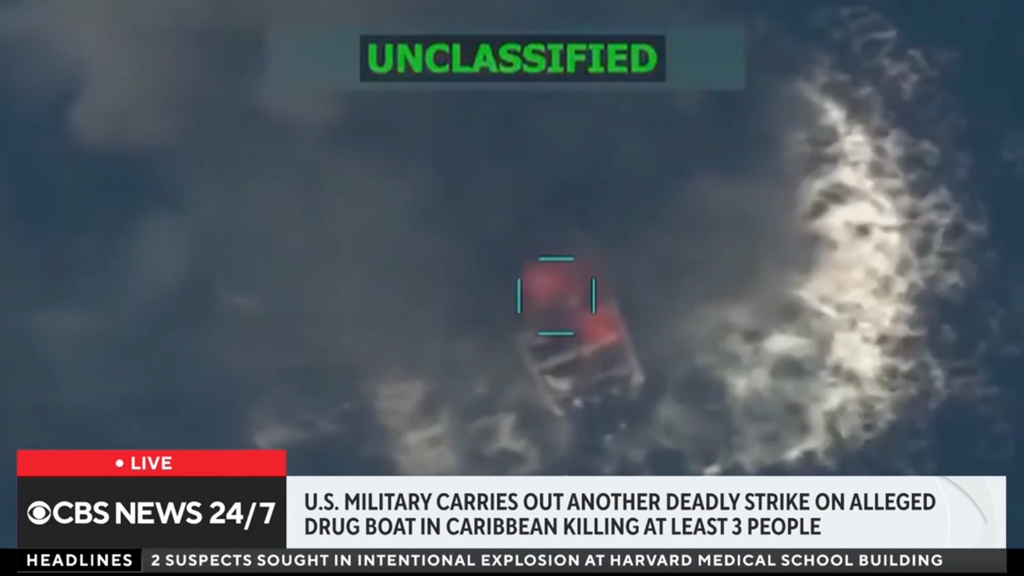
The Trump administration has initiated lethal strikes against drug cartel boats in the Caribbean, prompting discussions about the legality and historical context of such military actions. Critics argue that these operations represent an unprecedented use of military force against drug traffickers, while supporters contend that similar actions have been taken by previous administrations.
Chris Bray, a former infantry sergeant and historian, asserts that the narrative of Trump’s actions as groundbreaking overlooks decades of U.S. military involvement in counternarcotics operations. "For literally decades, with considerable controversy and debate, the United States has militarized the drug war in Latin America," Bray said.
Bray references a 1986 incident where U.S. Army forces participated in an attack on a drug processing facility in Bolivia, suggesting that military engagement in drug-related operations is not new. He argues that claims of Trump’s unprecedented approach ignore historical precedents set by former presidents.
In a recent commentary, Bray critiques media portrayals that label Trump’s military actions as shocking. He highlights that the use of lethal force against drug cartels has been a contentious topic for many years, with various administrations employing military resources in the fight against drug trafficking.
Bray points out that the Obama administration conducted military operations in Libya without congressional approval, drawing parallels to Trump’s current actions. He notes that historical figures, including Thomas Jefferson, have also engaged in military actions without explicit congressional authorization, indicating that the debate over military authority is longstanding.
"Trump isn’t doing anything new with these choices, which are all well within the range of long-established political norms," Bray stated. He emphasizes that the discourse surrounding Trump’s military strategy is often clouded by exaggerated claims and a lack of historical awareness.
The debate over the legality of military force in counternarcotics operations continues to evoke strong opinions. Critics argue that such actions violate due process rights, while supporters maintain that they are necessary to combat the ongoing drug crisis.
Bray concludes that the portrayal of Trump’s military actions as a radical departure from established norms is misleading. He encourages a more nuanced discussion that acknowledges the complexities of U.S. military involvement in drug enforcement over the years.