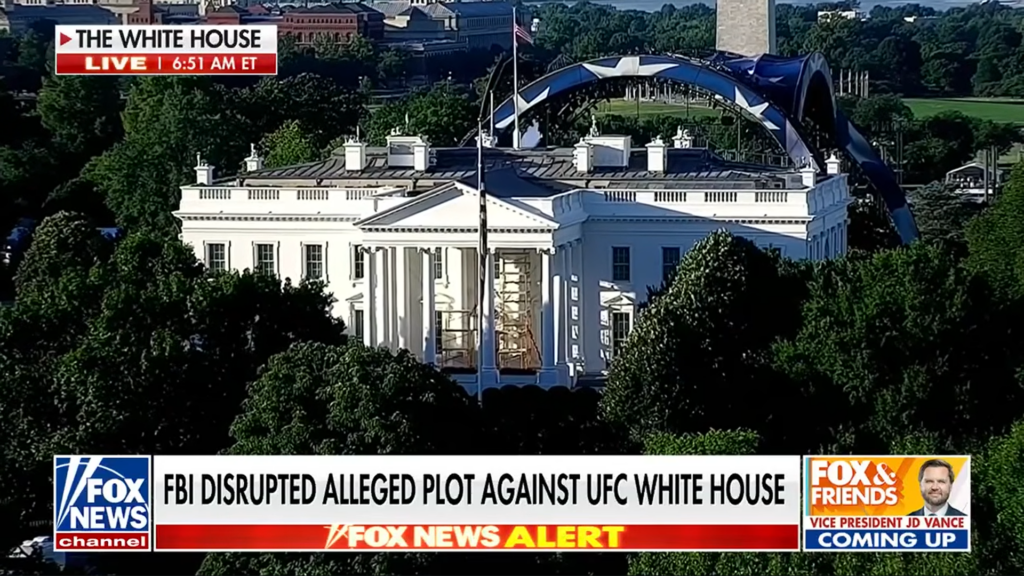
Federal authorities disrupted an alleged terrorist plot targeting the UFC Freedom 250 event at the White House, where former President Donald Trump was expected to attend. The FBI reported that the plan involved using explosive-laden drones to create chaos and facilitate an attack on the venue. This incident highlights growing concerns about domestic terrorism and the potential for violence at high-profile events. Law enforcement officials stated that the plot aimed to force a mass evacuation and direct crowds toward a pre-staged sniper team, indicating a calculated effort to maximize harm and confusion.
As of Monday, at least five individuals have been arrested, with authorities identifying 23 others as part of a potential network of plotters. Many of the suspects reportedly communicated through the messaging app Signal, which suggests a level of coordination and planning among them that raises alarm for law enforcement agencies. The use of encrypted messaging platforms is often associated with individuals attempting to evade detection while organizing illicit activities.
Key Details
Equally concerning are Thomas's claims that he subscribes to conspiracy theories linking Trump to child predators associated with Jeffrey Epstein. Court records indicate that Thomas believes Trump is protecting individuals involved in these activities, a narrative that has been a focal point for some critics of the former president. This connection to conspiracy theories illustrates how misinformation can fuel extremist actions and beliefs, potentially leading to real-world violence.
Broader Context of Violence
The alleged plot comes in the wake of other incidents where individuals have attempted to harm Trump. Recently, an armed man breached security at the White House Correspondents Dinner, raising alarms about the safety of public figures. This incident is part of a troubling trend of violence directed at political leaders, particularly from individuals with extreme views. Such incidents underscore the risks that public figures face in a politically charged environment.
Other suspects arrested in connection with the UFC plot include Bryan Omar Roa and 19-year-old Tycen Proper. Reports suggest that Proper used a portion of his graduation money to purchase firearms and ammunition for the planned attack. Both Roa and Thomas face serious charges, including conspiracy to commit murder, which could result in significant legal consequences if they are convicted. The involvement of younger individuals in such plots raises additional concerns about the influence of extremist ideologies on youth.
Reactions and Implications
The FBI's intervention highlights the agency's ongoing efforts to address domestic terrorism threats. While some critics have pointed to the alleged conspiratorial beliefs of the suspects as indicative of broader societal issues, others argue that such narratives are often exaggerated or politicized. The challenge lies in distinguishing between legitimate concerns about safety and the potential for political narratives to distort the reality of threats.
Supporters of Trump have not publicly commented on the specific allegations made by Thomas regarding the former president's connections to Epstein. However, some have noted that accusations of conspiracy often arise in politically charged environments, complicating discussions about accountability and safety. The lack of response from Trump’s camp may reflect a strategic decision to avoid engaging with conspiracy theories that could further inflame tensions.
As investigations continue, the implications of this alleged plot raise significant questions about the intersection of political rhetoric and real-world violence. Law enforcement agencies are likely to remain vigilant as they monitor potential threats leading up to future events. The situation serves as a reminder of the volatile nature of political discourse in the current climate and the need for ongoing dialogue about security and public safety at major gatherings. Ensuring the safety of attendees at such events is paramount, and the FBI's actions demonstrate a proactive approach to mitigating risks associated with domestic terrorism.