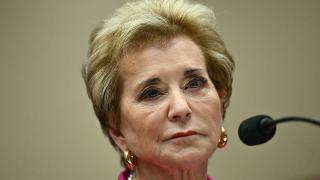
Washington, D.C. — The U.S. Department of Education is poised to reconsider the American Bar Association's (ABA) authority to accredit law schools, a move that could reshape the landscape of legal education in the United States. Critics argue that the ABA has infused far-left politics into the legal system through its accreditation power, which influences access to federal student loans and bar eligibility.
The review comes as the National Advisory Committee on Institutional Quality and Integrity (NACIQI) prepares to assess the ABA's accreditation status this summer. This process, typically routine, may face increased scrutiny under the current administration, which advocates for greater integrity in higher education. Sarah Parshall Perry, vice president of Defending Education, stated, "This year’s federal approval process is going to be different for the ABA."
ABA's Influence on Legal Education
The ABA is the sole federally recognized accreditor for nearly 200 law schools across the country, granting it significant influence over the legal profession. This authority extends to controlling access to federal student loans and determining eligibility for the bar exam. Critics, including Perry, contend that the ABA has implemented a stringent diversity, equity, and inclusion (DEI) regime that prioritizes political agendas over educational integrity.
In 2024, the ABA introduced Standard 206, which mandated stricter affirmative action in law school hiring practices. Following public backlash, the ABA paused this standard and is considering repealing Standard 303(c), which requires law schools to teach about bias and racism. Perry noted, "Play-acting at law school accreditation and ethics while jamming liberal orthodoxy down the throats of the nation... I’ll believe it when I see it."
Political Allegations and Responses
Defending Education claims that 72 DEI offices remain active or have rebranded at law schools, while 62 institutions still require coursework related to Standard 303(c). Critics argue that the ABA's political leanings are evident in its amicus briefs, with 80% supporting left-leaning causes. Perry highlighted the ABA's positions in significant Supreme Court cases, including those related to gun rights and abortion, which the Court ultimately ruled unconstitutional.
Supporters of the ABA have not publicly addressed these criticisms. Some legal experts argue that the ABA's standards are essential for maintaining educational quality and ensuring that law schools produce competent graduates. They contend that the focus on DEI is necessary to reflect the diverse society that lawyers serve.
Legislative Actions and Future Implications
At a recent roundtable, Rep. Chip Roy, R-Texas, emphasized the need to strip the ABA of its accreditation power, stating, "You can’t win a war that you don’t acknowledge exists, and a war is being waged against Western civilization." He supported efforts by Rep. Randy Fine, R-Fla., to allow more organizations to accredit law schools, arguing that the current system creates a monopoly that stifles diverse viewpoints.
Fine pointed out that only 11% of lawyers are ABA members, yet the organization wields disproportionate influence over legal education. He referenced Florida's approach to teachers' unions, which requires a majority membership for union operation, suggesting a similar model could be applied to law school accreditation.
Several states, including Florida and Texas, have begun distancing themselves from the ABA, with Tennessee and Ohio considering similar actions. However, the ABA's federal recognition as the exclusive accreditor remains a significant barrier to reform.
Student Experiences and Concerns
Concerns about the ABA's influence extend to the student experience in law schools. A University of Virginia law graduate, who requested anonymity, expressed that the ABA's requirements foster a culture that discourages critical inquiry. "We’re training lawyers in an environment that... encourages moral sorting rather than critical inquiry," she said.
Students have reported feeling pressured to conform to prevailing ideologies, with some fearing repercussions for expressing conservative views. Edward Goul, a law student at the University of Pennsylvania, noted that mandatory DEI courses send a clear message about acceptable ideas in law schools. "From the very beginning, they’ve sent a message that there’s a correct set of premises and ideas that are okay in law schools," he said.
As the Department of Education prepares to review the ABA's accreditation authority, the outcome could have lasting implications for the future of legal education in the United States, potentially altering the balance of political influence within law schools.