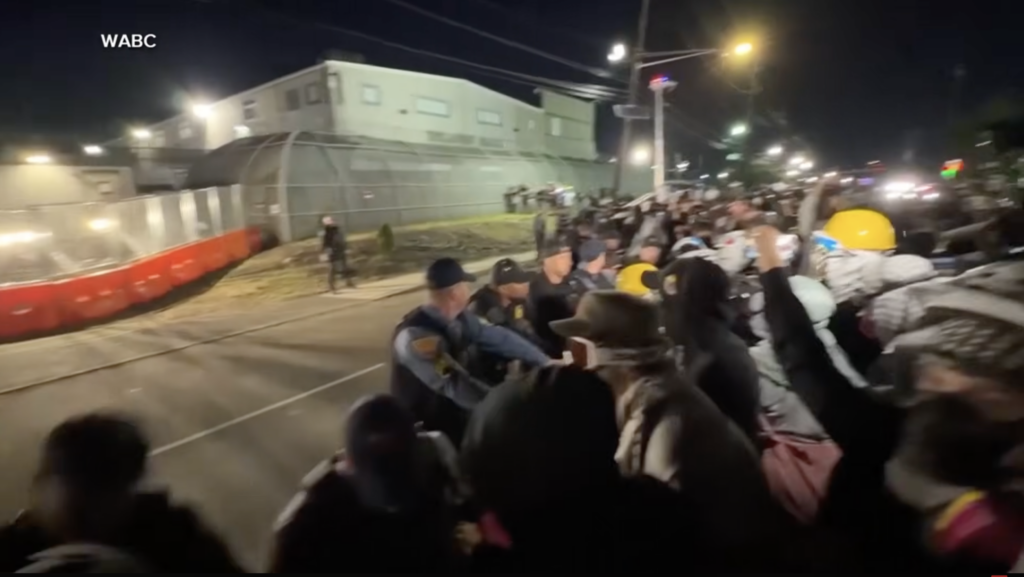
A rioter was charged on Friday for allegedly kicking and biting Immigration and Customs Enforcement (ICE) officers at a facility in New Jersey, according to acting Attorney General Todd Blanche. Another individual was arrested for threatening to murder an immigration officer and his family. The Department of Homeland Security reported that at least six rioters were arrested last Wednesday for allegedly assaulting law enforcement, with additional arrests made in the following days. These incidents highlight ongoing tensions between law enforcement and protest groups opposing ICE operations, raising significant questions about public safety and the effectiveness of current law enforcement responses. Critics argue that without stronger deterrence, such violence may continue to escalate.
Explainer Public Safety and Crime Trends in America: Understanding the Landscape
New Jersey Riots Lead to Arrests of Protesters Outside ICE Facility
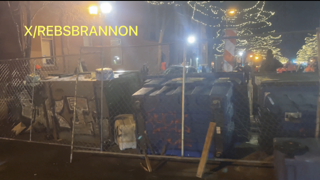
The protests occurred outside Delaney Hall, an ICE detention center located in New Jersey. Reports indicate that protesters were well-organized, arriving with stockpiles of masks, duct tape, hard hats, and medical supplies prepared before the demonstrations began. By Sunday, a curfew was imposed near the facility, with Governor Mikie Sherill stating, "It has grown unsafe, and that’s completely unacceptable." This decision reflects the escalating nature of the protests and the perceived threat to public safety.
Background and Reactions
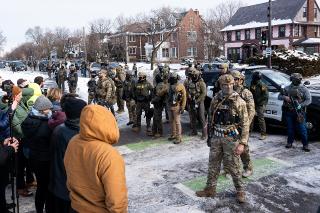
The recent violence mirrors earlier incidents, including riots in Minneapolis against Operation Metro Surge, where protesters engaged in violent confrontations with law enforcement. In those protests, one rioter bit an ICE agent's finger off, while others obstructed roadways and threatened authorities. Joshua Monnington, a writer for The Federalist, noted that the administration's response to such incidents has been insufficient, allowing a broader network of anti-ICE extremists to operate with relative impunity. Monnington emphasized the need for a decisive crackdown on anti-ICE obstruction, comparing it to the extensive law enforcement efforts following the January 6 Capitol riots. He stated, "The administration failed to carry out justice in a manner that was sufficiently swift, decisive, and visible enough to dissuade obstructionists from engaging in reckless, anti-ICE behavior."
The unrest at Delaney Hall is seen as a consequence of the Trump administration's perceived inaction in addressing previous violence against ICE agents. Reports suggest that the protests are not merely grassroots movements but are supported by well-funded organizations. The New York Post highlighted that Indivisible Twin Cities, which has led protests against ICE in Minnesota, received significant funding from George Soros’ Open Society Foundations. This raises concerns about the motivations behind the protests and the potential influence of external funding on domestic unrest.
Additionally, Fox News reported that some protesters are linked to organizations with ties to the Chinese Communist Party, raising further concerns about the influence of foreign entities on domestic protests. This has led to fears that ongoing violence against ICE agents is part of a coordinated effort to disrupt immigration enforcement. The implications of such connections could have serious ramifications for national security and public trust in law enforcement.
In response to the violence, President Trump has acknowledged the seriousness of the threat posed by groups like Antifa, designating them as a terrorist organization following violent incidents involving ICE. However, critics argue that the administration's actions have not been sufficient to deter ongoing violence against law enforcement. The Biden administration has faced scrutiny for its aggressive pursuit of January 6 defendants, with some critics suggesting that it has targeted individuals for minor offenses. Monnington argued that if the Biden administration can mobilize federal resources against political dissidents, the Trump administration should similarly address violent criminal organizations targeting ICE.
As the situation develops, the effectiveness of law enforcement responses to protests against ICE remains a contentious issue. While some officials have called for stronger measures to ensure public safety, others have yet to respond to the criticisms regarding the handling of these protests. The ongoing unrest raises significant questions about the balance between civil liberties and the enforcement of immigration laws in the United States. The challenges faced by law enforcement in managing these protests reflect broader societal divisions and the complexities of addressing immigration issues in a politically charged environment.