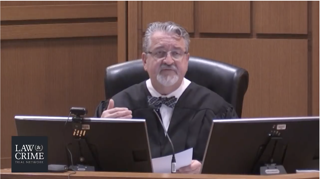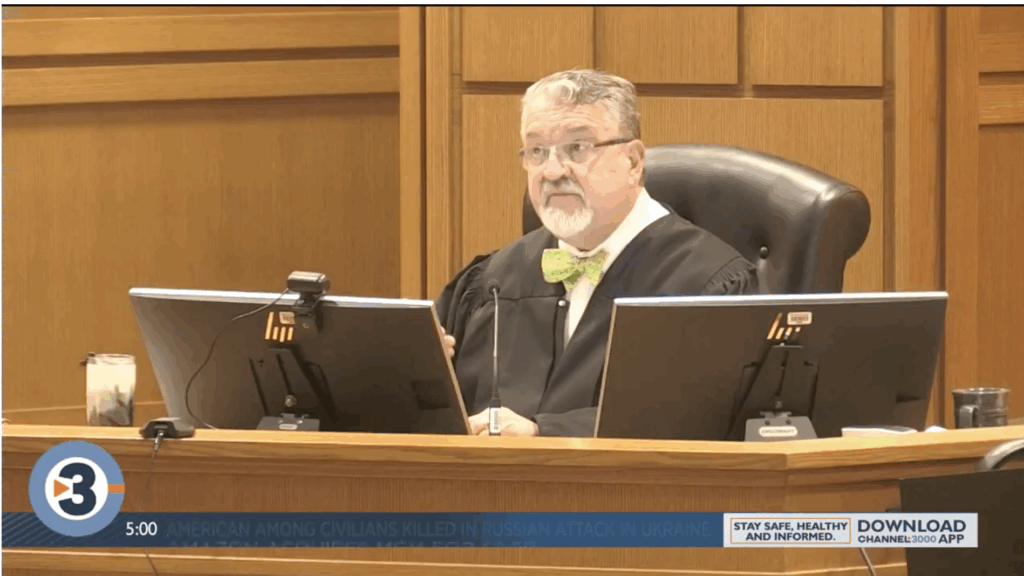
Newly unsealed court documents allege that Dane County Circuit Court Judge John Hyland received assistance from a retired judge in crafting his ruling on a politically charged case involving attorneys for the 2020 Trump campaign. The allegations raise questions about judicial ethics and the fairness of the ongoing trial, which is set to unfold in an election year.
The core issue centers on claims that Hyland did not independently write his August order denying motions to dismiss charges against Trump campaign officials, including Jim Troupis, Kenneth Chesebro, and Michael Roman. Critics argue that this involvement undermines the integrity of the judicial process, while supporters of the case maintain that the charges are warranted.
The defendants face multiple counts related to their efforts to file a slate of alternate electors in Wisconsin, a move they argue was necessary to protect Trump’s electoral votes amid allegations of voting irregularities in the 2020 presidential election. The case, brought by Democratic Attorney General Josh Kaul nearly four years after the election, could result in decades of prison time for the defendants.
Allegations of Judicial Misconduct
According to the unsealed documents, Troupis's legal team claims that retired Judge Frank Remington, who had a history of conflict with Troupis, contributed significantly to the August ruling. Attorney Joe Bugni stated, "Judge Remington was (to put it mildly) not a fan of my client when they were in practice or when they were colleagues on the bench."
The defense argues that this collaboration constitutes a breach of judicial ethics and creates a personal conflict for Hyland. They enlisted Georgetown professor Natalie Schilling, a forensic linguistics expert, to analyze the writing style of the order. Schilling concluded that the order bore a distinct resemblance to Remington's previous work, noting similarities in tone and structure.
Bugni explained that suspicions arose when colleagues in his office recognized that Hyland's order did not reflect his typical writing style. The situation was further complicated when metadata from the court documents indicated that Remington's son, a law clerk, was involved in the drafting process.
Judge Hyland's Response
In response to the allegations, Judge Hyland has denied any wrongdoing, asserting that he and his assigned staff attorney were solely responsible for drafting the order. He stated, "The Court is satisfied that no person other than the assigned staff attorney and I had a hand in drafting or editing the decision which this Court signed and entered."
Hyland emphasized that he holds no personal bias against any of the litigants and assured that he would conduct the trial fairly. However, the defense maintains that the appearance of impropriety undermines the legitimacy of the proceedings.
Political Context
The case has drawn significant attention as it unfolds against the backdrop of the 2026 midterm elections. Critics of the prosecution argue that it is part of a broader political strategy aimed at undermining Trump and his supporters. They contend that the timing of the charges, coming after Trump secured his third GOP nomination, suggests a politically motivated effort to influence the electoral landscape.
Supporters of the prosecution, including Attorney General Kaul, have labeled the alternate elector strategy as a "fake elector" scheme designed to overturn the legitimate election results. They argue that the charges are necessary to uphold the rule of law and protect the integrity of the electoral process.
As the trial approaches, the defendants express concerns about receiving a fair trial in what they describe as a politically charged environment. Troupis and his co-defendants assert that the judicial system is biased against them, complicating their ability to mount an effective defense.
The unfolding situation highlights the tensions between legal proceedings and political dynamics, raising questions about the intersection of justice and partisanship in high-profile cases. With the trial set to proceed, both sides are preparing for a contentious legal battle that could have significant implications for the future of election-related litigation in the United States.