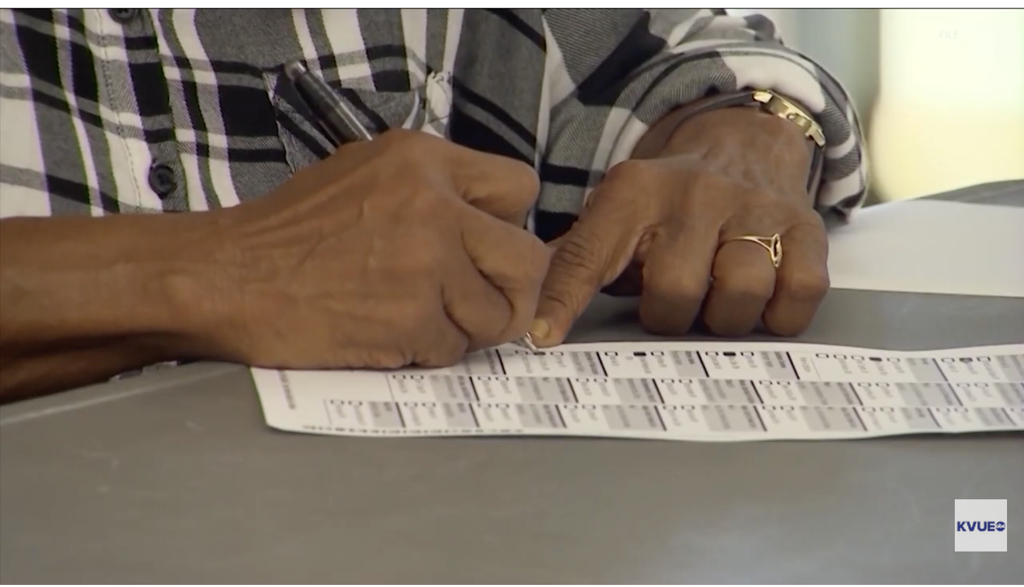
The small town of Thornapple, Wisconsin, has secured a legal victory regarding its decision to use hand-marked paper ballots in elections, despite facing a lawsuit from the U.S. Department of Justice (DOJ). A Dane County Circuit Court judge dismissed an appeal from local activist Erin Webster, who claimed the switch from electronic voting machines impaired her voting rights.
The core issue revolves around Thornapple's choice to abandon electronic voting machines in favor of traditional paper ballots, a move that has drawn both support and criticism. Critics, including Webster, argue that the change could disenfranchise voters, particularly those with disabilities, while supporters assert it enhances election integrity.
Thornapple, a community of approximately 711 residents, made the switch to paper ballots in 2023, citing concerns about the reliability of electronic voting systems. In December, Judge Jacob Frost ruled that Webster lacked standing to challenge the town's decision, stating she did not demonstrate how her rights were affected. "State law clearly says towns like Thornapple can use paper ballots. That’s what they did, and the court affirmed both their decision and their right to make it," said Nicholas Wanic, an attorney with the America First Policy Institute, which represented the town.
Legal Challenges from the DOJ
The DOJ's involvement began when it sent a letter to Thornapple officials, warning that the town needed to provide accessible voting machines to comply with the Help America Vote Act. The DOJ claimed that some voters with disabilities reported being unable to use electronic machines during the primary election. Following this, the DOJ filed a federal lawsuit, resulting in a preliminary injunction that required Thornapple to provide electronic voting systems for the November presidential election.
Despite the legal pressure, Thornapple officials maintained that their voting method was appropriate for their community. "I thought it was a little absurd because we were such a small community," said Suzanne Pinnow, the town's treasurer and chief election inspector. She noted that Thornapple has not had any disabled voters on its rolls for years, questioning the necessity of maintaining electronic machines.
Settlement and Compliance
In December, Thornapple signed a settlement requiring it to provide at least one accessible voting machine for future elections. This decision came after a similar complaint was filed with the Wisconsin Elections Commission by the law firm Law Forward and Disability Rights Wisconsin. The commission ruled that Thornapple did not need permission to switch to hand-counted paper ballots, a decision that Webster appealed unsuccessfully in court.
The DOJ's actions have drawn mixed reactions. While some local officials have complied with federal mandates, others, like those in Thornapple, have pushed back against what they view as overreach. "My first thought was, ‘Don’t you have better things to do with my tax dollars?’" Pinnow remarked, reflecting the sentiment of many in the community who feel overwhelmed by the legal scrutiny.
Broader Implications for Election Integrity
Thornapple's decision to revert to paper ballots aligns with a growing trend among some communities seeking to enhance election transparency and security. Kenneth Blackwell, chairman of Election Integrity at the America First Policy Institute, stated, "When voters can see the process with their own eyes—without black-box machines—they have more confidence in the results." This perspective is echoed by other towns considering similar moves, as Thornapple's situation becomes a focal point in the ongoing debate over election integrity.
As Thornapple navigates its legal challenges, the town's experience may influence other small communities grappling with similar decisions. The outcome of this case underscores the tension between federal regulations aimed at ensuring accessibility and local governance decisions reflecting community preferences. While supporters of electronic voting argue for its reliability, advocates for paper ballots emphasize transparency and public trust in the electoral process.
The legal battle in Thornapple illustrates the complexities of election law and the varying perspectives on how best to conduct elections in a way that serves all constituents. As the town prepares for future elections, it remains to be seen how these legal and regulatory challenges will shape its electoral landscape.