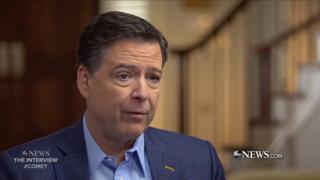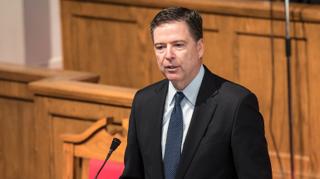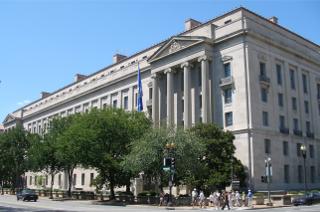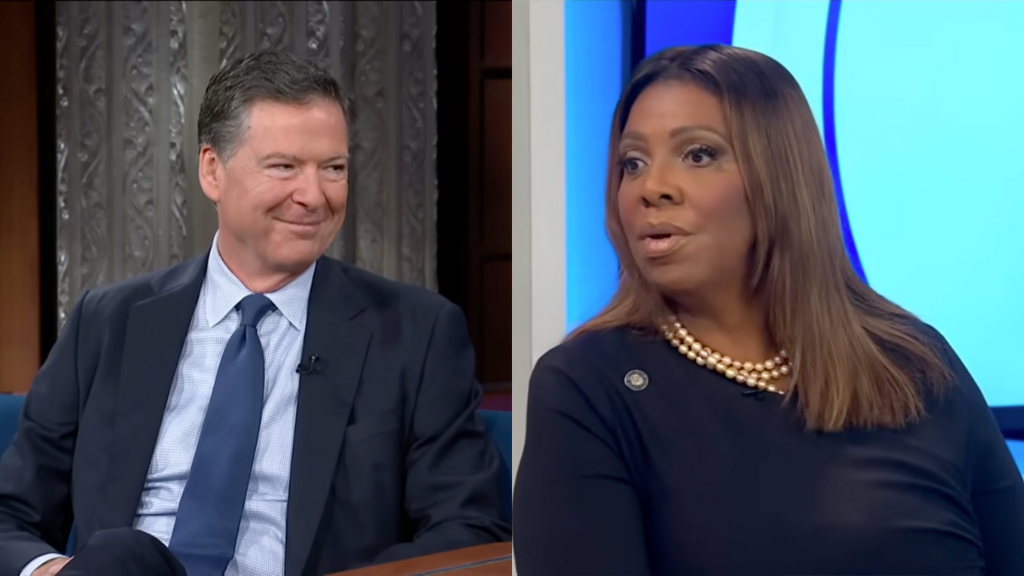
A federal judge dismissed the grand jury indictment against former FBI Director James Comey and New York Attorney General Letitia James on Monday, ruling that U.S. Attorney Lindsey Halligan was unlawfully appointed. Judge Cameron Currie, appointed by former President Bill Clinton, stated that Halligan's appointment was invalid, leading to the dismissal of the indictments against both Comey and James.
In his ruling, Currie noted that Halligan, who was appointed Interim U.S. Attorney just days before the indictment, had no prior prosecutorial experience. "On September 25, 2025, Lindsey Halligan... appeared before a federal grand jury in the Eastern District of Virginia," Currie wrote. Halligan had secured a two-count indictment against Comey for allegedly making false statements to Congress and obstructing a congressional proceeding.
Currie agreed with Comey's argument that the Attorney General's attempt to appoint Halligan was unlawful. "I will grant Mr. Comey’s motion and dismiss the indictment without prejudice," he stated. Halligan's appointment followed the resignation of Erik Siebert, who reportedly stepped down after refusing to pursue charges against Comey and James.
The government contended that Halligan's appointment was valid unless the Senate explicitly rejected her confirmation. However, Comey's legal team argued that federal law limits the tenure of interim appointments to 120 days, asserting that Halligan's appointment was invalid since the district court should have made the appointment after Siebert's resignation.
Currie sided with Comey, citing Section 546 of the federal statute, which outlines the process for interim appointments. He emphasized that only the district court has the authority to appoint a U.S. Attorney once a vacancy occurs. "Mr. Comey has the better reading of the statute," Currie concluded, stating that Halligan had been unlawfully serving since September 22, 2025.
As a result of Currie's ruling, all actions taken by Halligan, including the indictment against Comey, were deemed unlawful. The judge also dismissed the indictment against James, who had been charged in October with allegedly lying to a lending bank and a homeowner’s insurance company in connection with a mortgage fraud scheme.
The ruling raises questions about the legality of Halligan's appointment and the broader implications for prosecutorial authority in politically sensitive cases. The decision reflects ongoing tensions surrounding the appointment of U.S. Attorneys and the role of the judiciary in overseeing such appointments.
Brianna Lyman, an elections correspondent at The Federalist, reported on the case, highlighting the legal arguments presented by both sides. Lyman holds a degree in International Political Economy from Fordham University and has contributed to various media outlets, including Newsmax and Fox News.