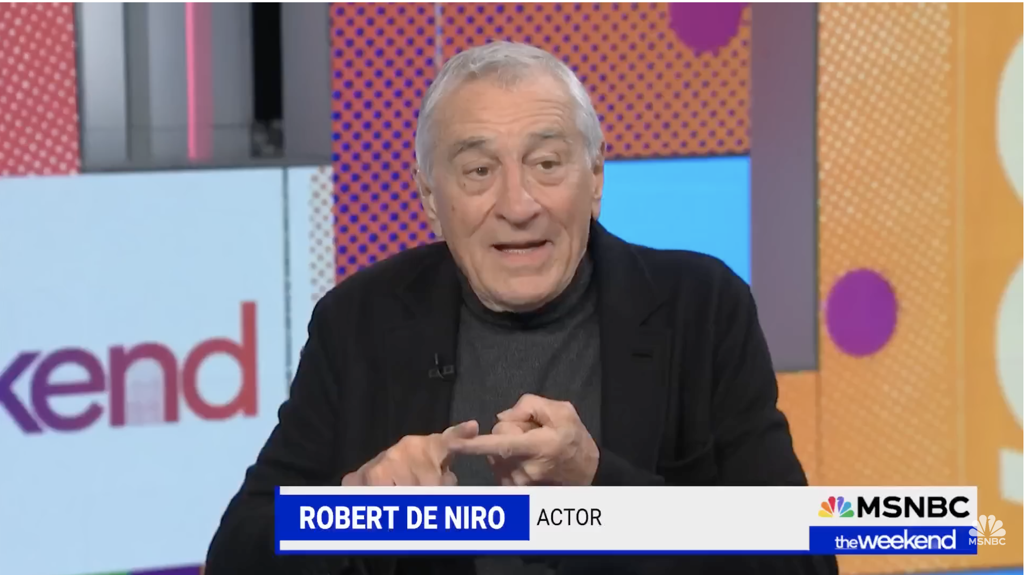
Robert De Niro recently appeared on MSNBC's 'The Weekend,' where he shared his views on former President Donald Trump and the current political climate. The actor, known for his outspoken leftist views, expressed concern that many Americans, particularly those in rural areas, are not exposed to what he considers credible news sources. He criticized the media landscape, suggesting that it fails to adequately counter Trump's influence, which he believes is pervasive among his supporters.
De Niro described Trump supporters as being entrenched in their beliefs, stating, "They’re used to seeing Trump do his stuff and they talk and they listen... that’s the truth to them because they don’t listen to anything else." This comment reflects De Niro's perception of a divide between urban liberal viewpoints and rural conservative sentiments.
During the interview, De Niro lamented the media's coverage of Trump, claiming that it is overwhelmingly negative. He cited a report from NewsBusters, which indicated that Trump received 92 percent negative coverage in the first 100 days of his second term, contrasting it with the more favorable coverage of President Joe Biden during his administration.
The actor also expressed a desire for more airtime for leftist perspectives, suggesting that the media should work to 'tamp down' what he perceives as Trump's 'nonsense.' De Niro's comments indicate a belief that the media should play a more active role in shaping public discourse against Trump and his supporters.
In a more alarming tone, De Niro warned that politicians must fear the 'wrath of the people' if they continue to support Trump. He suggested that the political landscape is fraught with tension, implying that those who align with Trump may face backlash from the public. He characterized this sentiment as a necessity for political survival in today's climate.
De Niro's remarks also included pointed criticisms of Trump’s former adviser Stephen Miller, whom he labeled a 'Nazi,' despite Miller being Jewish. This comment has drawn criticism for its incendiary nature and for invoking historical comparisons that many find inappropriate.
The actor's political endorsements leaned heavily towards Democrats, expressing admiration for figures like New York Attorney General Letitia James and House Minority Leader Hakeem Jeffries. He praised James for her aggressive legal actions against Trump, despite her facing her own legal challenges.
Critics of De Niro's comments argue that his views reflect a disconnect from the broader American electorate, particularly those who supported Trump in significant numbers. His characterization of Trump supporters as 'those people' has been interpreted as elitist, suggesting a lack of understanding of their concerns.
Overall, De Niro's appearance on MSNBC has sparked discussions about the role of celebrity voices in politics and the media's responsibility in shaping public opinion. His comments underscore the ongoing polarization in American politics, with prominent figures like De Niro contributing to the discourse in ways that may further entrench divisions rather than bridge them.