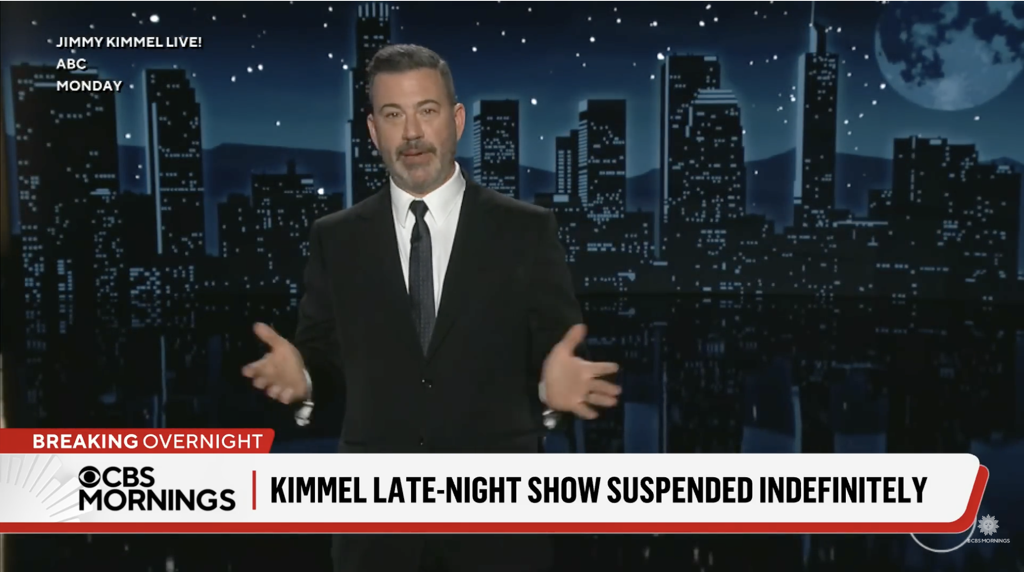
Jimmy Kimmel has been suspended from his late-night show, "Jimmy Kimmel Live!" (Www.fcc — fcc.gov), following controversial remarks he made regarding conservative commentator Charlie Kirk. The indefinite preemption has sparked debate over Kimmel's comments and the broader implications for free speech in media.
Explainer Free Speech Battles: Courts, Censorship, and Cultural Conflicts
Kimmel's suspension comes after he made statements during his monologue that critics deemed inflammatory. In his remarks, Kimmel suggested that Kirk's alleged assassin was connected to the MAGA movement, a claim that has been met with significant backlash. Law enforcement officials have indicated that the accused individual had a history unrelated to right-wing politics, raising questions about Kimmel's characterization.
Brendan Carr, chairman of the Federal Communications Commission (FCC), commented on the situation, stating, "The public interest means you can’t be running a narrow, partisan circus and still be meeting your public interest obligations." (Www.fcc — fcc.gov) Carr emphasized that broadcasters have a legal responsibility to provide balanced content.
The controversy has drawn responses from various political figures. California Governor Gavin Newsom criticized the circumstances surrounding Kimmel's suspension, asserting that it reflects a broader trend of censorship. Newsom stated, "Buying and controlling media platforms. Firing commentators. Canceling shows. These aren’t coincidences. It’s coordinated. And it’s dangerous." (Www.fcc — fcc.gov)
Supporters of Kimmel argue that his suspension is an attack on free speech, with some claiming that the backlash he faced is indicative of a hostile environment for comedians who express political views. However, critics maintain that Kimmel's comments were irresponsible and contributed to a divisive media landscape.
Kimmel's ratings have been declining in recent years, with Nielsen data showing a drop from 1.95 million viewers in January to 1.1 million in August 2025, a decline of 43 percent. The show has struggled to maintain its audience amid increasing competition from other late-night programs, including those on Fox News and CBS.
As Kimmel's contract with ABC is set to expire in May 2026, industry observers speculate that his recent comments may have provided the network with a justification to part ways with the host. The decline in viewership and the current controversy could impact the future of Kimmel's show.
The situation raises questions about the balance between free expression and accountability in media. While Kimmel remains free to express his views, the consequences of his statements have led to significant professional repercussions. As the debate continues, both supporters and critics of Kimmel's approach to comedy and commentary are watching closely to see how this situation unfolds.