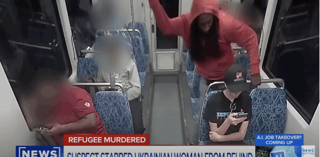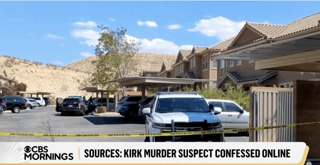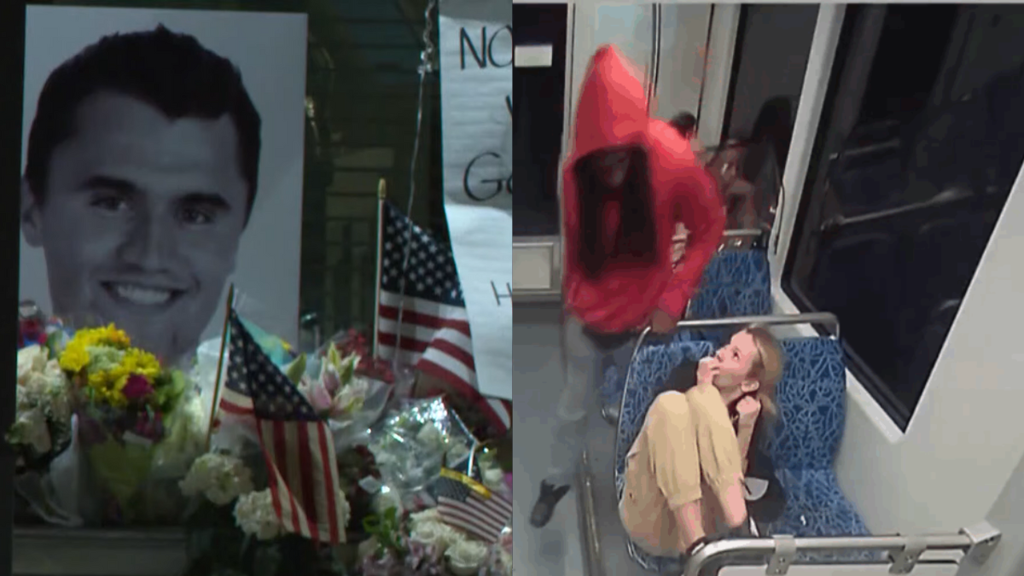
This week, two violent incidents in the United States have drawn significant attention, highlighting concerns over political rhetoric and public safety. The stabbing of Iryna Zarutska, a Ukrainian refugee, on a light rail train in Charlotte, North Carolina, and the assassination of conservative figure Charlie Kirk during an event in Utah have sparked discussions about the implications of political discourse and law enforcement policies.
Zarutska was attacked on September 9, 2025, allegedly by Decarlos Brown Jr., who has a lengthy criminal history, including 14 prior arrests. Eyewitnesses reported that Brown, after allegedly stabbing Zarutska, walked away from the scene while muttering, "I got the white girl." (U.S. DOJ) The incident has raised questions about the effectiveness of the judicial system in managing repeat offenders with documented mental health issues.
"It was politics that allowed a savage monster with 14 priors to be free on the streets to kill her."
— Charlie Kirk, founder of Turning Point USA
Kirk, the founder of Turning Point USA, was shot and killed on September 10, 2025, while speaking at Utah Valley University. His death has been described as a shocking act of violence against a public figure known for engaging in political dialogue. In his final social media post, Kirk expressed outrage over Zarutska's murder, stating, "It was politics that allowed a savage monster with 14 priors to be free on the streets to kill her." (U.S. DOJ)
Critics of current law enforcement policies argue that lenient approaches to crime, such as cashless bail and reduced penalties for certain offenses, have contributed to a climate of lawlessness in many urban areas. Supporters of these policies contend that they are necessary for addressing systemic inequalities and promoting social justice.
The incidents have reignited debates about the role of political rhetoric in inciting violence. Kirk had previously noted that a significant percentage of left-leaning individuals believed that violence against political opponents could be justified. According to a study by the Network Contagion Research Institute, 55% of respondents from the left indicated that they felt murdering a political figure like former President Donald Trump could be seen as somewhat justified.
In response to Kirk's assassination, some members of the House of Representatives reportedly reacted negatively to a request for a moment of prayer for him, with shouts of "no!" heard during the session. This reaction has been interpreted by some as indicative of a broader divide in political discourse.
The aftermath of these events has prompted calls for a reassessment of how political dialogue is conducted in the U.S. Many argue that the current environment fosters hostility and violence, particularly against those with opposing views. "The left is being whipped into a violent frenzy," (U.S. DOJ) Kirk had previously stated, emphasizing the need for a more civil discourse.
As investigations into both incidents continue, the implications for public safety and political engagement remain a focal point of discussion. Advocates for stricter law enforcement measures argue that without decisive action, the cycle of violence may continue, while others maintain that addressing the root causes of crime is essential for long-term solutions.
The recent violence serves as a stark reminder of the potential consequences of unchecked rhetoric and the importance of fostering a political climate that prioritizes dialogue over hostility. As the nation grapples with these issues, the need for a balanced approach to governance and public safety becomes increasingly clear.