TLT Explains
Supreme Court Rules Racial Gerrymandering Unconstitutional in Key Redistricting Case
What's happening
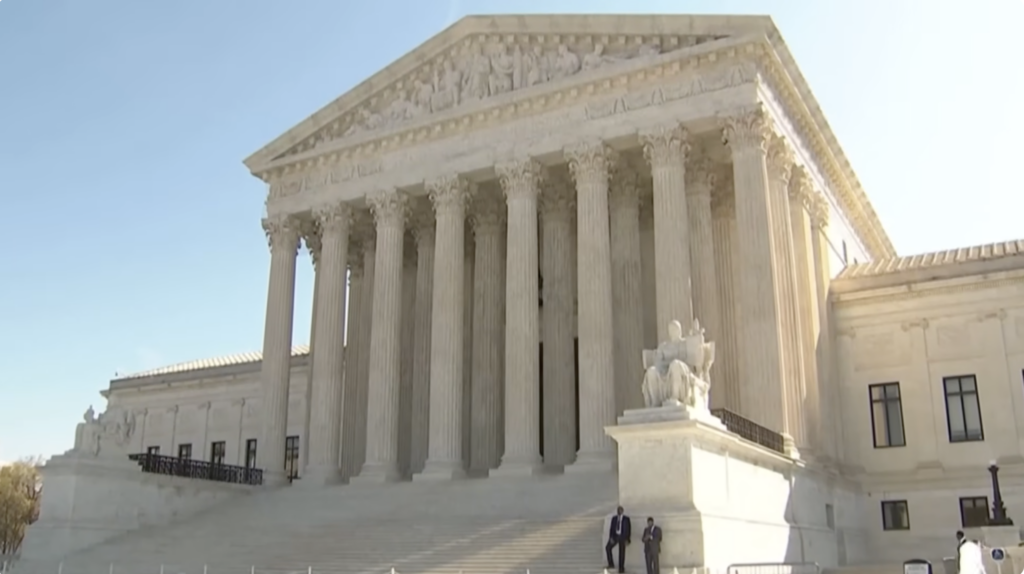
On Wednesday, the U.S. Supreme Court issued a landmark 6-3 ruling declaring that racial gerrymandering in congressional redistricting violates the Constitution. Authored by Justice Samuel Alito, the decision holds that states cannot prioritize race as the main factor when drawing electoral district boundaries. This ruling directly challenges practices that have sought to create districts primarily based on racial demographics, emphasizing that such approaches undermine constitutional protections.
The case at the center of the ruling, Louisiana v. Callais, involved a lower court order requiring Louisiana to establish a second majority-black congressional district. This mandate was based on concerns that the state's previous map potentially violated Section 2 of the Voting Rights Act of 1965, which aims to prevent voting discrimination against minority groups. However, the Supreme Court majority rejected the justification that compliance with the Voting Rights Act permits race-based districting, labeling the lower court’s directive as an unconstitutional racial gerrymander.
Racial gerrymandering has long been a contentious issue in American politics, reflecting the tension between ensuring minority representation and avoiding racial classifications that could amount to discrimination. The Voting Rights Act was originally enacted to protect minority voters from suppression and dilution of their voting power. Yet, this ruling signals a shift in how courts interpret the balance between anti-discrimination protections and constitutional equal protection principles.
The decision has sparked a range of reactions from legal experts and civil rights advocates. Election law expert Hans von Spakovsky praised the ruling as reinforcing the rule of law and constitutional norms, suggesting it prevents race from unduly influencing electoral maps. Conversely, NAACP President Derrick Johnson criticized the ruling as a serious setback for the Voting Rights Act, warning it could enable politicians to manipulate district boundaries to the detriment of minority voters.
What's at stake
The ruling’s implications are significant for states preparing for upcoming redistricting cycles, particularly those with diverse populations. Critics argue that the decision could weaken safeguards designed to ensure minority communities have fair electoral influence, potentially leading to diluted voting power. Supporters contend that it restores fairness by prohibiting race from being the predominant factor, thereby promoting districts drawn on neutral criteria rather than racial considerations.
Former President Barack Obama expressed concern that the ruling reflects a broader trend of the current Supreme Court stepping back from protecting minority rights. However, some legal analysts note that similar fears followed past decisions, such as the 2013 Shelby County v. Holder ruling, which did not result in the widespread discrimination predicted by opponents. White House spokeswoman Abigail Jackson described the ruling as a ‘‘complete and total victory for American voters,’’ underscoring the principle that race should not determine congressional representation.
Legal experts remain divided on the ruling’s long-term effects. Some believe it could lead to more competitive and equitable districts by eliminating race-based gerrymandering, while others caution it may exacerbate existing disparities in minority representation. Luke Berg, deputy counsel for the Wisconsin Institute for Law & Liberty, highlighted the difficulty in proving anti-competitive racial gerrymandering, noting a lack of substantial evidence nationwide to support such claims.
This Supreme Court decision marks a pivotal moment in the ongoing debate over redistricting and voting rights in the United States. It challenges states to find new ways to draw electoral maps that comply with constitutional mandates while respecting the Voting Rights Act’s intent. As the next round of redistricting approaches, this ruling will likely shape legal strategies and political calculations for years to come.
Looking ahead, observers will closely watch how states adjust their redistricting processes in response to this ruling. Legal challenges are expected as minority groups and advocacy organizations seek to protect voting rights under the new framework. The Supreme Court’s decision sets a precedent that could influence not only congressional maps but also state and local district boundaries, making the coming years crucial for the future of electoral representation in America.
Why it matters
The ruling reinforces constitutional limits on using race as the primary factor in drawing electoral districts. It challenges existing interpretations of the Voting Rights Act related to race-based redistricting. The decision affects how states will approach redistricting, especially in racially diverse areas.
It raises concerns about potential dilution of minority voting power and fair representation. Legal experts are divided, reflecting broader debates over electoral fairness and minority rights. The ruling will influence future legal battles and political strategies around redistricting.
It underscores ongoing tensions between protecting minority voters and ensuring equal protection under the law.
Key facts & context
The Supreme Court ruled 6-3 that racial gerrymandering in congressional redistricting is unconstitutional. Justice Samuel Alito authored the majority opinion in the case Louisiana v. Callais. The case involved a lower court order requiring Louisiana to create a second majority-black congressional district.
The ruling states that compliance with the Voting Rights Act does not justify race-based districting. The Voting Rights Act of 1965 was designed to prevent discrimination in voting practices. NAACP President Derrick Johnson criticized the ruling as a blow to the Voting Rights Act.
Election law expert Hans von Spakovsky praised the ruling as reinforcing constitutional principles. White House spokeswoman Abigail Jackson called the decision a victory for American voters. Former President Barack Obama expressed concern about the Court’s retreat from protecting minority rights.
The ruling is expected to affect redistricting strategies in upcoming election cycles. Legal analysts are divided on whether the ruling will improve or harm minority representation. Luke Berg of the Wisconsin Institute for Law & Liberty noted a lack of evidence for anti-competitive racial gerrymanders.
Timeline & key developments
2026-04-30: Supreme Court Ruling Limits Racial Gerrymandering in Redistricting. Additional reporting on this topic is available in our broader archive and will continue to shape this timeline as new developments emerge.
Primary sources
Further reading & references
- (Additional background links will appear here as we cover this topic.)
Related posts
- Supreme Court Rules Louisiana’s Congressional Map an Unconstitutional Racial Gerrymander
- Supreme Court Rules Louisiana’s Race-Based Redistricting Violates Constitution
- Supreme Court Allows Alabama to Use Controversial 2023 Congressional Map in 2026 Elections
- Poll Reveals Democrats' Willingness to Redistrict Black Majority Districts
- Supreme Court Allows Alabama to Move Forward with Race-Neutral Congressional Map