TLT Explains
Supreme Court Declines to Hear Florida’s Challenge on CDL Issuance to Unauthorized Immigrants
What's happening
On Tuesday, the Supreme Court chose not to hear a pivotal case brought by Florida challenging the issuance of commercial driver’s licenses (CDLs) to unauthorized immigrants who lack English proficiency. Justices Clarence Thomas and Samuel Alito voiced strong disapproval of this decision, emphasizing concerns about public safety and the constitutional responsibilities of the Court. The case specifically targeted California and Washington for allegedly violating federal law by granting CDLs to individuals unable to read or speak English, which Florida argues poses significant risks on the nation’s roads.
The dispute originated when Florida Attorney General James Uthmeier filed a motion in October 2025 asking the Supreme Court to permit Florida to proceed with its lawsuit against the two states. Uthmeier contended that the issue falls under the Court’s original jurisdiction, as it involves a conflict between states, and that no alternative legal forum exists to resolve this constitutional matter. He underscored the importance of the case by stating that it raises serious questions about the enforcement of federal law and the safety implications of current state licensing practices.
Article III of the U.S. Constitution grants the Supreme Court original jurisdiction in cases where states are parties, a point central to the dissenting justices’ arguments. Despite this constitutional provision, seven justices declined to hear the case, prompting Thomas and Alito to criticize the Court for neglecting its duty to adjudicate disputes between states. Thomas argued that the refusal undermines the constitutional framework designed to resolve such conflicts and questioned whether the Court has discretion to decline jurisdiction in these circumstances.
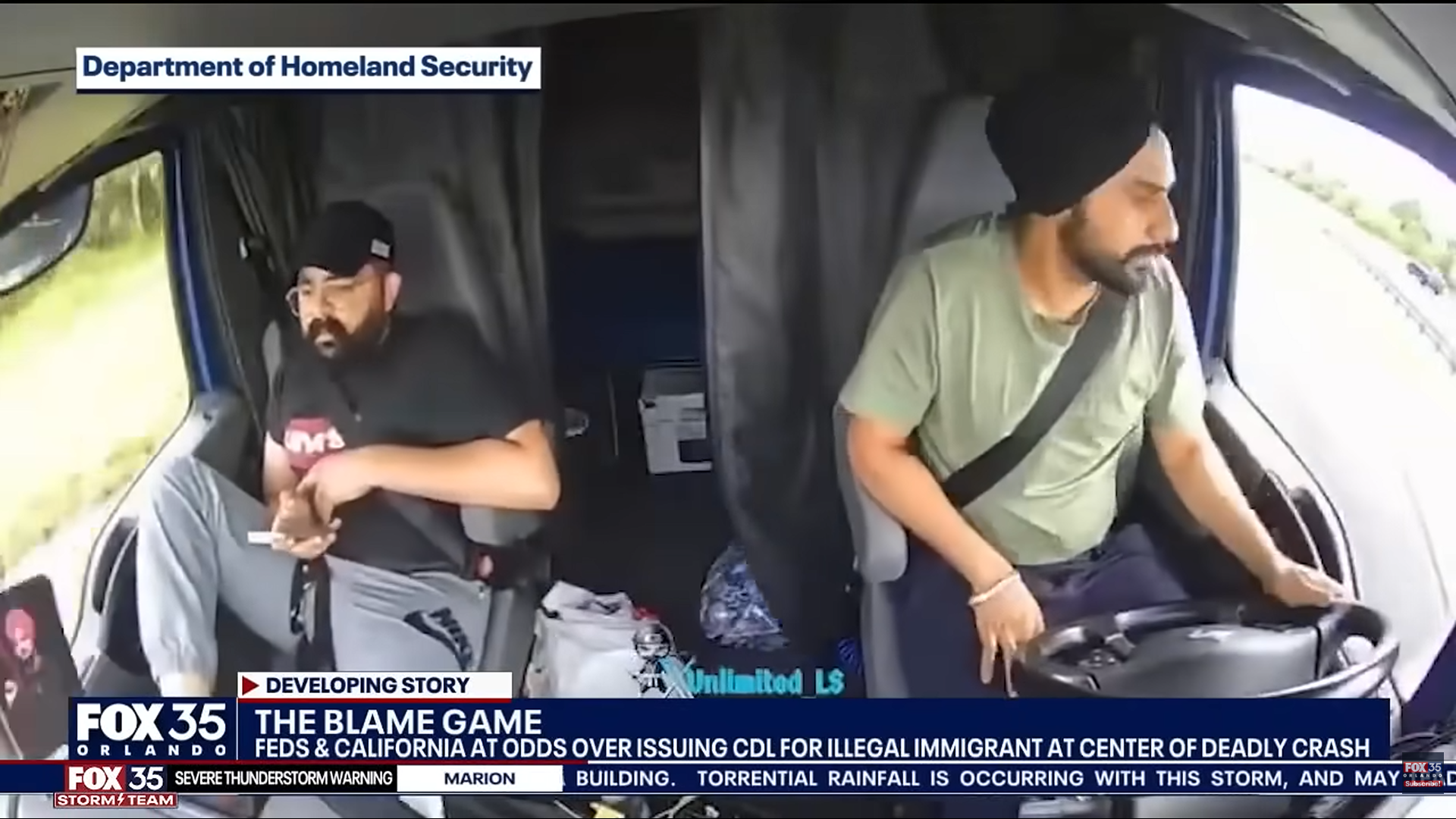
Justice Thomas highlighted safety concerns linked to the licensing of non-English-speaking unauthorized immigrants to operate commercial vehicles. He referenced Department of Transportation data indicating that in 2025, thirty fatalities resulted from seventeen semi-truck crashes caused by noncitizen commercial drivers, a figure he suggested might be underestimated. Thomas recounted a specific incident in Florida where an unauthorized immigrant, unable to read road signs, crashed a tractor-trailer into a minivan, killing three people. He asserted that issuing CDLs to individuals lacking English proficiency directly contributes to fatal accidents on public roads.
What's at stake
Both Thomas and Alito expressed that the Supreme Court should have granted Florida’s request to file its complaint, viewing the Court’s refusal as a failure to uphold its constitutional role. Thomas emphasized that Florida has no other legal avenue to bring its claims and that the Court’s exclusive original jurisdiction over disputes between states does not allow for discretionary refusal. This dissent raises broader questions about the Court’s approach to jurisdiction and its willingness to intervene in inter-state legal conflicts involving federal law and immigration policy.
The case also touches on broader debates about immigration enforcement and state responsibilities. Critics argue that allowing unauthorized immigrants who cannot communicate effectively in English to operate large commercial vehicles endangers public safety. However, proponents of current licensing policies have not publicly addressed these safety concerns, leaving uncertainty about how state officials in California and Washington will respond to the dissenting justices’ criticisms. The Supreme Court’s decision leaves unresolved the legality and safety implications of these licensing practices.
The stakes of this legal dispute extend beyond the immediate parties involved. The outcome could influence how states balance immigration enforcement with public safety and federal law compliance. It also highlights tensions between states with differing approaches to immigration and licensing policies. As the debate continues, policymakers and courts may need to consider how to address the challenges posed by unauthorized immigrants operating commercial vehicles without adequate language skills.
Looking ahead, the Supreme Court’s refusal to hear the case means that Florida’s lawsuit against California and Washington will not proceed at the highest judicial level for now. The unresolved issues may prompt legislative or administrative actions at the state or federal level to clarify licensing requirements and address safety concerns. Observers will be watching closely for any responses from the states involved and for potential future legal challenges that could revisit the constitutional questions raised by this case. The ongoing dialogue around immigration, state authority, and public safety remains a critical area to monitor.
Why it matters
Florida challenges California and Washington for issuing CDLs to unauthorized immigrants lacking English proficiency, citing federal law violations. The Supreme Court’s refusal to hear the case leaves unresolved constitutional questions about its original jurisdiction over disputes between states. Justices Thomas and Alito argue that licensing non-English-speaking unauthorized immigrants poses significant public safety risks.
The case highlights tensions between state policies on immigration and federal legal standards governing commercial driver licensing. The decision may influence future debates on immigration enforcement, state responsibilities, and public safety regulations.
Key facts & context
Florida filed a motion in October 2025 requesting the Supreme Court to allow it to pursue a lawsuit against California and Washington. The lawsuit alleges that these states violate federal law by issuing CDLs to individuals who cannot read or speak English. Article III of the U.S. Constitution grants the Supreme Court original jurisdiction over cases involving states as parties.
Seven justices declined to hear Florida’s case, prompting dissents from Justices Thomas and Alito. The Department of Transportation reported 30 deaths in 17 semi-truck crashes caused by noncitizen commercial drivers in 2025. Justice Thomas cited a Florida crash involving an unauthorized immigrant driver who could not read road signs, resulting in three fatalities.
The Supreme Court’s refusal leaves open questions about the legality and safety of issuing CDLs to unauthorized immigrants. Supporters of current state licensing policies have not publicly responded to the criticisms raised by the dissenting justices. The case underscores ongoing debates about immigration policy, state authority, and public safety in commercial transportation.
The Supreme Court’s original jurisdiction is constitutionally mandated for disputes between states, a point emphasized in the dissent. The decision not to hear the case may prompt legislative or administrative responses to address the underlying issues.
Timeline & key developments
2026-05-26: Justices Thomas and Alito Criticize SCOTUS for Not Hearing CDL Case Involving Unauthorized Immigrants. Additional reporting on this topic is available in our broader archive and will continue to shape this timeline as new developments emerge.
Primary sources
Further reading & references
- (Additional background links will appear here as we cover this topic.)
Related posts
- Supreme Court Rules on Racial Gerrymandering in Louisiana Case, Impacting Voting Rights Law
- Supreme Court Examines Citizenship Rights of U.S.-Born Children of Unauthorized Immigrants
- Justice Clarence Thomas Becomes Second-Longest Serving Supreme Court Justice in U.S. History
- Supreme Court Rules in Favor of ICE Operations in California
- Justice Alito Frames Clerkships as Part of Ideological Battle
- Justice Alito's Role in Overturning Roe Detailed in New Book