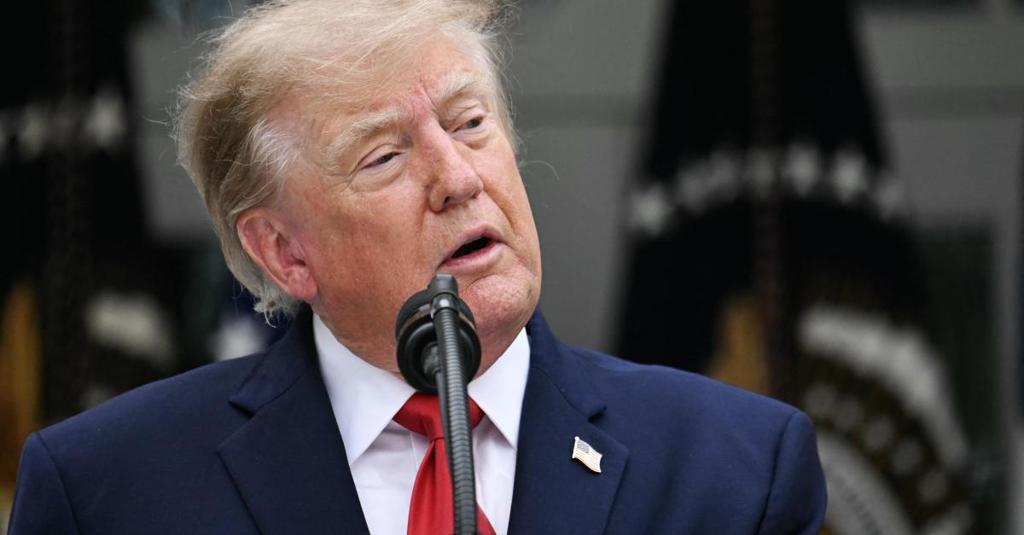
President Donald Trump has voiced his dissatisfaction with how major television news outlets refer to emerging technology, specifically criticizing their use of the term 'Artificial Intelligence' (AI) instead of what he prefers to call 'Super Intelligence' (SI). Trump’s comments have brought renewed attention to the ongoing debate over how advanced technologies should be described, regulated, and discussed in both public and official discourse.
Explainer Understanding America's Economic Growth and Challenges: A Conservative View
The former president took to his social media platform, Truth Social, to express his views. He singled out networks such as Fox News and publications like The Wall Street Journal, accusing them of deliberately avoiding the term 'Super Intelligence.' According to Trump, 'Super Intelligence' is a more accurate and fitting description for the rapidly evolving capabilities of modern machine learning and automation technologies. He wrote, "It is a far more accurate name — It’s SUPER, not Artificial!" This statement underscores his belief that the term 'Artificial' does not adequately capture the scope or potential of these technologies.
Trump's Social Media Posts
In a series of posts on Truth Social, Trump elaborated on his position. He specifically mentioned Fox News anchor Shannon Bream, criticizing her for repeatedly using the term 'Artificial Intelligence' during broadcasts. Trump suggested that the language used by the media has significant influence over public perception and policy development. He further claimed that Paul Atkins, Chairman of the Securities and Exchange Commission (SEC), would soon make the use of 'Super Intelligence' mandatory in official and media references. Trump wrote, "Like me, he likes ACCURACY in language!" However, as of now, there has been no formal announcement or policy proposal from the SEC or any other federal agency regarding such a mandate.
Trump’s remarks hint at the possibility of a federal initiative to standardize the terminology used for advanced technologies. While no concrete steps have been taken, his comments have sparked speculation about whether the federal government might eventually seek to influence or regulate the language used by both officials and the media when discussing technology.
Media and Public Response
The reaction from media figures and commentators was swift. Fox News commentator Brit Hume responded to Trump’s statements on the social media platform X (formerly Twitter). Hume emphasized the importance of free speech and editorial independence, writing, "Can someone please explain to this man that this is America, where he is free to call it Super Intelligence if he likes and the rest of us are free to continue calling it Artificial intelligence if we like. And no government agency can make any name for it mandatory."
Despite the public nature of Trump’s criticism, neither Fox News nor The Wall Street Journal issued an official response. Similarly, there has been no comment from the SEC or Chairman Paul Atkins regarding any plans to enforce the use of 'Super Intelligence' as a standard term. The lack of formal statements from these organizations suggests that, at least for now, the debate remains largely rhetorical and has not resulted in any immediate policy changes or editorial shifts.
Context in Technology Policy
The controversy over terminology comes at a time when policymakers, industry leaders, and the public are increasingly focused on the implications of rapid advancements in machine learning, automation, and related technologies. The words used to describe these innovations can have a significant impact on how they are understood by the public and how they are regulated by government agencies.
Language plays a crucial role in shaping perceptions of risk, opportunity, and responsibility. For example, the term 'Artificial Intelligence' has been widely adopted in both technical and popular discussions to refer to computer systems capable of performing tasks that typically require human intelligence. However, some advocates, including Trump, argue that as these systems become more powerful and autonomous, a term like 'Super Intelligence' may better capture their potential impact and capabilities.
The debate over terminology is not new, but Trump’s high-profile intervention has brought it to the forefront of public discussion. His push for the adoption of 'Super Intelligence' reflects broader efforts by political leaders to influence the language and framing of technology policy. Observers note that the terms used in legislation, regulation, and media coverage can shape the direction of research, investment, and public debate.
As the conversation continues, industry experts, policymakers, and commentators are watching for any formal action from federal agencies or further statements from network executives. While Trump’s comments have not yet led to any official changes, they have highlighted the importance of language in the ongoing dialogue about the future of technology and its role in society.
For now, the use of 'Artificial Intelligence' remains the standard in most media and official contexts. Whether Trump’s advocacy for 'Super Intelligence' will gain traction or lead to policy changes remains to be seen. The discussion underscores the evolving nature of technology and the challenges of keeping language and regulation aligned with rapid innovation.