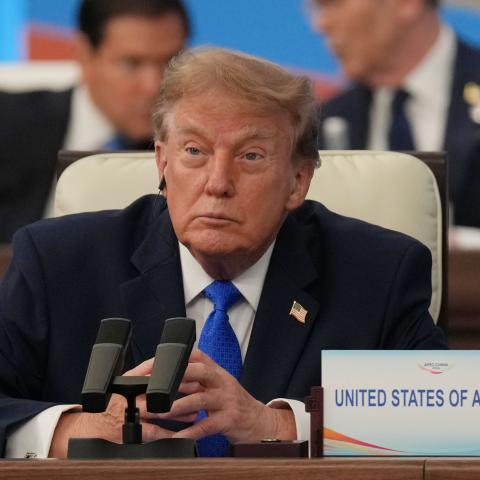
President Donald Trump on Thursday called for an immediate investigation into the Commerce Department's Bureau of Economic Analysis (BEA) after the agency revised its estimate of U.S. economic growth for the third quarter. The dispute has drawn renewed attention to the accuracy and timing of official economic data, with Trump alleging that the initial GDP figures released before the election understated the strength of the U.S. economy and may have influenced public perception at a critical moment.
Explainer Understanding America's Economic Growth and Challenges: A Conservative View
The BEA initially reported that real gross domestic product (GDP) grew at an annual rate of 3.4% from July through September. However, in its subsequent release, the agency revised the figure upward to 4.3%, according to the agency's second estimate. This revision, which came after the election, was attributed to updated data on investment and consumer spending.
President Trump's Allegations
In a post on Truth Social, President Trump accused the BEA of intentionally releasing incorrect economic data ahead of the election. He claimed the American economy was performing better than the initial numbers suggested and called the pre-election figures "fake."
"It was just revealed that the real numbers on the economy, published before the election, were fake, and a correction was issued yesterday by the people in the Government Agency that does these numbers."
— President Donald Trump, President of the United States
Trump further stated, "Why wasn’t the correct number issued before the election? I am asking for an immediate investigation of this situation. This is not a small error, this is a massive, and purposeful, error."
Trump's comments reflect longstanding concerns among some political figures about the potential for economic data releases to influence elections. He has argued that the timing of the GDP revision, coming after voters had cast their ballots, raises questions about transparency and fairness in the release of government statistics.
How the GDP Was Revised
According to the BEA's official release, the third quarter GDP was revised upward by 0.9 percentage points, from 3.4% to 4.3%. The agency attributed the change primarily to updated data on investment—particularly intellectual property products such as software—and consumer spending, especially on goods like pharmaceuticals and recreational items. The revision also reflected new information from the U.S. Census Bureau and the Department of Energy.
The BEA stated, "Real gross domestic product (GDP) increased at an annual rate of 4.3 percent in the third quarter of 2026 (July, August, and September), according to the second estimate released today by the U.S. Bureau of Economic Analysis (BEA)." The agency emphasized that such revisions are a standard part of its process to improve data accuracy as more comprehensive information becomes available.
GDP estimates are typically released in three stages: an initial "advance" estimate, followed by a "second" estimate, and then a "third" or "final" estimate. Each stage incorporates more complete data, which can lead to significant revisions. The BEA's methodology is designed to provide timely information to policymakers and the public, even though early estimates may be subject to change.
BEA's GDP Revision Process
The process of releasing initial economic estimates followed by subsequent revisions is standard practice at the BEA, which regularly updates GDP figures as more comprehensive data become available. These revisions are intended to reflect the most accurate picture of the economy based on the latest information from a variety of sources, including surveys and administrative records.
However, critics, including President Trump, have argued that the timing of these revisions can have political implications, especially when they occur around major elections. The Associated Press has reported that while the BEA's updates are routine, the practice is sometimes criticized as politically motivated. Such concerns are not new and have surfaced in previous election cycles, though there is no direct evidence that the BEA's procedures are influenced by political considerations.
The BEA did not immediately respond to Trump's allegations or calls for an investigation. The agency has historically maintained that its data releases are governed by strict protocols intended to ensure impartiality and accuracy.
The next GDP release, which will provide further updates for the third quarter, is scheduled for December 23, according to the BEA. This upcoming release is expected to incorporate even more detailed data, potentially leading to further adjustments in the reported growth rate.