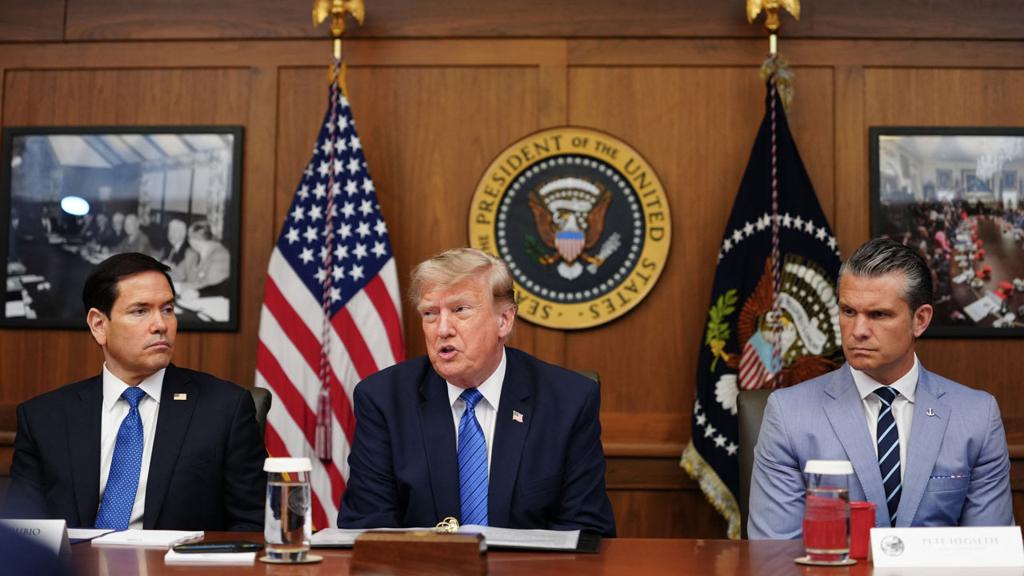
The Trump administration has placed Cuba's communist regime and regional drug cartels on heightened alert, signaling a tougher U.S. stance in the Western Hemisphere. Defense Secretary Pete Hegseth stated that all options, including military intervention, remain under consideration regarding Cuba. Hegseth told reporters that the United States will not tolerate "malign influence" in the region and emphasized that countries like Cuba are "on notice."
The administration's warnings come amid rising tensions and shifting alliances in Latin America, with U.S. officials and allies indicating a move away from previous diplomatic approaches to counter both communist regimes and transnational criminal networks. The current policy marks a departure from the engagement strategies of prior administrations, reflecting a renewed focus on security and containment.
This week, the Dominican Republic ordered Cuban diplomats to leave the country within seven days. The move was interpreted by Florida state Rep. Juan Carlos Porras as a sign of stronger American alliances in the region. Porras, who represents a majority Cuban American district, described the expulsion as a step by an American ally to "stand up for the Western Hemisphere."
"This administration has been clear that all options are on the table, and the Castro regime should count its last days."
— Juan Carlos Porras, Florida state representative
U.S. troops are currently training in Panama's jungle terrain, which officials note is similar to Cuba's. This training is seen as underscoring the administration's readiness to act if necessary. In a public address, Hegseth reiterated that the United States will defend the hemisphere from "external threats to national sovereignty, whether from narco-terrorism or foreign malign actors."
Regional Expulsions and Policy Shifts
The Dominican Republic's decision to expel Cuban diplomats follows a broader trend of U.S. allies distancing themselves from Cuba's regime. The move is viewed by some as part of a coordinated effort to isolate the Cuban government and pressure it toward reform. Porras praised the Dominican government for "standing for freedom and liberty in the hemisphere," and said the United States and its allies "all want to see a free Cuba."
Miguel Granda, a legislative aide for Florida state Rep. David Borrero, argued that Cuba's best path forward is "greater cooperation with the U.S. and a genuine move toward democratic governance and economic openness." Granda warned that Hegseth's remarks about military force "should not be taken lightly," but added that "America’s military strength speaks for itself, but our preference is to lead with partnership, not pressure."
The expulsion of Cuban diplomats by the Dominican Republic is the latest in a series of diplomatic actions in the region reflecting a shift in policy. Several countries have reconsidered their relationships with Cuba and other left-leaning governments, citing concerns over human rights, democracy, and security. U.S. officials have encouraged these moves as part of a broader strategy to counter authoritarian influence and criminal activity.
Monroe Doctrine and Foreign Influence
The Trump administration has rejected previous diplomatic strategies such as the Good Neighbor Policy and the Alliance for Progress, instead reaffirming the Monroe Doctrine's principle that foreign powers must avoid interfering in the Western Hemisphere. The Monroe Doctrine, first articulated in the early 19th century, has long served as a foundation for U.S. policy in the Americas, asserting that the region is off-limits to external intervention.
Mike Gonzalez, a senior fellow at The Heritage Foundation, stated that the doctrine remains "as solid today as it was in the day that it was formulated by Monroe’s secretary of state, John Quincy Adams." Gonzalez and other national security experts argue that the rise of left-wing governments in the region has undermined U.S. interests and allowed foreign adversaries like China, Russia, and Iran to expand their influence. According to Gonzalez, these countries "have no business here, and their support for the Cuban dictatorship has resulted in hardship for the Cuban people."
The administration's emphasis on the Monroe Doctrine reflects concerns about increasing foreign involvement in Latin America. U.S. officials have pointed to growing economic and military ties between regional governments and countries such as China and Russia, warning that these relationships could threaten stability and democratic governance.
Cartels, Terror Networks, and U.S. Response
Experts and officials have linked the growth of drug cartels and criminal networks to left-wing governments in the region, including Mexico under President Claudia Sheinbaum. Gonzalez contended that these governments have enabled cartels to traffic drugs, weapons, and unauthorized immigrants into the United States. He added, "If governments like those in Mexico and Venezuela are incapable of keeping their own territory under control, or worse, profit from the drug trade, the U.S. has no other choice but to act."
Recent federal reports have identified connections between regional governments, drug cartels, and foreign terrorist organizations such as Hezbollah. Hegseth cited these developments as justification for reviving the Monroe Doctrine, emphasizing that the United States will act against threats from narco-terrorism and foreign actors.
The administration's approach has included increased intelligence sharing, joint military exercises, and diplomatic efforts to strengthen regional cooperation against criminal and terrorist networks. U.S. officials have also called for greater accountability from governments accused of facilitating or tolerating illicit activity.
Cuban officials and supporters of the regime have not publicly responded to the administration's latest warnings. The situation remains fluid, with U.S. policymakers continuing to monitor developments and reiterate their commitment to defending the hemisphere from external threats.