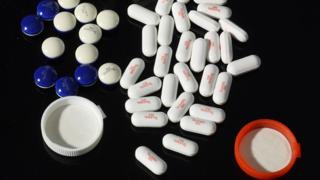
The Trump administration has launched Operation Trialblazer, a sweeping federal initiative aimed at accelerating the Food and Drug Administration’s (FDA) drug approval process and restoring the United States’ competitive position in global pharmaceutical development.
Explainer The Complex Legal Landscape of Abortion Laws After Dobbs
The announcement comes amid growing concern that U.S. clinical research is increasingly moving overseas. Officials say the trend threatens the nation’s status as a leader in medical innovation and could have long-term consequences for patients, researchers, and the broader economy.
Operation Trialblazer, unveiled by the Department of Health and Human Services (HHS), tasks six federal agencies with identifying and removing regulatory barriers that slow clinical trial research. The FDA’s current drug approval process can take up to 12 years from initial research to market approval. This lengthy timeline has been cited as a major factor in both rising pharmaceutical costs and the migration of early-stage research to countries with faster regulatory pathways, such as China and Australia.
Global Drug Approval Comparisons
In recent years, these countries have taken significant steps to streamline their own drug approval processes. For example, China has reduced its Phase 1 drug trial review period to just 60 days, while Australia’s process takes about 70 days. In contrast, the U.S. Phase 1 process averages 380 days and can extend to as long as 700 days. This disparity has had a measurable impact: in 2024, China surpassed the U.S. in the number of registered drug trials, with over 16,600 trials compared to 9,100 in the U.S., according to the Journal of Clinical Epidemiology.
"HHS is taking decisive action to reverse that trend and make the United States the preferred destination for clinical research and medical discovery."
— HHS news release
Impact of Investment in China
The shift in clinical research activity has also led to a surge in investment capital flowing to China. Out-licensing deals with Chinese pharmaceutical firms grew sharply, from $38 billion in 2023 to more than $137 billion in 2025. U.S. officials say that Operation Trialblazer is designed to stem this outflow of capital and research by clarifying the requirements for starting drug trials and reducing unnecessary animal testing before drug applications are submitted.
The FDA has acknowledged that the lack of explicit, phase-specific requirements has led many companies to overcompensate by submitting excessive data and conducting months of additional, and often unnecessary, studies. Under the new framework introduced by Operation Trialblazer, Phase 3 trials will now require only one clinical trial instead of the previous two. This change could save pharmaceutical companies an average of $282 million per trial. In addition, the costs associated with animal testing—which can range from $15 million to $100 million—are expected to decrease as the new guidelines take effect.
These regulatory changes are particularly significant for smaller pharmaceutical companies, which now account for more than 65% of drugs in development. Over the past decade, smaller firms originated 46% of first-in-class cancer drugs approved by the FDA, compared to just 14% from larger, established companies. By lowering the barriers to entry and reducing the financial burden of clinical trials, officials hope to encourage more innovation from these smaller players.
Economist Tomas Philipson, former acting chairman of the White House Council of Economic Advisers, has estimated in a new Unleash Prosperity Now report that shortening FDA review timelines by one to six years could generate between $4 trillion and $61 trillion in combined value for consumers and drug producers. This potential economic benefit underscores the stakes involved in reforming the drug approval process.
The administration’s approach with Operation Trialblazer stands in contrast to its other major pharmaceutical initiative, TrumpRX. TrumpRX introduced a most-favored-nation drug pricing policy, requiring drugmakers to match the lowest prices among selected high-income countries, many of which have government-imposed price controls. Critics of this policy argue that such controls could reduce profits for smaller companies, potentially leading to industry consolidation and less competition in the market.
Supporters of TrumpRX, however, point out that the program has increased price transparency for patients. By allowing patients to shop for the best cash price on medications, the policy has helped reduce confusion around drug pricing. The administration has not directly addressed criticism that price controls could disadvantage smaller firms, but officials emphasize that both Operation Trialblazer and TrumpRX are designed to deliver cost savings and improved access for patients.
Operation Trialblazer’s reforms are being rolled out across multiple HHS agencies. Officials say the ultimate goal is to restore U.S. leadership in clinical research, encourage investment in domestic pharmaceutical development, and deliver meaningful cost savings to patients. By streamlining the regulatory process and reducing unnecessary requirements, the administration hopes to make the United States once again the preferred destination for clinical research and medical discovery.
As the reforms take effect, industry observers will be watching closely to see whether the U.S. can regain its position at the forefront of pharmaceutical innovation and whether these changes will translate into faster access to new treatments for American patients.