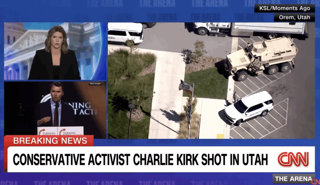
After the death of George Floyd in 2020, many top American colleges and universities provided resources to support students they believed were distressed by the incident. In contrast, following the assassination of conservative figure Charlie Kirk, these institutions have largely remained silent.
The Federalist reached out to several Ivy League schools, including Princeton, Harvard, Yale, University of Pennsylvania, Cornell, Brown, Columbia, and Dartmouth, to inquire about resources offered to students after Kirk's death. None responded to the inquiries.
While some universities may acknowledge the tragedy to discuss political violence, a review of their websites revealed no public statements addressing Kirk's assassination, unlike the responses following Floyd's death.
In 2020, Harvard's then-Dean of the Kennedy School, Douglas Elmendorf, expressed condolences regarding Floyd's death and highlighted available resources. Similarly, Yale and Brown University shared support resources and messages of solidarity with their communities at that time.
In contrast, public universities have shown a different response. The University of California, Berkeley stated it reached out to the Turning Point USA chapter shortly after Kirk's assassination, emphasizing safety for a planned vigil and offering mental health support and legal resources. Chancellor Rich Lyons condemned the use of violence for political purposes in a public statement following Kirk's death.
The University of Florida also reported reaching out to its Turning Point USA chapter to offer support after Kirk's assassination. The University of Virginia indicated it has been in contact with affected students and groups to provide care and resources.
Other institutions, such as UCLA, noted that the academic year had not yet begun, and students were not on campus. UCLA is currently investigating an employee for allegedly celebrating Kirk's death on social media.
Several universities, including the University of Michigan, University of California, San Diego, and University of North Carolina, did not respond to inquiries from The Federalist regarding their responses to Kirk's assassination. A few of these institutions addressed campus safety but did not specifically mention Kirk.
The differing responses from universities following the deaths of Floyd and Kirk highlight a potential disparity in how institutions engage with political violence and the support they offer to their student bodies.