Second Amendment Rights and Federal Courts: Balancing Liberty and Regulation
Explore the evolving legal landscape of Second Amendment rights through key court decisions shaping gun ownership and constitutional freedoms.
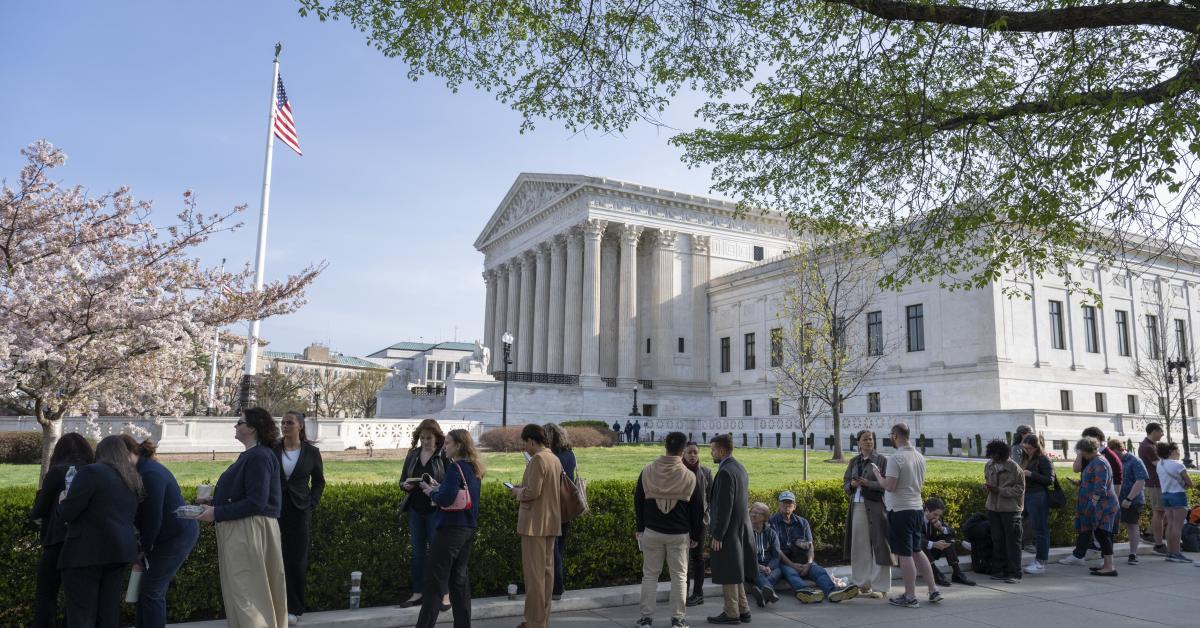
The Second Amendment of the United States Constitution, ratified in 1791, enshrines the right of Americans to keep and bear arms. This fundamental right has long been a pillar of American liberty, widely supported across the political spectrum, particularly among conservatives who emphasize individual freedom and self-defense. Yet, the scope and limits of this right have sparked continual debate in the courts, especially as legislative bodies have pursued various regulations intended to curb gun violence. Understanding the current judicial landscape surrounding the Second Amendment is crucial to appreciating how constitutional protections and government regulation intersect today.
Over recent years, the judiciary — particularly the Supreme Court — has played an increasingly decisive role in defining what the Second Amendment protects, how far states and the federal government can go in regulating firearms, and which restrictions cross constitutional boundaries. Recent cases highlight a dynamic tug-of-war between safeguarding individual rights and addressing public safety concerns. Our coverage offers detailed insights into these critical decisions shaping America’s gun laws.
The Constitutional Foundations and Historical Context
"Protecting Second Amendment rights is essential to safeguarding liberty against government overreach and preserving constitutional freedoms."
The Second Amendment’s language guarantees "the right of the people to keep and bear Arms," but the extent of this guarantee has been a matter of interpretation. Early American history recognized an individual’s right to bear arms, tied closely to the foundational idea of a militia. The historic context stemmed from the colonial and Revolutionary War eras, where armed citizen militias formed a bulwark against tyranny and foreign invasion. These early militias were often localized and community-based, highlighting a collective defense purpose intertwined with individual rights.
Over time, especially into the 20th and 21st centuries, the Second Amendment has been increasingly understood as an individual liberty vital for self-defense and resistance to tyranny. The legal understanding evolved beyond militia involvement, particularly after pivotal Supreme Court rulings. The 2008 decision in District of Columbia v. Heller marked a turning point by affirming the Amendment protects an individual's right to possess firearms, unconnected to militia service, within the home for lawful self-defense. This expanded the constitutional architecture recognizing private gun ownership as a fundamental liberty.
The aftermath of Heller saw various legislative efforts aiming to balance this individual right with public safety needs. Laws regulating gun ownership now grapple with complexity — they must respect constitutional guarantees while addressing modern realities such as firearm technology advances and urban crime. Issues such as banning certain semi-automatic rifles, imposing waiting periods, and setting age restrictions have become flashpoints in this continuing dialogue, reflecting the evolving intersection of historic rights and contemporary regulation.
Recent Supreme Court Engagements in Second Amendment Cases
The U.S. Supreme Court has been increasingly active in Second Amendment adjudication, signaling a judiciary attuned to preserving gun rights. Over the last few years, the Court’s docket reveals calculated engagement with Second Amendment issues, selectively taking cases with high constitutional stakes while declining to hear others. For instance, the Court recently declined to hear a challenge to Maine’s 72-hour waiting period, effectively allowing this regulation to remain in force for now. This reflects a nuanced approach—neither walking back the individual right nor endorsing all gun control measures outright (/2026/10/21/courts-law/supreme-court-declines-to-hear-challenge-to-maines-72-hour-gun-purchase-waiting-period/).
More significantly, the Supreme Court agreed to hear cases addressing federal bans on handgun sales to 18-20-year-olds as well as challenges to state assault weapons bans, focusing on firearms such as the AR-15 and various semiautomatic rifles (/2026/09/18/courts-law/doj-declares-federal-ban-on-handgun-sales-to-18-20-year-olds-unconstitutional/; /2026/08/05/courts-law/supreme-court-to-hear-major-cases-on-ar-15-and-semiautomatic-rifle-bans/). These decisions have the potential to recalibrate constitutional thresholds, potentially striking down age-based restrictions and affirming broader freedoms to possess certain firearms.
The Department of Justice’s position also underscores the seriousness of these cases. The DOJ has urged the Court to overturn state and local bans on AR-15s, framing these restrictions as incompatible with constitutional protections designed to safeguard individual rights from excessive government intervention (/2026/09/06/courts-law/justice-department-urges-supreme-court-to-overturn-state-and-local-ar-15-bans/). This move highlights the federal government’s increasing willingness to contest state-level gun laws that it views as infringing on constitutional freedom, intensifying the federalism debate central to Second Amendment jurisprudence.
Lower Courts and the Nuances of Second Amendment Litigation
While the Supreme Court sets national precedents, lower federal courts have played a vital and sometimes complicated role in shaping the practical application of Second Amendment rights. These courts assess specific statutes and regulations in their jurisdictions, often yielding divergent interpretations which reflect different judicial philosophies and regional attitudes toward gun control.
For example, the Fifth Circuit's ruling in United States v. Daniels questioned the constitutionality of certain federal firearm regulations by referencing America's historical traditions of gun ownership, suggesting that some modern restrictions lack constitutional support. This highlights how appeals courts weigh originalist historical context with present-day concerns. Meanwhile, the Ninth Circuit in Duncan v. Bonta took a more cautious approach, issuing a partial stay that allowed California's restrictions on large-capacity magazines to remain during appeals, underscoring the variability and uncertainty lower courts may generate for gun owners.
At times, lower courts have aggressively curtailed outdated or poorly justified firearm regulations. Recent rulings have invalidated key provisions of the 1934 National Firearms Act following the repeal of certain federal suppressor taxes, revealing courts' wariness of unnecessary regulatory burdens on gun ownership (/2026/08/07/courts-law/federal-judge-strikes-down-key-provisions-of-1934-gun-law-after-tax-repeal/). Similarly, judges have struck down restrictive regulations on suppressors themselves, questioning the rationale for excessive governmental control in an era of evolving gun technology that enhances safety and privacy (/2026/08/14/courts-law/federal-judge-strikes-down-suppressor-regulations-leaving-uncertainty-for-gun-owners/).
These rulings convey a judicial sensitivity to regulating firearms responsibly without infringing constitutional freedoms. However, the circuit split phenomenon—where one appellate court permits a law and another strikes a similar law—creates a fragmented landscape that only the Supreme Court can unify. This dynamic reinforces the crucial nature of Supreme Court oversight in Second Amendment litigation.
The Ongoing Battle Over Assault Weapons and Magazine Restrictions
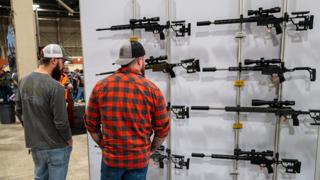
One of the most incendiary areas of gun law litigation involves assault weapons bans and high-capacity magazine restrictions. These laws, typically enacted by states with legislative majorities favoring tighter gun control, often prohibit the possession, sale, or manufacture of semi-automatic rifles modeled after military firearms, such as the AR-15, and limit magazines' ammunition capacity.
Conservatives and gun rights advocates argue these bans undermine constitutional protections by targeting popular firearms widely used for lawful self-defense, hunting, and sport shooting. They maintain the definition of “assault weapons” is often overly broad or arbitrary, and that such bans are ineffective at preventing criminal misuse while injuring law-abiding gun owners’ rights. The complexities inherent in these debates make the issue a constitutional flashpoint.
The Supreme Court's approach to these laws has been cautious. For instance, the Court recently declined to weigh in directly on Illinois’ assault weapons and high-capacity magazine ban, allowing the law to persist for now while further litigation unfolds (/2026/07/01/courts-law/supreme-court-to-hear-challenges-to-state-assault-weapons-bans/). Meanwhile, ongoing cases challenge Virginia’s new assault firearms ban amidst a politically charged environment, given Democrats’ legislative advances on gun control in the state (/2026/05/15/courts-law/lawsuits-filed-against-virginias-new-assault-firearms-ban/).
These controversies are often mirrored in concealed carry regulation debates, which also vary widely from state to state. Our comprehensive concealed carry tracker demonstrates the patchwork of legal environments, from permissive "shall-issue" states to highly restrictive jurisdictions (/trackers/concealed-carry-laws-by-state/). This variability reflects the broader cultural and political divide over gun rights across America, all of which shapes how Second Amendment rights are exercised on the ground.
The Role of Federalism and State Sovereignty in Gun Rights
Federalism plays a central role in how the Second Amendment is implemented across the United States. While the Amendment guarantees an individual right to bear arms, states retain significant authority to regulate firearms within their borders, resulting in a complex interaction between federal constitutional standards and state-specific laws.
The federal government, at times, has actively intervened in this balance. A notable example is the Department of Justice’s lawsuit against Virginia challenging its assault firearms ban, which underscores federal skepticism toward stringent state-level restrictions perceived as infringing on Second Amendment protections (/2026/07/01/courts-law/doj-sues-virginia-over-assault-firearms-ban/). This lawsuit represents a broader federalist tension where national constitutional principles confront localized policy priorities and political preferences.
Conversely, state courts have sometimes resisted federal judicial trends. The Hawaii Supreme Court’s rebuke of the U.S. Supreme Court in Granillo v. State demonstrates how state judiciaries may interpret gun laws differently, especially in jurisdictions with strong local gun control traditions or public safety concerns (/2026/07/21/courts-law/hawaii-supreme-court-rebukes-u-s-supreme-court-in-granillo-v-state-opinion/). These divergences typify the ongoing dialogue between state sovereignty and federal constitutional law in the firearm regulation arena.
Navigating this federal-state divide requires courts to balance respect for local governance with safeguarding constitutional freedoms. The intersection of these principles remains fluid and is constantly shaped by new cases and political movements, ensuring that Second Amendment application remains a dynamic component of American federalism.
Implications for Conservative Principles and American Liberty
Second Amendment jurisprudence holds profound significance for conservatives who emphasize individual liberty, limited government, and fidelity to the Constitution’s original meaning. Gun ownership is emblematic not only of practical self-defense but as a safeguard against potential government tyranny. This principle resonates deeply within broader conservative thought, framing firearm rights as cornerstones of freedom itself.
Recent court decisions highlight both victories and challenges for this worldview. The judiciary’s increased receptivity to constitutional arguments against certain restrictions signals a protective stance toward liberty. Yet, the courts must still navigate political and social pressures advocating for more regulation, often justified by public safety concerns. Conservatives rightly caution that expansive legislative action risks eroding core freedoms when it imposes blanket prohibitions or targets firearms favored by lawful owners.
Ongoing engagement with legal processes is necessary to ensure Second Amendment protections endure. It also requires vigilance against regulatory overreach that can gradually chip away at these rights under the guise of public interest. From landmark rulings to circuit court opinions, the conservative commitment to liberty demands active participation in shaping this crucial constitutional dialogue.
Looking Ahead: The Future of Second Amendment Litigation
The most consequential legal battles over the Second Amendment lie ahead, with the Supreme Court’s decisions poised to redefine fundamental boundaries. Cases involving state assault weapons bans, handgun sales to 18-20-year-olds, and challenges to magazine capacity restrictions promise to clarify longstanding ambiguities, reinforcing or recalibrating the scope of individual rights.
The evolving judicial landscape necessitates preparedness among citizens, policymakers, and advocates to navigate an era of intensified litigation. Court rulings will not only affect legal doctrine but will shape the practical realities of firearm ownership for decades. This moment is pivotal—the decisions made today will echo into the future.
Our comprehensive coverage of major gun rights cases, including detailed analysis of Supreme Court proceedings, offers readers insight into these critical developments (/2026/09/28/courts-law/supreme-court-to-hear-major-gun-rights-voting-and-jury-cases/). Staying informed equips the public to engage validly with the constitutional principles and policymaking efforts shaping America’s firearm rights.
Contextualizing Opposing Views While Emphasizing Rights
It is essential, even from a conservative viewpoint, to acknowledge that proponents of gun regulation advocate for measures intended to reduce firearms-related violence and protect communities from harm. Their perspective centers on empirical data and public safety concerns, arguing that restrictions on certain firearms or ownership policies could contribute to such goals.
However, conservative critiques highlight the inequities and inefficacy of many regulations—pointing out that laws commonly penalize law-abiding citizens rather than criminals, who often ignore or circumvent these rules. The lack of clear evidence linking specific gun controls to reduced violence fuels continued debate.
Within this contest of ideas, the courts remain essential as neutral arbiters tasked with balancing constitutional rights and public interests. This legal push-and-pull serves as a testament to the strength of America's constitutional order, where democratic principles and fundamental liberties jointly shape policy outcomes rather than unilateral legislative impulses.
The Broader Impact on American Society and Democracy
Second Amendment rights are integral to the American tradition of freedom, individual empowerment, and democratic governance. The judiciary’s role in interpreting these rights touches on societal trust in institutions, the balance of power, and civic cohesion.
Safeguarding constitutional gun rights while permitting reasonable regulation reflects a mature constitutional order grounded in checks and balances. However, government overreach threatens to erode freedoms and public confidence alike. Robust, informed engagement by citizens and a judiciary committed to constitutional fidelity help preserve the liberty and security that define American exceptionalism.
Our continuing, in-depth reporting ensures readers remain abreast not only of court rulings but also the fundamental principles at stake in this defining feature of American freedom. This vigilance is vital to maintaining the delicate balance between liberty and regulation in a complex, evolving society.
Frequently asked questions
What does the Second Amendment protect?
It protects the individual right to keep and bear arms for lawful purposes such as self-defense.
How does the Supreme Court influence gun laws?
It interprets the constitutionality of gun regulations, setting nationwide legal precedents.
Can states restrict firearms despite the Second Amendment?
Yes, states can enact certain regulations, but they must not violate constitutional rights as interpreted by courts.
What are assault weapons bans, and why are they controversial?
These bans prohibit certain semi-automatic rifles; conservatives argue they infringe lawful ownership rights.
Why is concealed carry regulation important for Second Amendment rights?
Concealed carry laws determine how citizens may legally carry firearms outside their homes, impacting practical self-defense.
How do federal and state courts differ in gun rights rulings?
Lower courts often have varied interpretations, while the Supreme Court provides uniform constitutional rulings.
What recent Supreme Court cases are shaping the future of gun rights?
Cases involving handgun sales to younger adults and challenges to assault weapons bans are currently pivotal.
How can citizens stay informed about changes in gun laws?
Following reputable coverage like ours and tracking legal developments ensures awareness of evolving rights and laws.
Timeline of our coverage
- 2026-10-21 — Supreme Court Declines to Hear Challenge to Maine's 72-Hour Gun Purchase Waiting Period
- 2026-09-28 — Supreme Court to Hear Major Gun Rights, Voting, and Jury Cases
- 2026-09-18 — DOJ Declares Federal Ban on Handgun Sales to 18-20-Year-Olds Unconstitutional
- 2026-09-06 — Justice Department Urges Supreme Court to Overturn State and Local AR-15 Bans
- 2026-08-14 — Federal Judge Strikes Down Suppressor Regulations, Leaving Uncertainty for Gun Owners
- 2026-08-07 — Federal Judge Strikes Down Key Provisions of 1934 Gun Law After Tax Repeal
- 2026-08-05 — Supreme Court to Hear Major Cases on AR-15 and Semiautomatic Rifle Bans
- 2026-07-21 — Hawaii Supreme Court Rebukes U.S. Supreme Court in Granillo v. State Opinion
- 2026-07-08 — Justice Alito's Influence Grows Amid High-Stakes Supreme Court Decisions
- 2026-07-01 — DOJ Sues Virginia Over Assault Firearms Ban
- 2026-07-01 — Supreme Court to Hear Challenges to State Assault Weapons Bans
- 2026-06-25 — Supreme Court Strikes Down Hawaii's Concealed Carry Restrictions
- 2026-05-15 — Lawsuits Filed Against Virginia's New Assault Firearms Ban
- 2026-05-07 — Justice Clarence Thomas Becomes Second-Longest Serving Supreme Court Justice
- 2026-03-06 — Appeals Court Rules D.C.'s Gun Magazine Restriction Is Unconstitutional
- 2026-01-27 — Virginia Democrats Advance Gun Control Bill Amid Supreme Court Considerations
- 2026-01-27 — Virginia Democrats Propose Gun Legislation That Critics Call Unconstitutional
The Bottom Line
- The Second Amendment embodies a core American liberty critical to individual freedom and self-defense.
- Judicial interpretation increasingly shapes how gun laws balance public safety and constitutional rights.
- State and federal conflicts over gun regulation reveal deep tensions in American federalism.
- Supreme Court rulings set legal precedents that guide millions of Americans’ firearm ownership.


Sources
- U.S. Supreme Court
- Tomshardware.com: Federal Judge Strikes Down Atf Ghost Gun Rule For 3d Printed Parts Says Restrictions Violate Fifth Amendment And Historical Tradition Of Diy Gunsmithing
- Nprillinois.org: Federal Appeals Court Upholds Illinois Assault Weapons Ban
- Axios.com: Supreme Court Case Guns Abortion Lgbtq Rights (Oct 01, 2023)
- Axios.com: Hunter Biden Dismiss Gun Charges Dismiss Request Second Amendment (Dec 12, 2023)
- Axios.com: Illinois Supreme Court Assault Weapons Ban (Dec 14, 2023)
- Apnews.com: 9158e2a4c7aed59e5a21cd0974a99cbf