TLT Explains
Washington Post Criticizes Supreme Court's Conservative Majority for Undermining Civil Rights Protections
What's happening
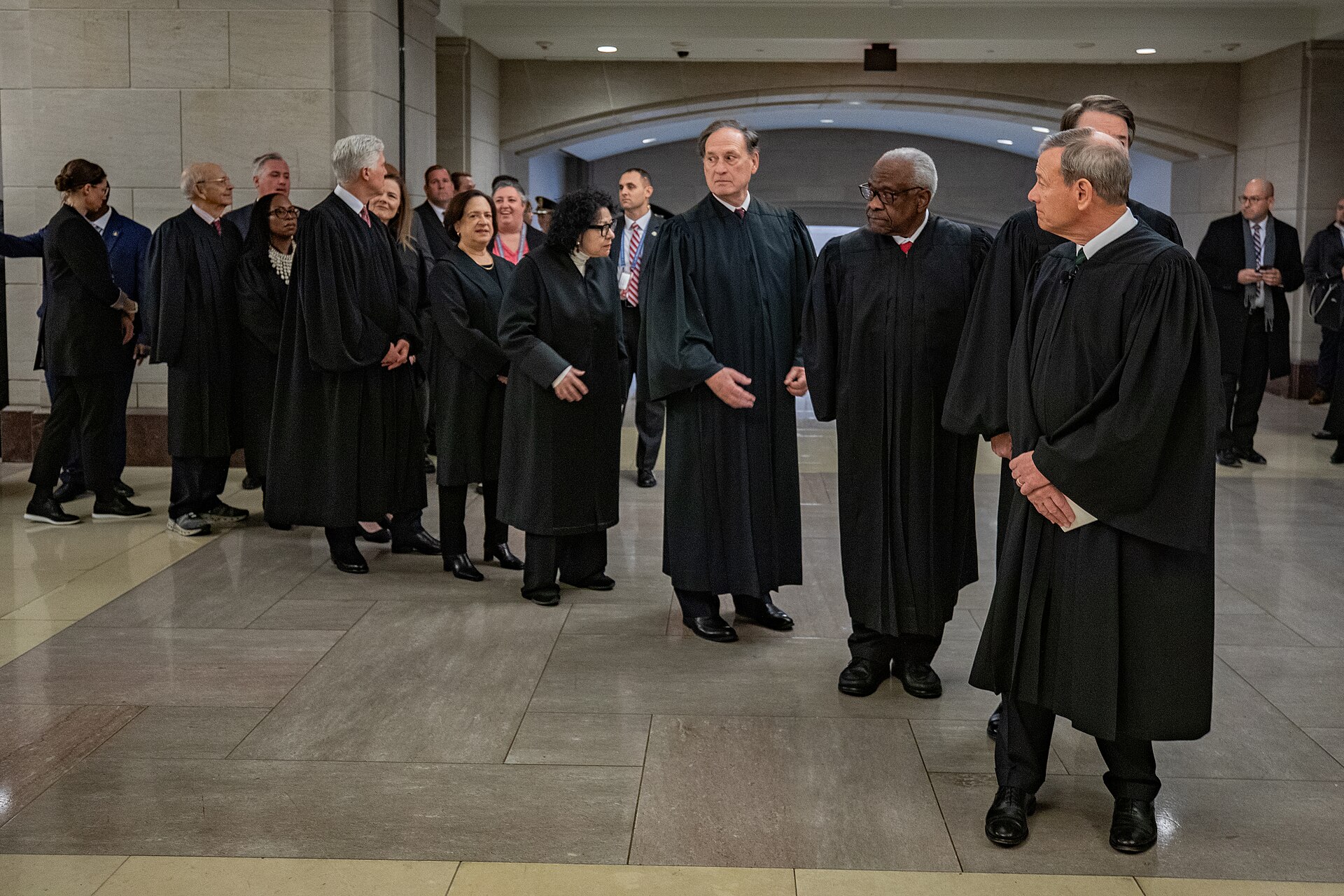
The Washington Post published an article on Thursday sharply criticizing the U.S. Supreme Court's recent rulings, alleging that the court's conservative majority is eroding established civil rights protections. The piece, written by journalist Justin Jouvenal, argues that the court, reshaped by former President Donald Trump’s appointees, has taken a decisive turn to the right. This shift has resulted in a series of rulings that critics say have disadvantaged women, minorities, and LGBTQ+ individuals. The article highlights a growing concern about the court’s role in redefining civil rights in America.
The background to this critique lies in the court’s composition and its recent decisions. Since 2020, Justices Neil Gorsuch, Brett Kavanaugh, and Amy Coney Barrett, all appointed by Trump, have joined the bench, altering its ideological balance. A study cited in the article, conducted by professors from Washington University and Penn State, analyzed 270 Supreme Court cases between 2020 and 2024. The study found that civil rights advocates have won only 44 percent of these cases, a notable decline compared to previous decades when they typically prevailed in the majority of such rulings. This data underscores the court’s apparent shift away from protecting certain civil rights claims.
Jouvenal’s article emphasizes that this ideological shift has led to rulings that many view as undermining protections for marginalized groups. For example, the court’s decision in 303 Creative LLC v. Elenis involved a Christian web designer who refused to create websites for same-sex weddings. The court ruled against the designer, a decision that critics argue reflects a broader trend of limiting civil rights protections for LGBTQ+ individuals. Similarly, the court upheld laws restricting certain medical procedures for minors and reinforced parental rights in educational settings, decisions seen as aligning with conservative social values.
The article also discusses the Supreme Court’s ruling in Students for Fair Admissions (SFFA) v. Harvard, which ended certain affirmative action policies that considered race in college admissions. This decision was controversial because it was interpreted by some as curtailing protections against racial discrimination for white and Asian American applicants. Critics argue that this ruling narrows the scope of civil rights, while supporters claim it promotes fairness and equal treatment in admissions processes. These cases illustrate the complex and often contentious nature of the court’s recent jurisprudence on civil rights issues.
What's at stake
Jouvenal’s analysis portrays the current Supreme Court as deeply polarized and increasingly partisan. He describes it as the most ideologically divided court in seven decades, with rulings that frequently favor conservative positions. The article references specific cases such as U.S. v. Skrmetti and Mahmoud v. Taylor, which upheld laws limiting access to certain medical treatments for minors and bolstered parental authority in schools. These decisions have sparked debate about the court’s role in shaping social policy and protecting individual rights, particularly for LGBTQ+ communities.
Reactions to the Washington Post’s critique have been mixed. Some legal experts and commentators argue that the article oversimplifies the court’s decisions by framing them as uniformly hostile to civil rights. They contend that the justices are applying originalist interpretations of the Constitution, which they believe is essential for judicial consistency and integrity. Meanwhile, advocacy groups and civil rights organizations express concern that the court’s conservative majority is dismantling decades of progress on equality and protections for vulnerable populations. This divide reflects ongoing tensions over the court’s influence on American society.
The article also notes that the Supreme Court did not respond to requests for comment regarding the criticisms or the study cited. Legal scholars point out that interpretations of civil rights law often vary widely depending on political and ideological perspectives, making consensus difficult. The debate over the court’s direction is likely to continue as it hears new cases involving contentious social and legal issues. The Washington Post’s coverage adds to a broader conversation about the judiciary’s role in balancing individual freedoms and societal values.
Looking ahead, the Supreme Court is expected to maintain its conservative stance in upcoming terms, with several high-profile cases on the docket that could further impact civil rights protections. Observers will be closely watching how the court approaches issues such as LGBTQ+ rights, affirmative action, and parental authority in education. The scrutiny from media outlets, advocacy groups, and legal experts is likely to intensify, especially as the court’s decisions have far-reaching consequences for various communities across the country. The evolving composition of the court and its jurisprudence will remain a critical area of public interest and debate.
Why it matters
The Supreme Court’s conservative majority has shifted rulings away from traditional civil rights protections. Key decisions have affected LGBTQ+ rights, including cases like Elenis involving same-sex wedding services. The court’s ruling in Harvard’s admissions case ended certain race-conscious policies, impacting affirmative action.
Critics argue these rulings reduce protections for women, minorities, and marginalized groups. Supporters say the court is adhering to originalist constitutional interpretations. The court’s decisions influence social policies on medical procedures and parental rights in education.
Ongoing debates about the court’s role highlight deep ideological divisions and future legal battles.
Key facts & context
The Washington Post published a critical article on April 10, 2026, about the Supreme Court’s conservative majority. The article was authored by Justin Jouvenal and cites a study from Washington University and Penn State. The study analyzed 270 Supreme Court cases from 2020 to 2024, finding civil rights advocates won 44% of cases.
Justices Neil Gorsuch, Brett Kavanaugh, and Amy Coney Barrett, appointed by Donald Trump, shifted the court rightward. The court ruled in 303 Creative LLC v. Elenis against a Christian web designer refusing same-sex wedding services. In Students for Fair Admissions v. Harvard, the court ended some race-conscious college admissions policies.
Cases like U.S. v. Skrmetti and Mahmoud v. Taylor upheld laws limiting medical procedures for minors and reinforced parental rights. The court’s conservative majority is described as the most polarized in seven decades by the article. The Supreme Court did not provide comments in response to the Washington Post’s article or the referenced study.
Legal experts note that civil rights interpretations vary widely depending on ideological perspectives. The court’s upcoming terms include cases that may further affect civil rights and social policies. The Washington Post’s article adds to ongoing national discussions about the judiciary’s impact on civil rights.
Timeline & key developments
2026-04-10: Washington Post Criticizes Supreme Court's Conservative Majority. Additional reporting on this topic is available in our broader archive and will continue to shape this timeline as new developments emerge.
Primary sources
Further reading & references
- (Additional background links will appear here as we cover this topic.)
Related posts
- Supreme Court Limits Trump’s Tariff Authority but Kavanaugh Sees Other Legal Options
- Supreme Court Allows Trump Administration to Revoke TPS For Venezuelan Nationals
- Judicial Tensions Rise as Lower Court Judges Criticize Supreme Court's Emergency Docket
- Supreme Court Rules in Favor of ICE Operations in California
- Supreme Court to Review Birthright Citizenship Interpretation
- Supreme Court Blocks Lower Court Order on Trump's Foreign Aid Cuts