TLT Explains
FBI Search in Georgia Highlights Challenges in Election Accountability and Oversight
What's happening
The recent FBI search warrant executed for 2020 election materials in Fulton County, Georgia, has intensified scrutiny over the state's election accountability mechanisms. This federal action has reignited debates about whether any alleged election law violations will be properly investigated and prosecuted, especially given the complex jurisdictional and structural issues within Georgia's election oversight system. Advocates for election integrity are calling for clearer enforcement and transparency as questions mount about the effectiveness of state-level responses.
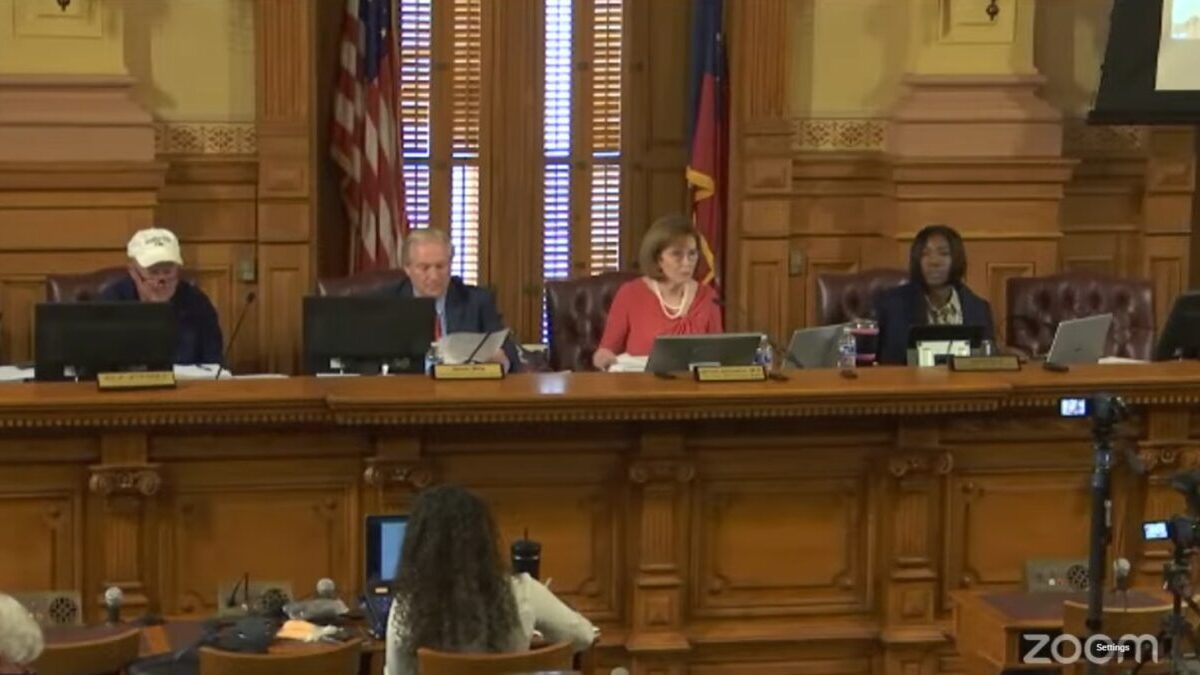
The backdrop to this federal intervention includes a significant backlog of unresolved election-related cases in Georgia. In December, the State Election Board convened to address over 315 pending cases, many of which stem from the 2020 and 2022 elections. This backlog has drawn criticism from multiple quarters, including Secretary of State Brad Raffensperger, who has publicly questioned the board's efficiency. However, the board itself has faced challenges, including accusations that its chairman, John Fervier, has obstructed progress by missing key meetings where numerous cases were adjudicated.
One particularly notable case from the December meeting, labeled #2022-015, revealed that more than 130 tabulator tapes, accounting for approximately 315,000 votes, lacked the required signatures from poll managers. While Raffensperger characterized this as a mere clerical error, the incident raised broader concerns about election oversight and procedural compliance. The State Election Board, which has been partially independent since 2021 and fully separated from the Secretary of State's office since 2024, is tasked with investigating such irregularities but has struggled with limited resources and authority.
The relationship between the Secretary of State's office and the State Election Board has been fraught with tension. Raffensperger has expressed dissatisfaction with the board's increasing independence and has been accused of undermining its authority. Complicating matters, the board has relied on investigators from the Secretary of State's office to conduct inquiries, creating a conflict of interest since the same office manages elections. In late 2025, Raffensperger further complicated oversight by withdrawing these investigators from board meetings, hampering the board's investigative capacity.
What's at stake
Jurisdictional ambiguity also hampers enforcement efforts. Kara Murray, communications director for Attorney General Chris Carr, has stated that while the attorney general’s office has jurisdiction over certain election crimes, it lacks investigative authority. Murray also noted that no criminal matters have been formally referred to the attorney general by either the State Election Board or the Secretary of State’s office. This contrasts with claims from the board’s executive director, James Mills, who insists that serious criminal violations have been referred, highlighting a disconnect between agencies responsible for election law enforcement.
Political dynamics further complicate the enforcement landscape. Raffensperger has increasingly bypassed both the State Election Board and the attorney general by referring election cases directly to local district attorneys. Critics question whether these local officials have the resources, expertise, or willingness to pursue complex election-related prosecutions effectively. Meanwhile, State Senator Brian Strickland, a candidate for attorney general, has advocated for clearer statutory authority and enhanced enforcement powers for the attorney general’s office to address election crimes more robustly.
The stakes of these ongoing challenges are significant. Without meaningful reforms—such as increased funding for an independent State Election Board and clearer jurisdictional mandates for the attorney general—Georgia risks weakening its election oversight framework. Experts like Mark Davis, president of Data Productions, Inc., emphasize that restoring public confidence in the electoral process requires both political will and structural changes. As the 2026 Republican primary approaches, the handling of election integrity issues by key figures like Raffensperger and Carr could influence voter perceptions and the broader political landscape.
Looking ahead, the next steps will likely involve legislative and administrative efforts to clarify roles and responsibilities among Georgia’s election oversight bodies. Monitoring how the attorney general’s office, the State Election Board, and local prosecutors respond to ongoing investigations will be critical. Additionally, the outcome of the 2026 elections may shape future reforms and determine whether federal involvement remains necessary to ensure election accountability in Georgia.
Why it matters
The FBI search raises urgent questions about whether election law violations will be effectively investigated and prosecuted in Georgia. A backlog of hundreds of election cases highlights systemic challenges in the state’s election oversight and enforcement mechanisms. Jurisdictional confusion limits the attorney general’s office from investigating election crimes, reducing accountability.
Political tensions between the Secretary of State and the State Election Board hinder coordinated election oversight. Without reforms, Georgia’s election laws risk becoming ineffective, undermining public trust in the electoral process.
Key facts & context
The FBI executed a search warrant in Fulton County, Georgia, targeting 2020 election materials. In December, the Georgia State Election Board faced a backlog of approximately 315 election-related cases. Over 130 tabulator tapes representing about 315,000 votes were found unsigned by poll managers in case #2022-015.
The State Election Board became fully independent from the Secretary of State’s office in 2024. Secretary of State Brad Raffensperger withdrew his office’s investigators from board meetings in late 2025. Attorney General Chris Carr’s office has jurisdiction over some election crimes but lacks investigative authority.
No criminal election matters have been formally referred to the attorney general’s office by the State Election Board or Secretary of State’s office, according to Kara Murray. State Senator Brian Strickland supports clearer jurisdiction and stronger enforcement powers for the attorney general regarding election crimes. The Secretary of State’s office has begun referring election cases directly to local district attorneys.
Mark Davis, president of Data Productions, Inc., has called for political will and structural reforms to restore election integrity in Georgia. The 2026 Republican primary features key figures involved in election oversight, including Raffensperger and Carr, with election integrity a central campaign issue.
Timeline & key developments
2026-02-11: FBI Search Raises Questions on Election Accountability in Georgia. Additional reporting on this topic is available in our broader archive and will continue to shape this timeline as new developments emerge.
Primary sources
Further reading & references
- (Additional background links will appear here as we cover this topic.)
Related posts
- Georgia’s Fulton County Election Board Cannot Find Missing 2020 Early Voting Zero Tapes
- Fulton County Acknowledges Unlawful Certification of Early Ballots in 2020 Election
- Noncitizen Admits to Voting Multiple Times in Georgia Elections
- FBI Investigates Fulton County's 2020 Election Administration Amid Claims of Irregularities
- Ohio Enacts Law Requiring All Mail Ballots to Be Returned by Election Day
- Fulton County Admits 315,000 Votes Lacked Proper Certification in 2020 Election