TLT Explains
Acting Attorney General Todd Blanche Addresses Calls for Accountability Amid DOJ Political Weaponization Claims
What's happening
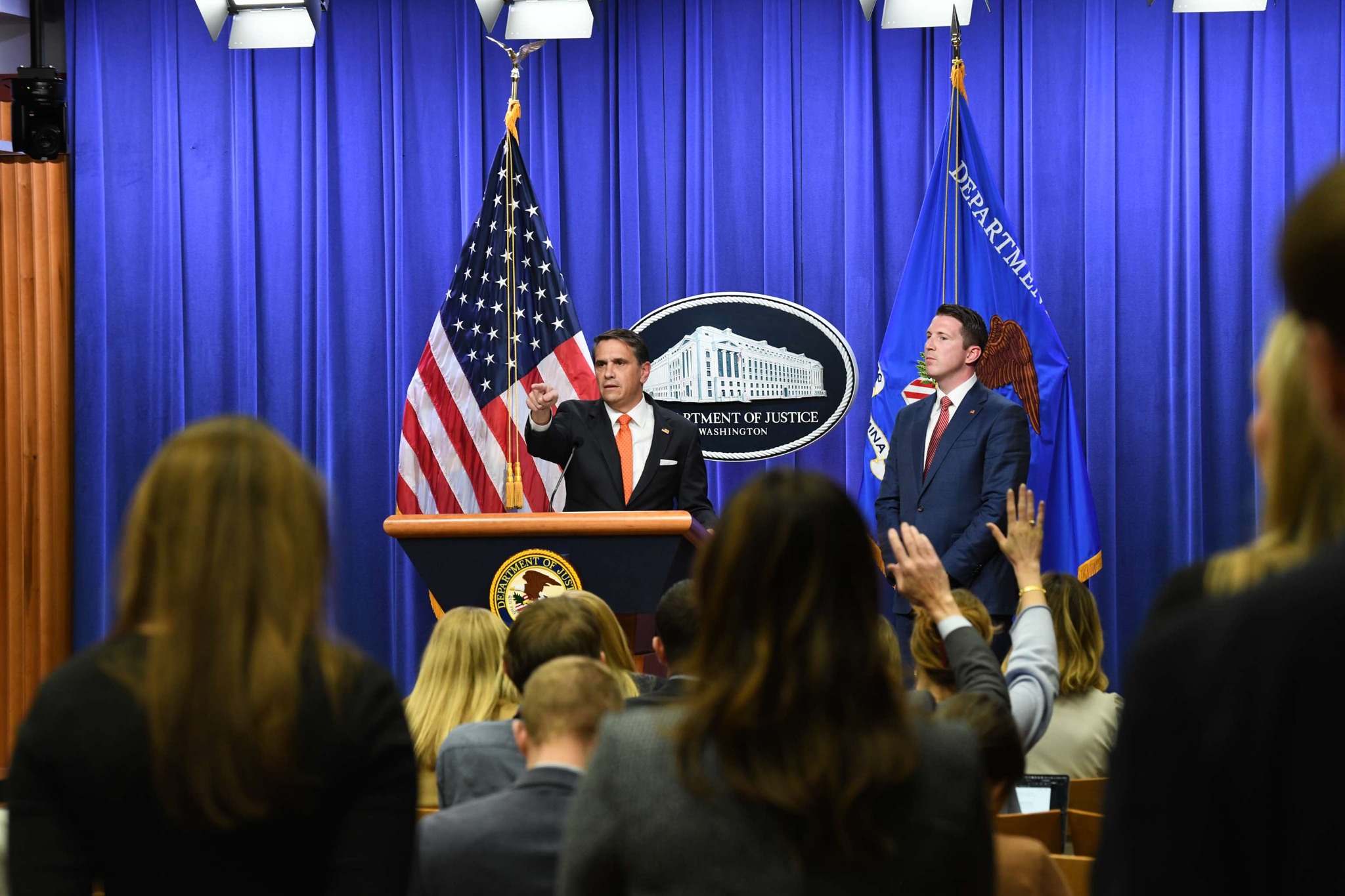
Acting Attorney General Todd Blanche recently spoke at a press conference to confront mounting concerns about the Department of Justice's alleged political weaponization. He underscored the importance of holding individuals accountable for any misconduct within the DOJ, highlighting the department’s responsibility to maintain integrity and public trust. These remarks come amid ongoing debates about how past investigations, including the Russia collusion probe, have been perceived as politically motivated. Critics argue that without accountability, the DOJ risks perpetuating a cycle of politicization that undermines its mission.
The controversy surrounding the DOJ’s role in politically charged investigations has deep roots, with critics pointing to actions taken during previous administrations as evidence of systemic issues. The Russia collusion investigation, in particular, remains a focal point for those who believe the DOJ was used as a tool against political opponents. This backdrop has fueled calls for a thorough review and potential prosecution of individuals involved in what some describe as abuses of power. At the same time, supporters of the DOJ caution that such moves could further entangle the department in partisan conflicts, complicating its ability to enforce the law impartially.
Central to this debate is the tension between the need for accountability and the risk of further politicization. Supporters of investigating past misconduct argue that failing to act would embolden future abuses and erode public confidence in the justice system. Conversely, opponents warn that pursuing prosecutions based on political grievances could damage the DOJ’s reputation as an independent institution. This dynamic was evident during a recent exchange between Blanche and CNN reporter Paula Reid, where questions were raised about balancing the pressure to prosecute perceived political enemies with the administration’s commitment to ending DOJ weaponization.
Blanche’s response to these concerns highlighted the complexity of the issue, stating that ending weaponization should not be viewed negatively. He suggested that efforts to hold individuals accountable are part of restoring the department’s credibility rather than undermining it. This perspective reflects the challenges faced by DOJ leadership in navigating political pressures while trying to uphold the rule of law. The conversation also touched on the role of the media, with Blanche noting that some journalists who now criticize the DOJ were previously silent or supportive during earlier administrations, illustrating shifting public narratives.
What's at stake
The media’s coverage of the DOJ’s actions has been a significant factor in shaping public perception. Critics argue that major news outlets have sometimes downplayed or ignored allegations of weaponization, particularly in relation to investigations involving former President Donald Trump and his allies. This perceived inconsistency has led some observers to question the media’s impartiality and its impact on the broader debate about justice and accountability. Blanche’s remarks about media complicity underscore the evolving nature of how these issues are reported and understood by the public.
Calls for accountability have gained traction among certain segments of the public and political commentators who are frustrated by what they see as a lack of consequences for those involved in past abuses. High-profile figures such as former FBI Director James Comey and former CIA Director John Brennan have been cited by critics as examples of individuals who should face scrutiny. These demands reflect a broader desire to restore faith in the DOJ by addressing perceived failures and ensuring that no one is above the law. However, some experts caution that politicizing prosecutions could lead to a cycle of retaliation that ultimately harms the justice system’s independence.
The stakes in this debate are significant, as the DOJ’s credibility and ability to enforce laws fairly are foundational to the American legal system. If the department is seen as a political tool, public trust may erode further, affecting everything from criminal prosecutions to civil rights enforcement. On the other hand, ignoring allegations of misconduct risks perpetuating a culture where political considerations override legal standards. This balance is delicate and requires careful management by DOJ leadership, lawmakers, and the broader justice community.
Looking ahead, the DOJ faces a challenging path as it seeks to address these competing demands. Acting Attorney General Blanche’s comments suggest an awareness of the need for both accountability and impartiality, but concrete steps remain uncertain. The department may pursue internal reviews or limited prosecutions to demonstrate a commitment to integrity without appearing politically motivated. Meanwhile, public and political pressure will likely continue to influence the DOJ’s approach, making transparency and clear communication critical. Observers will be watching closely to see how the department navigates these issues in the coming months.
What happens next will depend largely on how the DOJ balances the pressure to respond to past allegations with the imperative to maintain its independence. Key decision points include whether to initiate investigations into specific individuals and how to communicate those actions to the public. The broader political environment will also play a role, as partisan divisions influence perceptions of the department’s legitimacy. Ultimately, the DOJ’s ability to restore trust will hinge on its success in demonstrating fairness and accountability without becoming further entangled in political battles.
Why it matters
Without accountability for past DOJ abuses, critics warn the cycle of politicization will persist. Supporters believe addressing misconduct is essential to prevent future abuses and restore trust. Opponents caution that politically motivated prosecutions could deepen divisions and harm DOJ impartiality.
Balancing the pressure to prosecute political enemies with promises to end weaponization presents a complex challenge. The debate reflects broader concerns about the politicization of law enforcement in the United States.
Key facts & context
Acting Attorney General Todd Blanche recently addressed concerns about the DOJ's political weaponization. Blanche emphasized the need for accountability among those accused of misconduct within the DOJ. The Russia collusion investigation remains a key point of contention in discussions about DOJ politicization.
Critics have named figures like James Comey and John Brennan as individuals who should face scrutiny. Blanche engaged in a notable exchange with CNN reporter Paula Reid regarding DOJ prosecutions and weaponization. Some media outlets are accused of downplaying allegations of DOJ weaponization in politically sensitive cases.
Blanche highlighted that some journalists who now criticize the DOJ were previously silent during earlier administrations. Calls for accountability have grown amid public frustration over perceived lack of consequences for past abuses. Opponents warn that politicizing prosecutions could erode public trust in the justice system.
The DOJ’s credibility is central to its ability to enforce laws fairly and maintain public confidence. The department faces pressure to act while preserving its independence from political influence. Future DOJ actions on accountability will be closely watched as indicators of its commitment to impartial justice.
Timeline & key developments
2026-04-09: Calls for Accountability in DOJ Amid Allegations of Political Weaponization. Additional reporting on this topic is available in our broader archive and will continue to shape this timeline as new developments emerge.
Primary sources
- (We’ll add agency, court, or official documents here as they become available.)
Further reading & references
- (Additional background links will appear here as we cover this topic.)
Related posts
- MSNBC to Rebrand as 'MS NOW' Amid Criticism of Bias
- Virginia Attorney General Candidate Jay Jones Faces Scrutiny Over Text Messages
- Calls Grow For ABC To Fire Kimmel For Lie About Kirk Assassination
- Antifa Is Responsible For Charlie Kirk's Assassination
- Media Credibility Declines Amid Allegations of Hoaxes in 2025
- Debunking The Top 5 Lies About Charlie Kirk