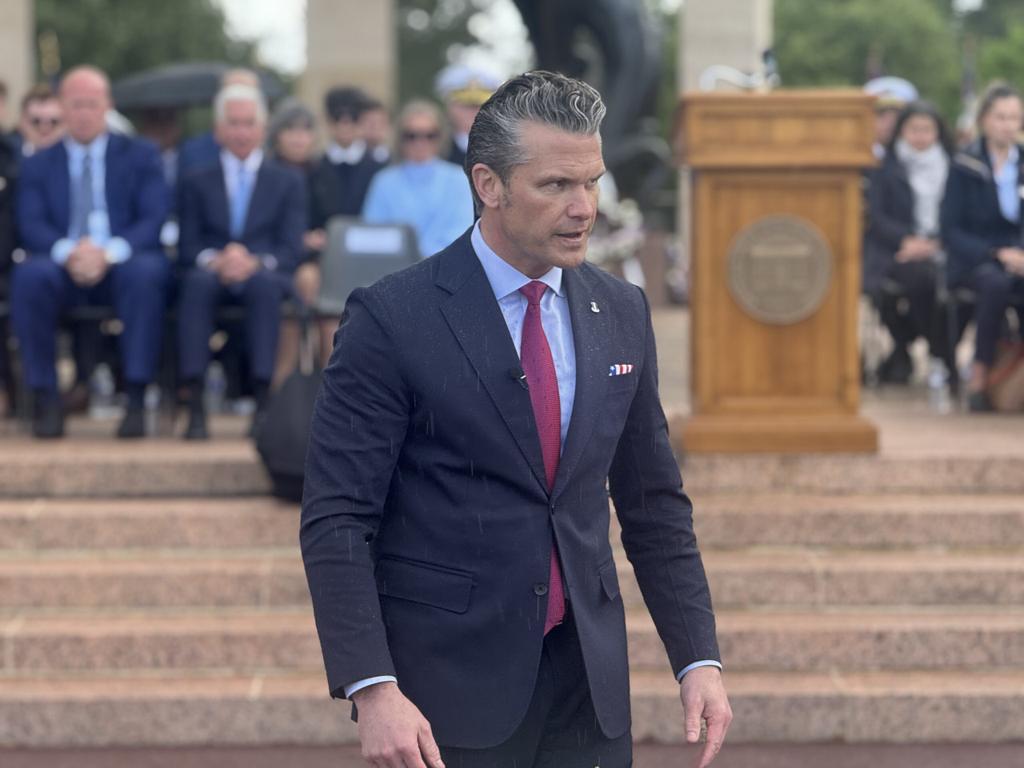
NORMANDY, France — U.S. Secretary of War Pete Hegseth delivered a stark warning about a growing migration crisis in Europe during his speech commemorating the 82nd anniversary of D-Day. Speaking at the Normandy American Cemetery, Hegseth highlighted the challenges posed by what he termed an invasion of "third-world migrants" arriving on European shores. His remarks reflect a significant tension surrounding Europe’s immigration policies and national security, emphasizing the need for urgent action.
Hegseth called for European nations to take decisive measures to address the influx of migrants, which he argues threatens the continent's stability and cultural identity. His speech served not only as a tribute to the sacrifices made during World War II but also as a call for contemporary leaders to uphold the values and security that those sacrifices represented.
Call to Action
"Sadly, today, different European beaches are stormed by different dangerous ideologies," Hegseth stated, referencing the arrival of boats filled with migrants in countries like Spain, Italy, and Greece. He questioned when European capitals would respond to what he described as an invasion, expressing hope that it is not too late for action.
In his remarks, Hegseth criticized European nations for their handling of migration, stating, "They’ve opened their borders in many cases, defunded their militaries, and opened their welfare state, and you’ve got a flood of refugees that a lot of countries have had challenges dealing with." He emphasized that addressing this issue is crucial for the future of Europe, suggesting that failure to do so could have dire consequences.
Historical Context
The D-Day invasion on June 6, 1944, was a pivotal moment in World War II, marking the beginning of the liberation of France from Nazi occupation. Hegseth invoked this history to stress the importance of maintaining freedom and security in Europe today. He warned that the freedoms restored by the sacrifices of those buried at Normandy could be at risk if current leaders do not act decisively to protect them.
Hegseth also pointed out that many European nations have become complacent since World War II, stating, "Peace is not wished into being. It is bought with purpose, with honor, and with strength." He called for a renewed commitment to military readiness among European allies, suggesting that the United States should not bear the entire burden of defense alone. This call to action reflects a broader sentiment that European nations must step up their contributions to collective security.
NATO Responsibilities
During his visit, Hegseth met with French Armed Forces Minister Catherine Vautrin, where they discussed the need for NATO allies to increase defense spending and take greater responsibility for their own security. Hegseth advocated for a defense spending target of 5% of GDP for NATO members, emphasizing the importance of a capable and prepared alliance in the face of emerging global threats.
He remarked, "The men who fought and died here restored freedom to Europe. That freedom must be maintained by this generation of leaders and war fighters, or what they fought for was merely temporary." Hegseth's comments reflect a broader concern among some U.S. officials regarding the adequacy of European defense capabilities in the face of emerging threats, including geopolitical tensions and security challenges.
While Hegseth's warnings resonate with critics of current immigration policies, supporters of these policies argue that they are essential for humanitarian reasons and that Europe has a moral responsibility to assist those fleeing conflict and persecution. At the time of publication, there were no immediate responses from European officials regarding Hegseth's comments, indicating a potential divide in perspectives on this pressing issue.
As the ceremony concluded, Hegseth reiterated the need for unity and strength among allies, stating, "America will lead, and we must. But capable allies must be right there with us, shoulder to shoulder in the breach when it matters." His remarks serve as a reminder of the ongoing challenges facing Europe and the importance of addressing them with urgency and resolve. The commemoration of D-Day not only honors the past but also calls for vigilance in safeguarding the future of freedom and security in Europe.