A House subcommittee held a hearing on Thursday to discuss proposals for packing the U.S. Supreme Court, with no Democrats present condemning the idea. The session, organized by the House Judiciary Subcommittee on Courts, Intellectual Property, Artificial Intelligence, and the Internet, featured testimony from legal experts regarding concerns that such actions could undermine the legitimacy of the Supreme Court.
The hearing underscored a significant partisan divide over the future of the judiciary, as Republicans argued that court packing would threaten the rule of law while Democrats refrained from disavowing the proposal. The topic has gained traction among some progressive lawmakers who advocate for expanding the court to counter what they perceive as a conservative majority.
During the hearing, House Republicans emphasized the potential dangers of court packing. Rep. Jim Jordan, R-Ohio, stated, "They’re all talking about it. … ‘We gotta pack the court.’ Why? Why? ’Cause they don’t like the decisions that this good court is giving this country." He cited various incidents, including the leak of the Dobbs decision and threats against conservative justices, as evidence of a broader effort to undermine the court.
Democrats' Stance on Court Packing
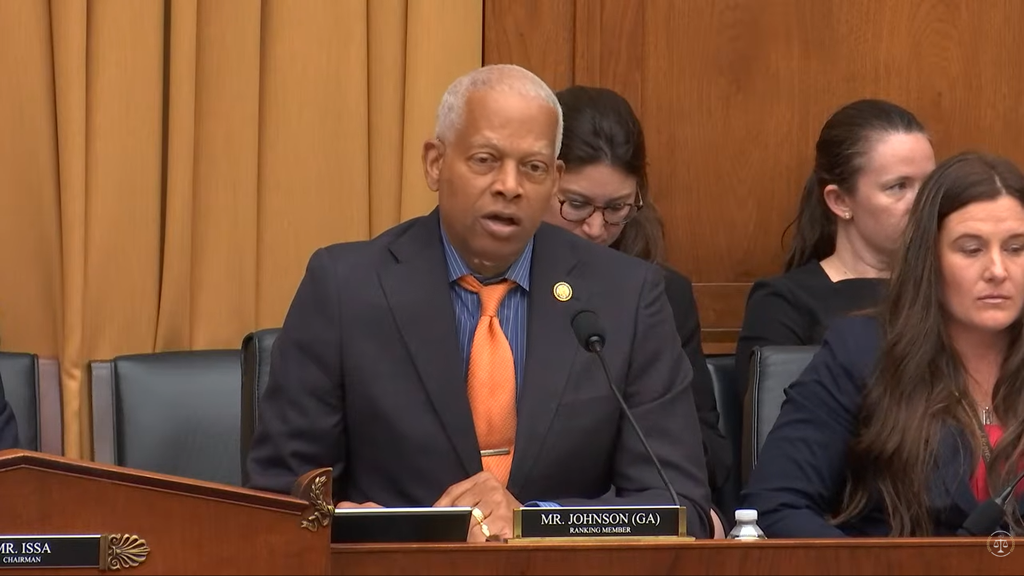
Despite the contentious nature of the discussion, every Democrat in attendance declined to condemn the idea of packing the court. Rep. Hank Johnson, D-Ga., criticized the Supreme Court's conservative justices, claiming they serve the interests of corporations and billionaires. He characterized the current court as a "corrupt United States Supreme Court that too often works for the corporations, the billionaires, and the oligarchs at the expense of the American people."
Johnson also referenced the Dobbs decision, which overturned Roe v. Wade, claiming it "decimated reproductive freedoms that generations of women fought to secure." He did not acknowledge that the ruling returned the authority to regulate abortion to individual states and their elected representatives.
Rep. Jamie Raskin, D-Md., echoed similar sentiments, arguing that the Republican-controlled Senate's actions regarding judicial appointments amounted to court packing. He described the filling of Justice Ruth Bader Ginsburg's seat by Justice Amy Coney Barrett as a "stolen" seat and claimed that recent rulings have returned the country to a state of political white supremacy.
Republican Criticism of Democratic Claims
Republicans pushed back against these assertions, arguing that Democrats are attempting to delegitimize the court because they disagree with its rulings. Jordan pointed to the assassination attempt against Justice Brett Kavanaugh and the intimidation of conservative justices as part of a broader strategy to lay the groundwork for court packing.
Rep. Zoe Lofgren, D-Calif., also refrained from disavowing court packing, instead focusing on criticisms of Justices Clarence Thomas and Samuel Alito. Her comments, along with those of her colleagues, have drawn scrutiny from Republicans who argue that such rhetoric only serves to further divide the political landscape.
While the hearing highlighted stark differences in perspectives, some experts suggest that the debate over court packing reflects deeper issues within the political system. Critics argue that both parties have engaged in tactics that undermine the independence of the judiciary, raising concerns about the long-term implications for American democracy.
The Broader Implications
The hearing concluded without any consensus on the future of the Supreme Court, leaving the issue of court packing unresolved. As Democrats continue to advocate for reforms, Republicans remain steadfast in their opposition, framing the debate as a critical moment for the integrity of the judicial system.
Supporters of court packing argue that it is necessary to restore balance to the court, while opponents warn that such actions could lead to further politicization of the judiciary. The lack of bipartisan agreement on this issue suggests that the debate over the Supreme Court's future will continue to be a contentious topic in American politics.